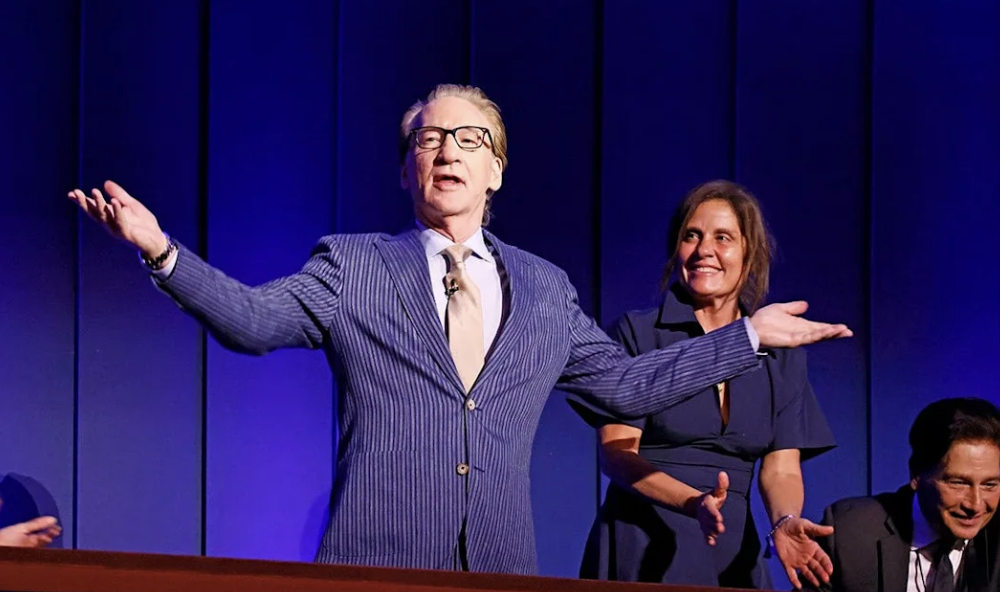



Bill Maher gave NPR a blunt assessment of its political identity, and the network’s host did not seem especially eager to accept it.

Maher, the longtime host of HBO’s Real Time, appeared on NPR’s Newsmakers podcast in an episode released Wednesday. During the conversation, he offered a characterization of the network that many listeners have probably thought themselves.

“Maybe I’m wrong,” Maher said, “but I think of this place as the far extreme of the left.”

It is not difficult to understand why he would reach that conclusion. NPR’s programming frequently centers on issues that occupy the modern progressive agenda, including climate change, race, transgender politics, and immigration. Listeners who tune in during almost any part of the day are likely to hear those subjects discussed, often from a perspective that reflects the assumptions of the political left.

Even NPR’s lighter programming tends to carry the same cultural tone. The network may consider its audience broad and diverse, but its editorial outlook is rarely mistaken for conservative or even politically neutral.

Maher’s comment came during a discussion about his relationship with comedian Louis C.K., whom Maher invited onto Real Time in October. The appearance came eight years after allegations of sexual misconduct damaged Louis C.K.’s career.

Maher argued that the punishment directed at the comedian had been far more severe and lasting than the criticism faced by wealthy progressives who chant “globalize the intifada” or express sympathy for Hamas.

Advertisement

“Your audience is going to love this, by the way,” Maher told host Steve Inskeep.

The remark was plainly sarcastic. Inskeep responded by insisting that NPR’s audience was “a little more diverse than you might think.”

Maher did not appear convinced.

“Really?” he replied. “I’m surprised you even had me on.”

Inskeep laughed, but the exchange exposed the gap between how NPR sees itself and how much of the country sees it. The common image of the NPR audience is not difficult to describe: white, liberal, highly educated, and financially comfortable.

Available audience data does little to undermine that impression.

A report from Market Ingenuity, an organization that helps public media stations attract corporate support, stated that NPR’s audience has historically been predominantly white. The report said Black and Hispanic listeners were each approaching 10%, while Asian and Pacific Islander listeners accounted for nearly 5%.

Advertisement

Those figures suggest some diversity, but they also indicate that white listeners still make up a clear majority of the audience. The report’s use of phrases such as “approaching” and “almost” is also notable, since precise figures would have made the demographic picture easier to evaluate.

The financial profile of NPR listeners is even more revealing. Market Ingenuity reported a median household income of approximately $115,000 among NPR listeners. That is well above the national median household income. Since median income represents the midpoint, it also means half of NPR-listening households earn at least that amount.

The same report noted that NPR listeners tend to have more formal education than people who do not consume public media. It also claimed they are considerably more likely to work in top management positions. Taken together, those details point to an audience that is disproportionately affluent, credentialed, and professionally established.

Market Ingenuity’s political breakdown appears more balanced at first glance. It lists the audience as roughly 34.6% Democratic, 32% Republican, and 24.5% independent. Those labels, however, do not necessarily reveal much about ideology. Plenty of self-described Republicans are moderate or liberal on cultural issues, while many independents consistently vote for Democrats.

Maher has spent decades working at the intersection of entertainment, politics, and popular culture. He is hardly unfamiliar with the attitudes of media institutions or their audiences. His criticism of NPR was not based on a random impression. It reflected the network’s programming, reputation, and the demographic profile of the people most likely to listen.

NPR insiders may genuinely believe their coverage is balanced because their political assumptions feel normal within their professional environment. When everyone around them shares similar views, bias becomes harder to recognize.

That is why Inskeep’s attempt to push back against Maher’s description did not help his case. By appearing surprised that anyone would view NPR as far left, he reinforced the perception that the network is insulated from how it is seen outside its own audience.

The Western Journal