Democratic Socialists Of America In Photos
For anyone who made it through all 11 minutes and 15 seconds of Graham Platner’s campaign withdrawal video, congratulations. That takes either a deep commitment to civic engagement or an unusually high tolerance for political self-pity. In 2026, those two qualities may no longer be mutually exclusive. Platner used the video to announce that he […]
For anyone who made it through all 11 minutes and 15 seconds of Graham Platner’s campaign withdrawal video, congratulations. That takes either a deep commitment to civic engagement or an unusually high tolerance for political self-pity. In 2026, those two qualities may no longer be mutually exclusive.
Platner used the video to announce that he was suspending his campaign for the U.S. Senate in Maine following serious allegations of sexual misconduct. Much of the statement was devoted to denying wrongdoing, defending his character, and portraying the collapse of his campaign as part of a broader struggle against powerful political forces.
“They are going to take everything away from us,” Platner said, placing his personal situation within the language of a larger movement.
Eventually, he reached the announcement everyone was waiting for.
“We believe that for the movement to continue, it can’t be me,” Platner said. “And for that reason, we are suspending campaign operations.”
He insisted that the decision should not be interpreted as an admission.
“This is incredibly difficult because I know that some will think it’s an admission of guilt, and it most certainly is not,” he said. “We’re not doing it because of the allegations. We’re doing it because of the structures that are being taken away from us by those in power.”
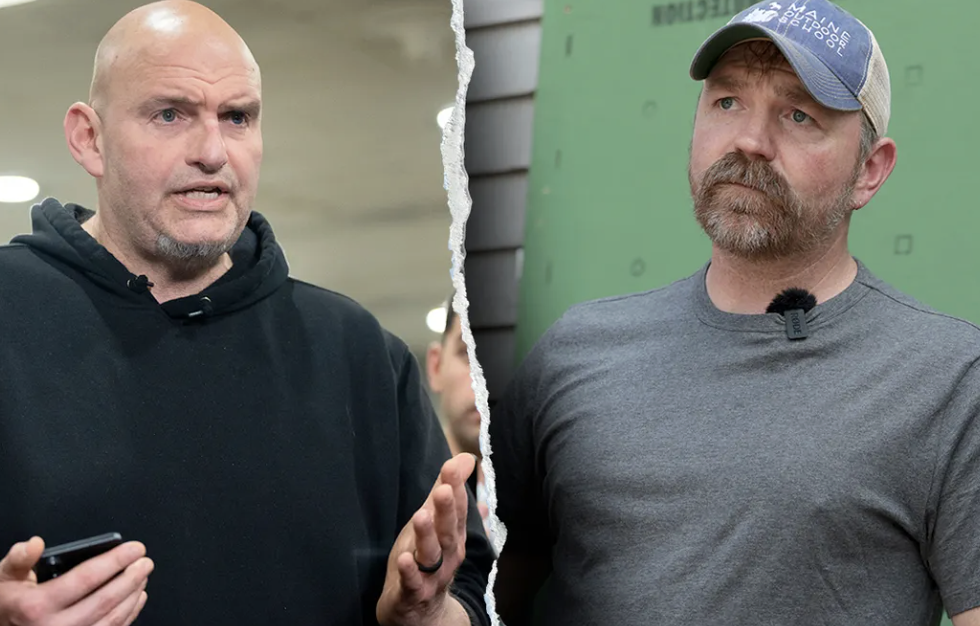
That explanation did little to satisfy one of Platner’s most outspoken Democratic critics. Pennsylvania Senator John Fetterman appeared on Fox News less than an hour after the video was released and offered a much harsher assessment of how the campaign would be remembered.
“Bro, you will only be remembered as the accused rapist that got pushed out of your election,” Fetterman said.
Fetterman had criticized Platner well before the latest allegation became public. He had previously raised questions about Platner’s online activity, personal relationships and use of social media platforms, including Kik and Reddit. Platner reportedly used the username “P-Hustle,” a name Fetterman repeatedly invoked while mocking him during the Fox News appearance.
“Like, P-Hustle,” Fetterman said, “you will only be remembered as the accused rapist that got pushed out of your election.”
Fetterman then referred to other allegations involving Platner’s personal conduct, including claims about infidelity and mistreatment of a former girlfriend.
“That’s your legacy, bro,” he said. “So go back under that rock that you came from.”
The language was blunt, but Fetterman’s broader point was difficult to miss. Platner’s campaign did not collapse because of one isolated controversy. It fell apart after a series of damaging stories, allegations, and revelations accumulated over time. Each new controversy forced supporters to decide whether they were willing to keep defending him.
For a while, many of them were.
Platner had presented himself as an authentic working-class outsider, a political insurgent capable of channeling anger at the Democratic establishment. That image attracted support from left-wing activists who were eager for a candidate who appeared less polished and more confrontational than a traditional politician.
The problem was that the carefully marketed authenticity came with baggage. As more information about Platner’s past emerged, his defenders repeatedly argued that he had changed, that the latest revelation was being exaggerated or that establishment forces were trying to destroy a threatening outsider.
That defense became harder to maintain each time another controversy appeared.
There will undoubtedly be lengthy explanations of how Platner’s campaign imploded. Some will blame poor vetting. Others will point to ideological activists who became too invested in his candidacy to judge him objectively. There will also be criticism of the press, both for helping elevate Platner and for waiting too long to seriously examine his background.
But the central lesson is much simpler. A candidate with a deeply troubling record does not become less risky because supporters are emotionally invested in the movement surrounding him. When serious warning signs appear early and continue to multiply, dismissing each one only makes the eventual collapse more damaging.
Democrats have repeatedly tried to package elite or unconventional candidates as authentic representatives of working-class voters. The details change, but the strategy is familiar. Politicians pose with hunting rifles, visit fast-food restaurants, emphasize rural hobbies or adopt the visual language of ordinary life in an attempt to appear relatable.
Sometimes the performance works. Often it looks forced.
Platner’s version involved oysters, outsider politics and anger at the establishment. His supporters wanted the image to be real badly enough that they overlooked evidence suggesting the candidate was far more complicated than the character being sold to voters.
By the end, the campaign had become trapped in a predictable cycle. A damaging story would emerge. Platner would offer an explanation or apology. Supporters would insist he had grown as a person. Then something worse would surface, and the process would begin again.
That cycle continued until the latest allegation made the campaign politically impossible to sustain.
Platner attempted to frame his withdrawal as a sacrifice for a movement under attack. Fetterman rejected that framing entirely. In his telling, this was not the tragic defeat of a political cause. It was the predictable end of a campaign built around a candidate whose past had never been properly confronted.
Whatever happens next, Platner’s withdrawal video is unlikely to control how the campaign is remembered. His critics will define it through the allegations, the controversies, and the repeated decisions by supporters to defend him long after the warning signs became impossible to ignore.
The campaign should have ended earlier. Instead, Democrats and activists who believed they could use Platner’s anger and outsider appeal kept moving forward, hoping the next revelation would be the last.