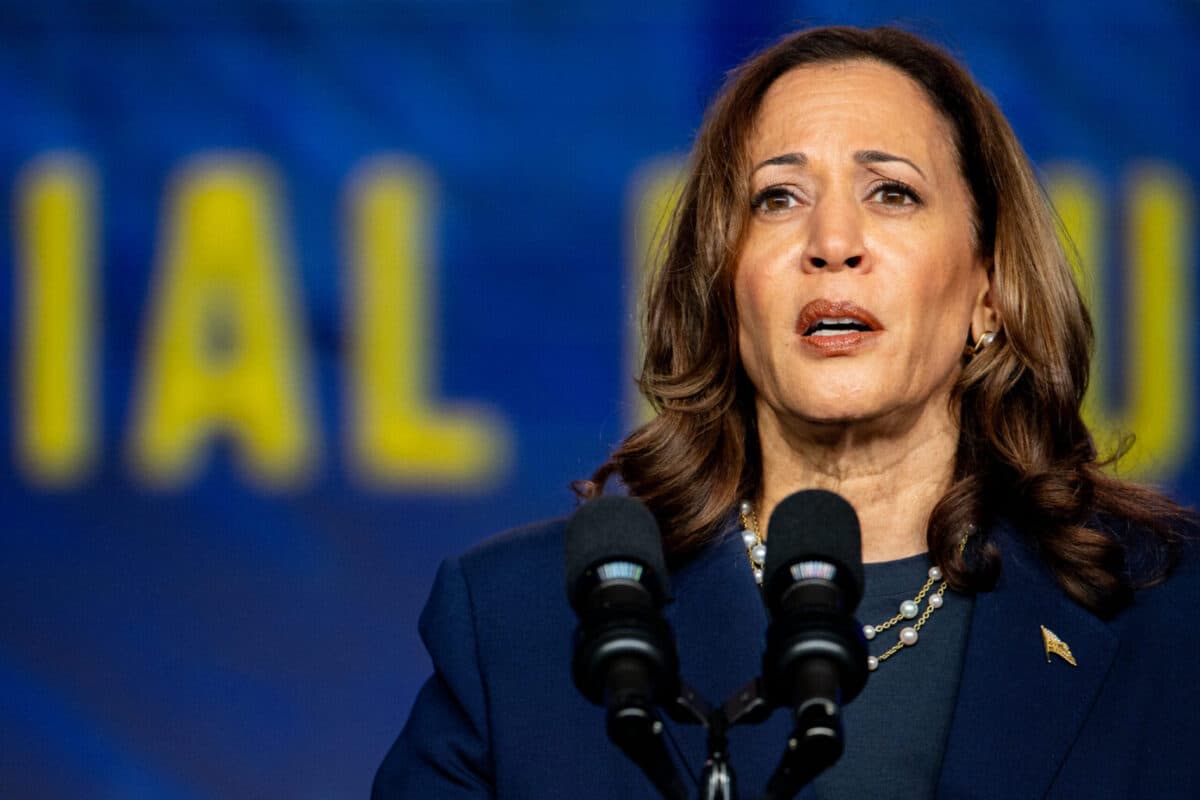
Democrats running for office in tough states are telling former Vice President Kamala Harris to stay home. The latest example comes from Alaska, where candidate Mary Peltola rejected a fundraising email sent in her name. According to a Peltola spokesperson speaking to a local news outlet, Mary is not pursuing endorsements from any Lower 48 individual because her attention remains fixed on Alaska. In 2024, President Donald Trump defeated Harris in Alaska by a margin of 13 points, making this move logical.
The same pattern shows up in Iowa. A campaign spokesperson for gubernatorial nominee Rob Sand told the Washington Examiner that his team does not want an endorsement from Harris. They also do not want her to appear at any rallies or have any involvement with the campaign. This is a sharp change from 2018, when Harris supported Sand’s successful run for state auditor. Josh Turek, a Senate candidate, informed the Washington Examiner that he neither intends to campaign alongside Harris nor seeks her backing.
In the 2024 election within his district, Turek exceeded Harris’s performance by approximately 13 points. This gap highlights the different political groups each candidate built in Iowa. Timothy Hagle, a political scientist at the University of Iowa, observed that Republicans maintain a voter registration lead of about 190,000 in the state. He suggested that nominees understand they do not want to spoil that lead by appearing too tied to Harris.
Democrats in these competitive races are struggling with how to handle Harris on the trail. She continues to be a leading contender for the 2028 Democratic presidential nomination. However, her ties to the Biden administration and her 2024 loss are making some candidates wary. They fear that if they associate with her, it could hurt their chances in must-win contests.
The Washington Examiner stated that Democratic candidates in states leaning red did not appear open to receiving support from Harris. The fear is that Harris brings baggage that voters in these states do not want. Consequently, linking themselves with Kamala Harris might create difficulties for them. This concern is driving the decision to keep her at arm’s length during these critical midterm races.
Despite the pushback from some candidates, others in the party see her as an asset. One supporter remarked that her donor networks, fundraising capacity, and list remain robust within the party, providing base energy and money. Senator Jon Ossoff’s team offered a different take, stating, “Senator Ossoff is grateful for Vice President Harris’ help and support in his re-election campaign.” This split shows the deep divide within the party on her role right now.
The Cook Political Report recently shifted its ratings for several key races. They moved the Iowa gubernatorial race from a “toss-up” to “leans Democratic.” They also changed Iowa’s Senate race from “leans Republican” to “toss-up,” which is a boost for Democrat Josh Turek. These changes come as Democrats try to revive their base after the 2024 election.
The data shows a clear gap in voter registration that Democrats must overcome. Republicans hold a lead of nearly 200,000 voters in Iowa alone. This gap has grown over the last several election cycles. In Alaska, the 13-point loss for Harris in 2024 serves as a stark warning for Peltola’s team. They know that winning requires focusing strictly on local issues rather than national figures.
The Cook Political Report also updated ratings for Texas. They moved the Texas Senate race from “Lean R” to “Toss Up” and the Texas Governor race from “Solid R” to “Likely R.” These shifts suggest that the political landscape is still fluid. Democrats are trying to find the right balance between using party resources and avoiding national figures who might drag them down in specific districts.