



Republican New York Rep. Mike Lawler and Democratic New Jersey Rep. Josh Gottheimer urged four agencies to crack down on so-called election misinformation propagated by artificial intelligence (AI) tools, prompting pushback from First Amendment organizations.
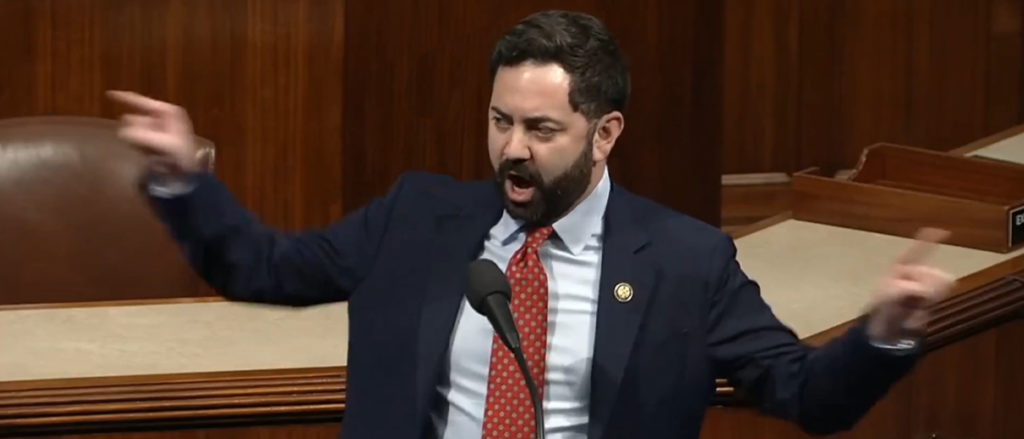
The lawmakers asked the Department of Justice (DOJ), the Department of Homeland Security (DHS), the Cybersecurity and Infrastructure Security Agency (CISA) and the Federal Election Commission (FEC) to monitor AI tools to prevent the spread of election misinformation in a letter Tuesday. The letter elicited warnings from First Amendment organizations who expressed to the Daily Caller News Foundation their concerns about what it could mean for Americansâ constitutional rights.
âWith the midterm elections just a few months away, we urge your agencies to coordinate to ensure the U.S. is prepared for AI-driven threats to election integrity, including the development and deployment of appropriate monitoring and mitigation capabilities,â the letter stated. âWe also urge you to deepen engagement with major AI companies to understand their safeguard protocols, testing practices, and mechanisms for identifying political bias, misinformation, or model vulnerabilities that could affect voters.â
Lawler said on X that his demand would help AI companies âaddress election threats, improve transparency, and identity bias,â arguing that AI presented ânew challengesâ to election integrity. Neither Lawler or Gottheimer responded to the DCNFâs questions about which arbiter would determine what constitutes misinformation.
David Inserra, a fellow for free expression and technology at the Cato Institute, told the DCNF that the letter is a âfrightening attack on the First Amendment.â
âMisinformation is generally protected under the First Amendment,â Inserra told the DCNF. âIt can be misleading speech, it can be inaccurate speech, false speech, it can be speech that is biased or unverified. That speech is protected by the First Amendment. All of us, every American, every single day, says things that are biased or saying one view over another that leaves out, in crucial details. Weâre all inaccurate, we all say things that turn out to be wrong or partially wrong. But we donât empower the government to somehow police that speech and that is exactly what this letter to various government agencies is suggesting.â
âItâs saying to these government agencies, you should look long and hard about trying to police misinformation and biased speech around elections and that is a frightening attack on the First Amendment and just generally a frightening attack on the notion that people should be able to decide for themselves what they want to do with their vote and how they want to think about elections,â Inserra continued.
Tech platforms targeted so-called misinformation and disinformation after the 2016 and 2020 elections. During the 2020 election cycle, Twitter locked accounts owned by the New York Post and former White House press secretary Kayleigh McEnany after they shared the Postâs story about Hunter Bidenâs laptop, citing it as Russian disinformation. The DCNF verified the contents of the laptop in October 2020.
Former President Joe Bidenâs administration used CISA to crack down on so-called online mis-and-dis-information, which received scrutiny from Republicans. Inserra said he was âsurprisedâ that both Republicans and Democrats did not recognize the threat after witnessing the Biden administrationâs attempts to police speech on tech platforms.
âIâm quite frankly a little surprised that both sides of the aisle donât see the threat in this,â Inserra told the DCNF. âFrom the right, Iâm surprised that theyâre not saying, âlook, we went after the Biden administration for years for doing this exact kind of thing,â trying to manage, trying to control our speech online regarding things like COVID or elections and yet, weâre saying to these exact same agencies, go now and do that for AI tools.â
The Foundation for Individual Rights and Expression (FIRE) Director of Public Advocacy Aaron Terr argued this directive could allow federal agencies to pressure AI platforms âto align their outputs with the governmentâs preferred views.â
âThis letterâs vague directive risks opening the door to federal agencies pressuring AI platforms to align their outputs with the governmentâs preferred views, much as the government has done with social media companies in recent years,â Terr told the DCNF. âBut as the Supreme Court recently made clear, âit is no job for government to decide what counts as the right balance of private expressionâto âun-biasâ what it thinks biased, rather than to leave such judgments to speakers and their audiences.'â
âOfficials can encourage public skepticism and verification of AI-generated information. But any attempt from the government to pressure AI platforms to change their responses would raise the same First Amendment problems as government meddling with the content of social media platforms, search engines, or newspapers,â Terr continued.
Bret Swanson, the director of the Heritage Foundationâs Center for Technology and the Human Person, argued that the government cracking down on so-called misinformation is âmore dangerous than misinformation itself.â
âAfter a quick read of their letter, it doesnât look like they are proposing any specific policy or legislation. As far as I can tell, they are asking government agencies to watch over AI related election risks. The letter, therefore, may seem innocuous. But remember, âmisinformationâ and âelection securityâ were key justifications for government agencies, including some referenced in this letter, to engage in the industrial scale censorship we saw in the 2020 through 2024 era. My own view is that government cracking down on âmisinformationâ is far more dangerous than misinformation itself.â
The DOJ said it would review the letter âcarefullyâ and takes issues regarding AI and election security âvery seriously.â
âThe Department has received the letter from Reps. Lawler and Gottheimer and takes the concerns raised regarding AI and election security very seriously. We will review the letter carefully as part of our ongoing commitment to protecting the integrity of U.S. elections,â a DOJ spokesperson told the DCNF.
CISA told the DCNF it âworks directly with Congress to address their questions.â The FEC declined to comment and DHS did not respond to the DCNFâs request for comment.
Inserra argued Lawler and Gottheimer want AI tools to function the way the federal government wants them to, which is an âattackâ on the Constitution and the users of AI tools.
Lawler and Gottheimer sent a letter to AI companies in May demanding measures to prevent political bias and misinformation ahead of the midterm elections. These companies included OpenAI, Google, Microsoft and Anthropic. Google-owned YouTube banned Trumpâs account after the Capitol riot on Jan. 6, 2021, and the company agreed to pay Trump a $24.5 million settlement to end a lawsuit in September 2025.
All content created by the Daily Caller News Foundation, an independent and nonpartisan newswire service, is available without charge to any legitimate news publisher that can provide a large audience. All republished articles must include our logo, our reporterâs byline and their DCNF affiliation. For any questions about our guidelines or partnering with us, please contact [email protected].
