
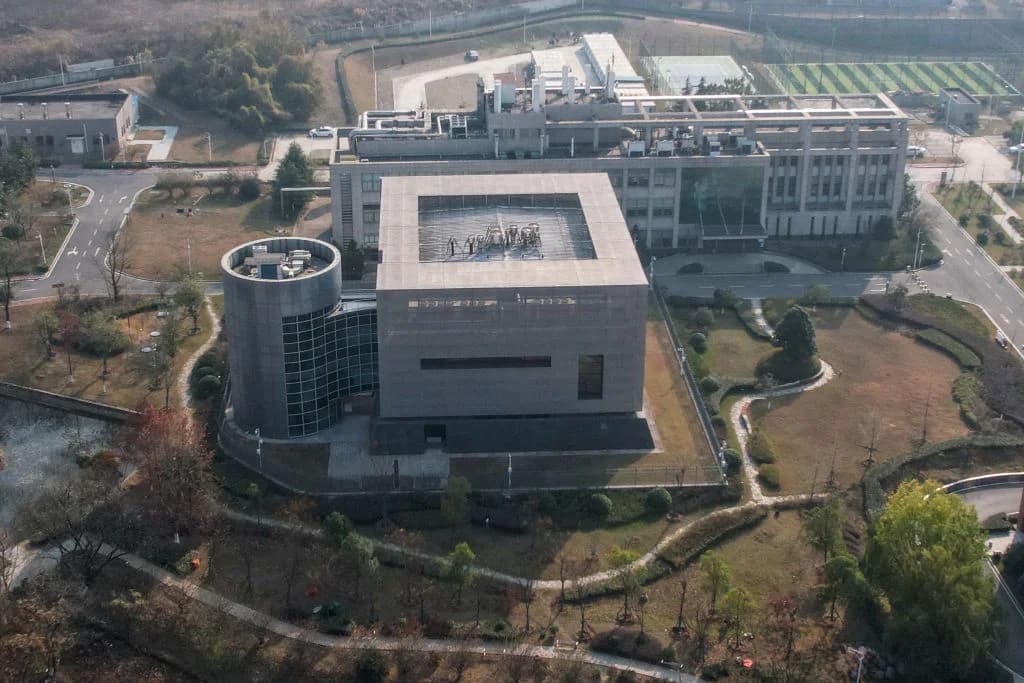
Former Biden White House COVID-19 Response Coordinator Dr. Ashish Jha says he now believes the COVID-19 pandemic most likely began with an accidental laboratory leak, marking a notable shift from the position he held when he joined the administration.
According to Fox News, Jha shared his updated assessment during a Sunday interview on CNN with Dana Bash after she referenced a recent social media post in which he agreed with commentator Jamie Metzl's argument that the virus likely originated at the Wuhan Institute of Virology.
"This is going to surprise some people," Jha said. "When I went into the White House, my view was, 'This was almost surely a natural outbreak, maybe a lab leak.' Based on information I learned and based on information I've seen, I have come to conclude that it is more likely to have been a lab leak."
Jha stressed that his conclusion is an assessment rather than a confirmed fact.
"Here's the bottom line. No one in the United States knows for sure," he said. "The only people who know for sure are officials in China, and we still need transparency and accountability on that."
Bash responded by noting that Jha's remarks represented significant news and reflected how understanding of the pandemic's origins continues to evolve.
After the interview aired, Jha posted a clip of the exchange on X, saying his position was not new and had remained consistent since his time in the White House.
"My view on COVID origins isn't new," he wrote. "Based on strong circumstantial evidence I've seen, I think lab leak is much more likely. Not engineered. Not deliberate. Accidental."
He also emphasized that reasonable people can review the available evidence and reach different conclusions because no definitive proof has been made public.
Watch:
The question of COVID-19's origin has remained one of the pandemic's most debated issues.
Early in the outbreak, many scientists and public health experts favored a natural transmission theory, while the lab leak hypothesis was widely disputed and, at times, restricted on social media platforms under COVID-19 misinformation policies.
"More likely to have been a lab leak."? I would say most probably a lab leak. If a river suddenly has oil in it, there is an oil refinery next-door, I don't assume that it must be natural. I can "almost" definitely say that it came from the refinery.
Finally, some truth on C19 revealed by the previous administration.