In a 6-3 decision on Friday, the Supreme Court ruled against a group of Maine health care workers seeking a religious exemption from the state’s Vaccine mandate. They had submitted an emergency application for injunctive relief.
Their stated reason for the exemption is that “fetal tissue from terminated pregnancies was used in developing the approved vaccines,” according to The National Review. “The plaintiffs see immunization as an implicit endorsement of abortion, in violation of their religious beliefs.”
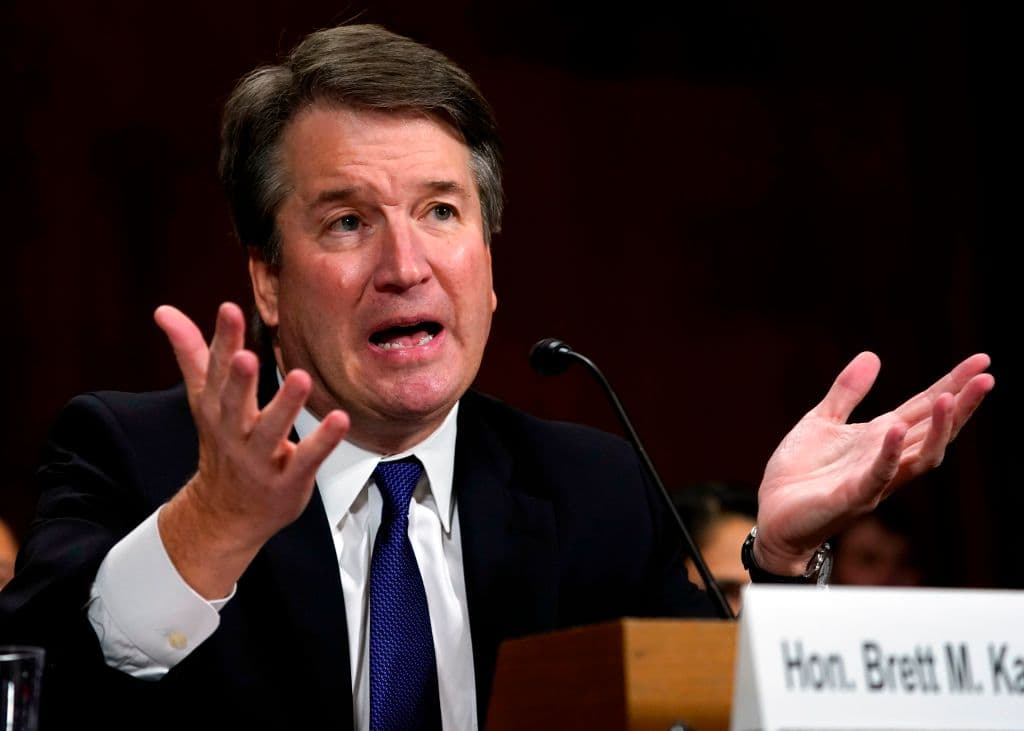
Conservatives were alarmed to learn that Trump appointees, Justices Brett Kavanaugh and Amy Coney Barrett, had sided with the progressive wing of the Court.
Chief Justice John Roberts, who stopped being a reliable conservative vote a long time ago, also joined the liberals in denying the preliminary injunction.
In August, Maine Gov. Janet Mills announced that health care workers in the state must be fully vaccinated against COVID-19 by October 1.
In 2019, 73 percent of voters in the state supported the repeal of religious and philosophical exemptions from the laws governing immunization requirements, according to The New York Times. (Exemptions are still granted if a health care professional considers a Vaccine to be “medically inadvisable” for an individual.)
Barrett, joined by Kavanaugh, wrote a concurring opinion based on the fact that “the case was brought on the shadow docket, or as an emergency appeal. Shadow docket cases do not involve oral arguments or full rulings that are part of normal cases. Barrett said the shadow docket should not be used for such a case, and that the court should not make this decision ‘on a short fuse without benefit of full briefing and oral argument,’ implying she and Kavanaugh could vote differently if the case came before the court in a different way,” according to Business Insider.
Justice Neil Gorsuch, also a Trump appointee, joined Justices Clarence Thomas and Samuel Alito in dissent.
Gorsuch points out that, “Unlike comparable rules in most other States, Maine’s rule contains no exemption for those whose sincerely held religious beliefs preclude them from accepting the vaccination.”
“Yet, with Maine’s new rule coming into effect, one of the applicants has already lost her job for refusing to betray her faith; another risks the imminent loss of his medical practice.”
He also reminds us that the plaintiffs “have served patients on the front line of the COVID–19 pandemic with bravery and grace for 18 months now.”
Barrett’s and Kavanaugh’s concurrence with the majority in this case has some of us wondering why Republicans fought so hard for their confirmations.
It should be noted that in August, Barrett disappointed Conservatives by rejecting a request from a group of Indiana University students who were seeking an exemption from the school’s Vaccine mandate.
While Supreme Court justices take an oath to “impartially discharge” their duties, there’s obviously a reason why confirmation hearings have become so politically fraught. Those who had expected years of conservative safeguard from leftist tyranny after Justices Kavanaugh and Barrett joined the Court have been sorely disappointed.
The National Review’s Andrew McCarthy, who is a former assistant U.S. attorney, finds it troubling that Barrett and Kavanaugh ignored the First Amendment in their concurrence.
He writes: “What is stunning, and will be troubling for Conservatives, is the decision by Justices Barrett and Kavanaugh to side with the progressives and turn a blind eye to a state government’s suppression of a fundamental freedom that the Constitution is supposed to protect. And equally troubling: the thin gruel they offer as a rationale.”
Still, it’s possible Conservatives are overreacting, at least in this case.
Adam Liptak who follows the Supreme Court for The New York Times sees their concurrence differently. Rather than viewing it through a political lens, he offers more practical reasons for their decisions.
He believes it served “a dual purpose: of indicating that the two justices were not signaling how they would vote if the question reached the court in a more deliberate fashion and of cautioning litigants against the overuse of what critics call the court’s ‘shadow docket.'”
Although it might be too soon to sound the alarm, Conservatives will be watching Barrett’s and Kavanaugh’s future decisions closely.
This article appeared originally on The Western Journal.