



Many TSA Agents Call Out Amid Partial Shutdown
At George Bush Intercontinental Airport in Houston, the situation reached a boiling point Tuesday, with security lines stretching up to 270 minutes—nearly five hours—after roughly 42 percent of TSA officers failed to…
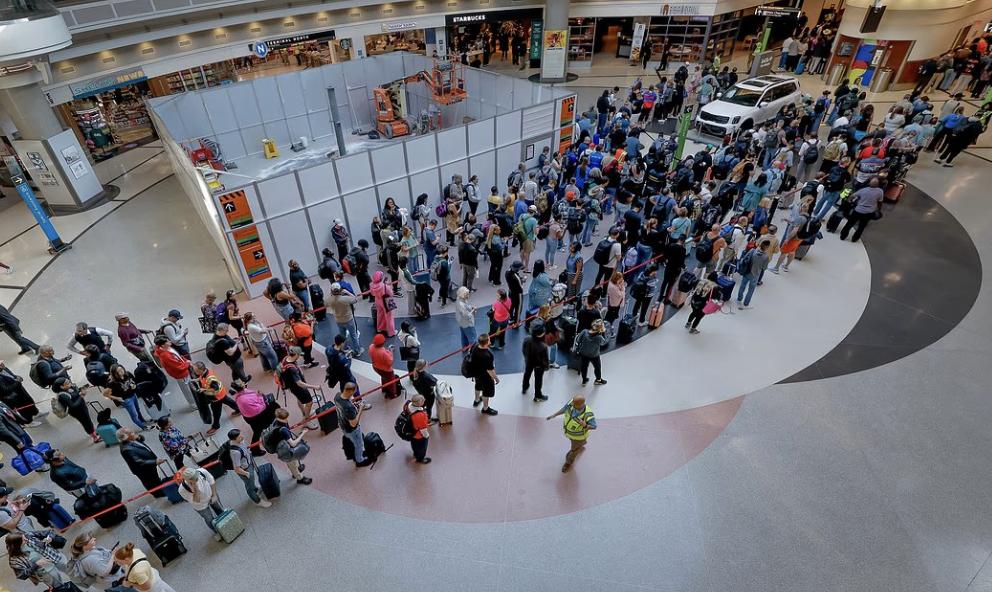
At George Bush Intercontinental Airport in Houston, the situation reached a boiling point Tuesday, with security lines stretching up to 270 minutes—nearly five hours—after roughly 42 percent of TSA officers failed to report for duty. The scenes were nothing short of chaotic, with lines winding through terminals and even spilling into underground tunnels. Desperate announcements warned passengers that even those with imminent departures might not make it through security in time.
Houston wasn’t alone. The ripple effects of the staffing crisis are being felt nationwide. At Hartsfield-Jackson Atlanta International Airport—the busiest airport in the country—officials urged travelers to arrive at least four hours early, though they couldn’t even provide a reliable estimate for wait times. In New York, JFK Airport reported delays approaching an hour, directly blaming the ongoing federal funding lapse.
The root of the crisis is clear: a prolonged Homeland Security funding standoff that has left tens of thousands of TSA workers operating without pay since late January. The strain is showing. More than 400 TSA officers have reportedly quit, and absentee rates have surged, with nearly 12 percent calling out nationwide at one point—the highest level since the funding lapse began.
In response, the federal government is taking extraordinary measures. President Donald Trump has ordered Immigration and Customs Enforcement agents to deploy to 14 major airports to help stabilize operations. Armed federal agents have already been spotted in terminals across cities, including Atlanta, Houston, New York, and New Orleans—an unusual and highly visible move at standard TSA checkpoints.
While federal law enforcement is not uncommon at airports, their presence in frontline security screening areas marks a significant shift, underscoring just how strained the system has become.
Some locations are showing signs of stabilization. Houston’s Hobby Airport, which saw nearly half its TSA workforce call out earlier, has managed to reduce wait times to under 10 minutes. But for many major airports, the situation remains volatile.
Behind the scenes, lawmakers are scrambling to break the deadlock. Negotiations in Washington have intensified, with senators working through the night to craft a deal that could restore funding to most of the Department of Homeland Security—though key disagreements over immigration enforcement continue to stall a full resolution.