


Now that MS NOW has cut its NBC ties, the liberal cable mainstay apparently feels free to say the ugly quiet part out loud.
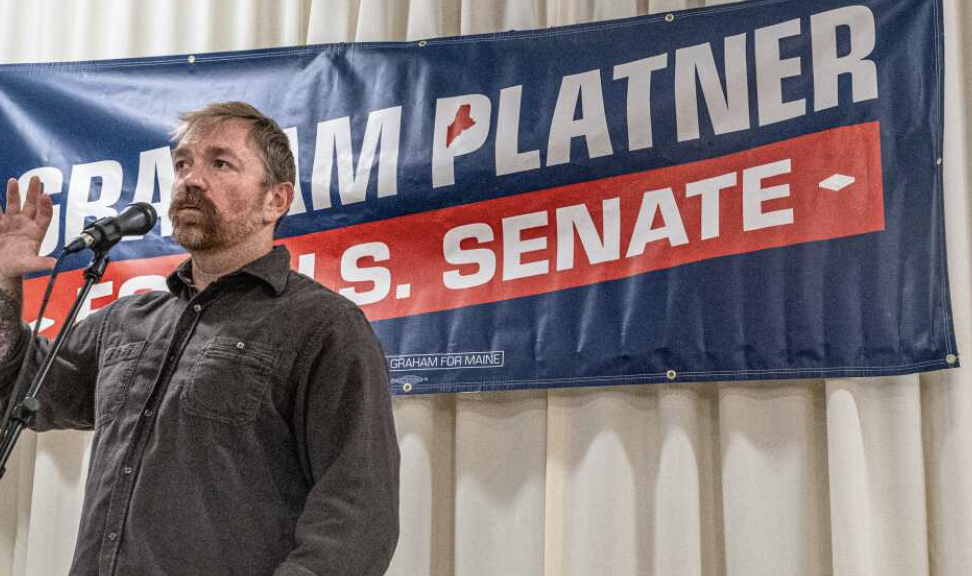
In Graham Platner’s case, that quiet part is this: Democrats had already heard troubling allegations about him before. He had been accused of partner abuse. There were already serious questions about his behavior toward women and his understanding of sexual boundaries. But the latest allegation, the one they seemed more willing to accept, was not coming from a Republican woman who had once dated Maine’s Democratic Senate nominee.
For anyone who has lost track of the many scandals surrounding Platner since his insurgent campaign began last August, Politico reported Monday afternoon that a woman who had an on-and-off relationship with him accused him of raping her in 2021.
The woman, 41-year-old Maine resident Jenny Racicot, described the alleged incident to Politico in three interviews over two weeks. Politico also spoke with a man Racicot had dated and confided in after the alleged incident, and reviewed documents that included emails between Racicot and her therapist, along with messages between Racicot and an acquaintance she had warned years earlier not to get involved with Platner.
Racicot said she and Platner had been in an on-and-off relationship for more than two years before, one night in late 2021, he allegedly entered her rural Maine home uninvited while deeply intoxicated and forced himself on her as she repeatedly told him to stop. She said she cut off contact after telling him the encounter was not consensual.
“I remember him grabbing my pelvis and being really forceful of me,” Racicot told Politico. “I remember the specific moment where I thought to myself, like, ‘This is no longer my choice.’”
The allegation fits a broader pattern of concerns that have followed Platner: issues involving women, alcohol, consent, and abuse. That raises the obvious question of why his candidacy was allowed to get this far in the first place.
MS NOW’s answer, whether intentional or not, was revealing. The earlier accuser was conservative. Apparently, “believe all women” comes with fine print.
Platner’s social media history had already shown serious problems in how he talked about women and sexual consent. There had also been rumors online about his private conduct beyond his Reddit history. Then, in June, The New York Times published a report detailing allegations from a former girlfriend who said Platner had abused and intimidated her. She also said he had made disturbing comments about potentially raping home intruders, while clarifying that it would be “not in a gay way,” but as a way to show dominance.
Platner did not dispute making those grotesque comments. The former girlfriend also said the Times had softened her account. Even so, the story somehow did not produce enough urgency among Democrats to push him out of the race.
MS NOW’s Antonia Hylton later explained why some Democrats struggled with the earlier allegation.
“Part of, I think, what made it complicated for some Democrats to fully believe the woman who was the center of the last round was that she was associated with right-wing politics,” Hylton said.
That is the problem in one sentence.
Hylton appeared more willing to accept Racicot’s allegation because Racicot was conflicted between her support for Platner’s politics and her belief that Maine voters needed to know what she said happened.
But Lyndsey Fifield, the conservative communications staffer and occasional podcaster who previously described her relationship with Platner, did not exactly gain anything by coming forward. Their relationship reportedly lasted from roughly 2013 to 2015. She was not some fringe activist trying to destroy a Democratic candidate at any cost. She gave a serious account, and it deserved to be treated that way.
Instead, the reaction to Fifield may have helped lead to Racicot’s decision to go public. Politico reported that Racicot felt compelled to speak out because the response to the Times story became focused on Fifield’s Republican ties rather than the substance of what she alleged.
Fifield stood by her allegations when contacted by Politico and declined to comment further. She did, however, respond elsewhere after Democratic Sen. Ruben Gallego of Arizona withdrew his endorsement of Platner following the Politico report.
There were already plenty of moments when Democratic officials could have decided Platner was unfit for office. One of them came when Fifield’s allegations were published on June 4, just five days before the Maine primary. Platner was effectively running without serious opposition, but Gov. Janet Mills was still on the ballot even after ending her campaign. A serious last-minute effort could have changed the course of the race.
Instead, party leaders let it move forward.
So much for believing all women. In practice, the rule seems to be: believe all women, as long as their politics are acceptable.
Everyone else gets treated as a suspect, even when the accused candidate has a history of offensive posts, disturbing comments, and allegations he cannot simply explain away.