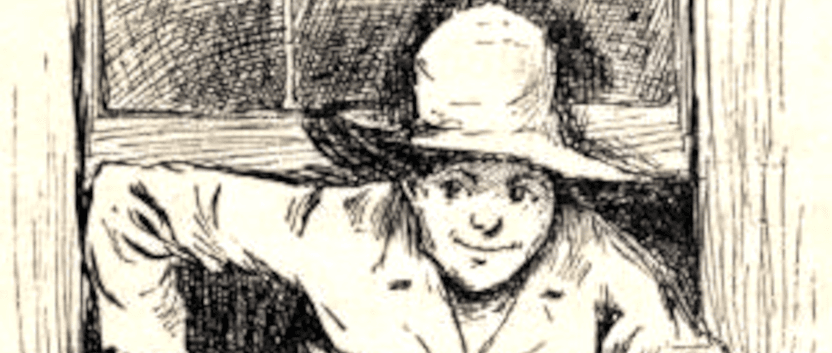

The New York Times recently posed a question that should never have needed asking in a free country: “Should We Read ‘Huck Finn’?” Their answer, wrapped in the usual hand-wringing about “slurs,” “job-endangering conversations” and the delicate feelings of students, amounts to a soft surrender.
Educators are quietly dropping Mark Twain’s masterpiece because the most commonly used racial slur toward black Americans appears more than 200 times, because it makes people uncomfortable and because teaching hard truths now risks careers. That is not education. That is cultural self-castration.
I reject it completely. Every American child, black, white, every background, should read “Adventures of Huckleberry Finn” in its original form. Not the cleaned-up editions that scrub the language. Not the version filtered through modern sensibilities. The real book. The one Hemingway called the root of all American literature. The one that forces you to confront the raw, ugly reality of slavery, hypocrisy, and human conscience without the safety net of contemporary moral preening.
Twain did not write a feel-good parable. Published in the U.S. in 1885, Twain wrote a razor-sharp satire that skewers the racism and moral cowardice of pre-Civil War America while showing a poor white boy choose friendship and basic decency over the “civilized” society that demanded that Huck return a runaway slave. Huck’s decision to “go to hell” rather than betray Jim is one of the purest moral acts in our literature. The repeated use of the racial slur is not endorsement; it is indictment. It is the authentic voice of the time, deployed to expose the rot. Remove it, and you gut the book’s power. You turn history into a children’s story that never happened.
The Times piece treats this classic like fugu, the Japanese fish that can kill you if prepared wrong. Teachers and administrators, terrified of being labeled insensitive or worse, simply stop assigning it. Students are “upset by the slurs.” Conversations might get messy. Better to avoid the whole thing. This is the logic of the censor, not the educator. It is the same impulse that has purged other uncomfortable American texts, statues and historical facts under the banner of “protecting” the young. What we are really protecting is the fragile ideology that insists past sins must be endlessly performed as present guilt, rather than understood, judged and transcended.
Hard truths do not break free people; they forge them. American children are not porcelain dolls. They can handle the language of 1885 Mississippi because that language is part of the actual history they inherit. Shielding them from it does not make them more compassionate. It makes them historically illiterate and intellectually soft. It trains them to demand the world conform to their feelings instead of training them to master difficult material and think for themselves.
Toni Morrison, no conservative, understood this. She called the brilliance of Huck Finn the fact that “it is the argument it raises.” The novel itself models the critical thinking our schools claim to want: Huck wrestles with the conscience society tried to instill in him and rejects it. That is the opposite of indoctrination. It is liberation. Students who never encounter that struggle leave school less equipped to navigate a complex, imperfect nation.
Censorship dressed up as sensitivity is still censorship. It is the same impulse that once banned the book for being too coarse or irreligious. The actors change; the authoritarian instinct does not. We do not honor the victims of slavery by erasing the literature that most effectively condemned the system that enslaved them. We honor them by reading it, discussing it honestly and refusing to let temporary discomfort dictate the curriculum of a republic.
Parents, teachers who still have spines, school boards with courage: put the original Huckleberry Finn, the complete version Mark Twain wrote, back in every American classroom. Make it required reading. Let the kids encounter the river, the raft, the moral choice and the language of the time. Let them argue about it. Let them be uncomfortable. That is how citizens are formed, not by endless sanitizing, but by confronting the full, unfiltered story of who we were and who we must become.
America does not need more fragile graduates who flinch at history. It needs young people who can look the past square in the eye, learn from it and carry the hard-won freedom forward. Huck Finn is not optional. It is essential.
Col. Rob Maness, USAF-ret., is a decorated combat veteran and dynamic leader with over 40 years of experience steering complex organizations through high-stakes challenges. During his military service, Maness received eighteen major awards and decorations, including the Legion of Merit twice and a Bronze Star for combat leadership. Through Iron Liberty Group (2013-present), Maness consults, hosts “The Rob Maness Show” on the WorldViewTube Network, and drives digital initiatives, showcasing entrepreneurial adaptability. His leadership — forged in combat, proven in turnarounds and fueled by a knack for inspiring teams — marks him as a force for action and impact in any arena and is showcased in his book: “What You Can Do About It — Taking Real Action Against Corruption, Radicalism, and Moral Decay to Save America.”
The views and opinions expressed in this commentary are those of the author and do not reflect the official position of the Daily Caller News Foundation.
All content created by the Daily Caller News Foundation, an independent and nonpartisan newswire service, is available without charge to any legitimate news publisher that can provide a large audience. All republished articles must include our logo, our reporter’s byline and their DCNF affiliation. For any questions about our guidelines or partnering with us, please contact [email protected].