



Sen. Rob Portman Says Republicans Are ‘Absolutely Committed’ to a Bipartisan Infrastructure Deal
Sen. Rob Portman (R-Ohio) says a group of Republican senators who worked to craft a bipartisan infrastructure deal are “committed” to it even if Senate Minority Leader Mitch McConnell (R-Ky.) opposes it. During an…
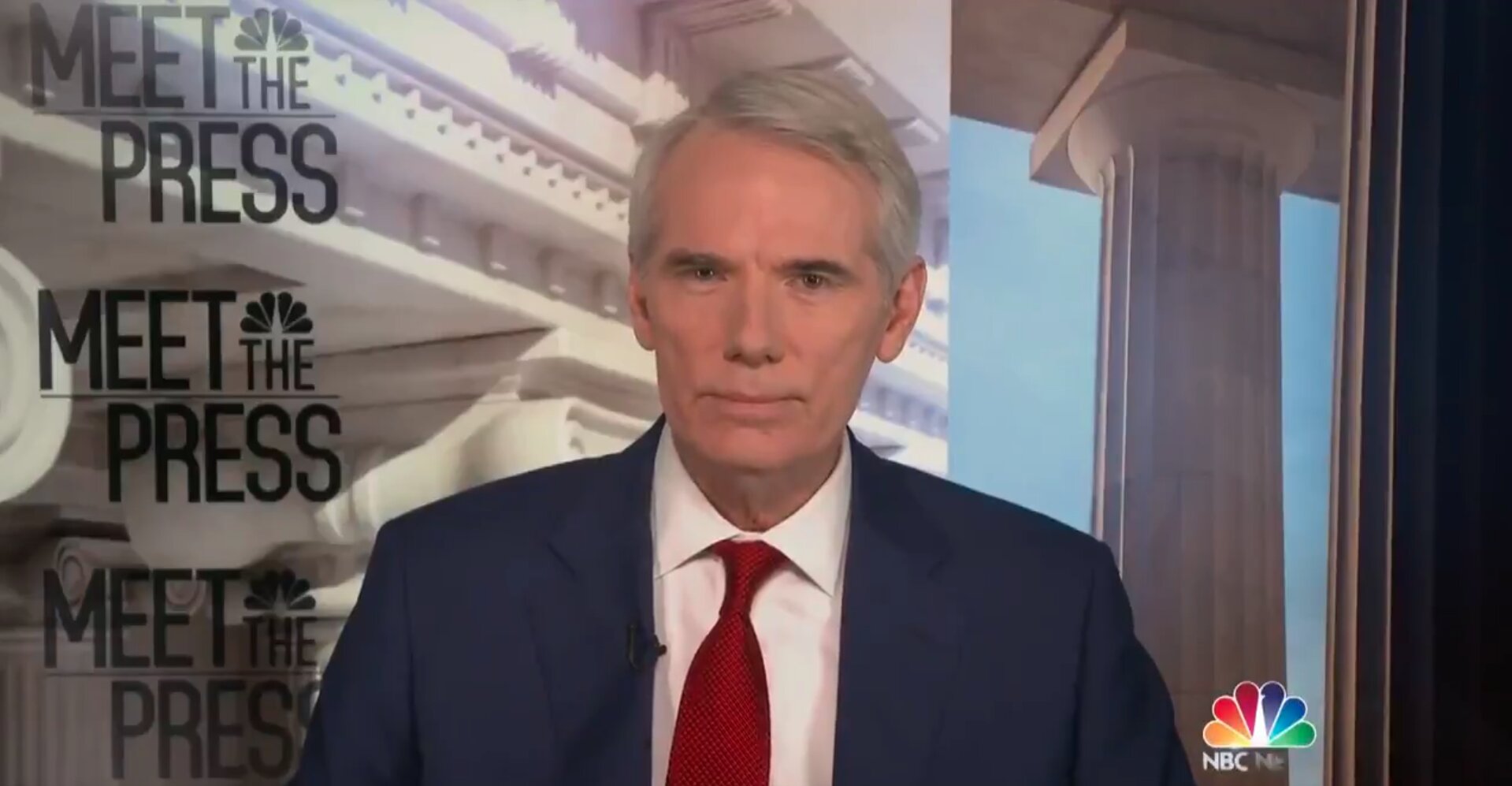
Sen. Rob Portman (R-Ohio) says a group of Republican senators who worked to craft a bipartisan infrastructure deal are “committed” to it even if Senate Minority Leader Mitch McConnell (R-Ky.) opposes it.
During an interview on NBC’s “Meet The Press” on Sunday, Portman was asked by host Chuck Todd “how committed” the group of 11 Republican senators is to the package.
“I think we’re absolutely committed to it, and I think there’s a number of others as well on both sides of the aisle,” Portman responded.
He continued, “Last week, I heard from a lot of my colleagues saying, ‘I just need to look at one other issue, you know, can you do this, can you do that?’ But there’s a lot of interest in having a bipartisan proposal. And Chuck, this is growing the vote from the middle out.”
Watch the video below:
Portman went on to cite lawmakers’ success in passing a COVID-19 relief package at the end of 2020, “You recall that at the end of last year we did the same thing with regard to a COVID-19 package, which helped to get that final package done at the end of the year after, really, almost a year of no activity on something that was really necessary. This is the same thing. Everybody wants to do infrastructure.”
A bipartisan group of 20 senators announced last week that they had reached a deal on an infrastructure package.
Portman along with 10 other Republican Sens. Richard Burr (N.C.), Bill Cassidy (La.), Susan Collins (Maine), Lindsey Graham (S.C.), Lisa Murkowski (Alaska), Mitt Romney (Utah), Mike Rounds (S.D.), Thom Tillis (N.C.), Todd Young (Ind.), and Jerry Moran (Kan.) worked with Democrats to craft the package.