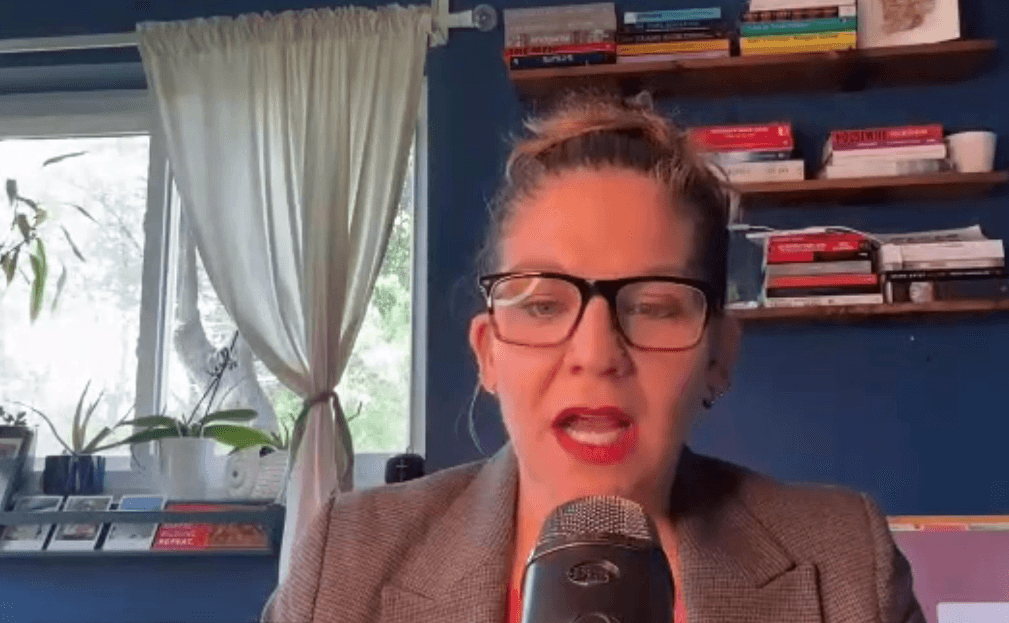
Dr. Karla Solheim wasn’t some outsider standing across the street throwing rocks at the medical establishment. She was inside it. A board-certified obstetrician-gynecologist. Chair of the American College of Obstetricians and Gynecologists’ Iowa chapter. A physician who had personally performed transition-related hysterectomies.
She also describes herself as a lesbian, a mother and a lifelong Democrat.
Then she began questioning the evidence.
According to Solheim, ACOG eventually gave her a remarkably straightforward choice: stop publicly criticizing the organization’s reliance on guidelines from the World Professional Association for Transgender Health, or resign her leadership position.
She resigned.
“The choice was easy,” Solheim wrote, because she “did not intend to silence myself on an issue about which I care so much.”
But how did she get there? Because this wasn’t an overnight conversion.
Solheim began working periodically at a UnityPoint LGBTQ+ clinic in Waterloo, Iowa, in 2019. She expected considerable numbers of gay and lesbian patients. Instead, she said, patient after patient was seeking medical treatment related to gender dysphoria.
At first, she participated without much hesitation.
That included performing hysterectomies on patients transitioning from female to male. Solheim reasoned that the procedure could make sense for patients taking testosterone or who wanted to eliminate menstruation.
Then came a patient in 2023 who changed the way she looked at the whole thing.
The patient, according to Solheim, was a healthy woman in her early 20s who wanted a hysterectomy but wasn’t planning a complete medical transition.
And Solheim had a question she couldn’t shake.
Why would removing the healthy uterus of a young patient ordinarily require a medical justification, while gender identity could make the same operation medically appropriate?
“Why was it that for a healthy young person it would be nearly impossible to get their uterus removed without an underlying medical issue,” she wrote, “but if one were simply to identify as a man with no other plans to transition — or even just say they are nonbinary — the surgery is freely available?”
So she asked other doctors.
According to Solheim, some physicians told her the procedure was medically necessary and pointed toward ACOG and WPATH guidance. Others called her “ignorant” and a “transphobe.”
But she says nobody gave her the evidence-based explanation she was looking for.
She declined to perform the operation.
And here’s where the story takes another turn.
Solheim subsequently treated a detransitioner — a woman who had taken testosterone while transitioning toward a male identity, then stopped taking it and again identified as a woman.
Solheim said she had understood detransition to be exceedingly rare. Encountering such a patient in her own relatively small community pushed her to investigate the medical literature more closely.
She expected to find a deep body of long-term research supporting the treatments she had been providing.
She says she didn’t.
“I couldn’t find a single good long-term, longitudinal study on the health outcomes of transgender patients who underwent treatments including hormone replacement therapy and surgery,” Solheim wrote.
She began reading investigations of Britain’s Tavistock gender service and later watched a 2025 Federal Trade Commission hearing scrutinizing transgender medicine. Solheim ultimately reached severe conclusions about the quality and integrity of some of the research supporting existing practices.
Those conclusions are Solheim’s and remain disputed within a broader medical debate. But that’s precisely where her conflict with ACOG becomes important.
She wasn’t quietly wondering anymore.
In December 2025, Solheim published an essay titled “Physicians Must Demand Answers from WPATH.”
Two months later, she says ACOG Vice President Rachel Pittman contacted her.
According to Solheim, Pittman wrote that the essay “raises concerns” because of her “public expression of dissatisfaction with ACOG’s inclusion of WPATH in its clinical guidance.”
Then came the March meeting.
Solheim says she was told to resign as Iowa chair or stop publicly criticizing ACOG’s endorsement of WPATH guidance.
Not debate it internally. Not publish a rebuttal alongside ACOG’s response.
Stop criticizing it publicly or give up the position.
Solheim chose the position.
And the timing was almost surreal.
She says that on the very day she was pushed out, ACOG gave its Iowa section a State Legislative Advocacy Award for work she had done recruiting and retaining OB-GYNs. Just a week earlier, she says, the organization had recognized her with a service award and invited her to speak before a national audience in Washington.
So this wasn’t somebody whose professional work had supposedly become worthless overnight.
Her account presents something much more specific: ACOG valued her work while simultaneously objecting to her public challenge to its clinical guidance.
Solheim believes that exposes a serious problem with medical organizations’ reliance on professional consensus.
“Whenever WPATH’s proponents are asked to defend their guidelines, they don’t cite the weak scientific evidence,” she wrote. “Their strongest argument is always that all major medical associations in the United States have adopted them.”
And there, ladies and gentlemen, is the circularity she’s challenging.
An organization points to consensus as evidence that its position is sound. Then one of its own leaders questions the underlying evidence supporting that consensus and, according to her account, is told she cannot continue publicly doing so while remaining in leadership.
Whether Solheim is ultimately right about every scientific question is a separate matter. Medical evidence can and should be argued over using data, methodology, outcomes and competing research.
But that’s exactly her complaint.
She wanted that argument.
She says ACOG gave her an ultimatum instead.