



Streamer Makes Bold Claim As Muslims Celebrates In The Streets Of New York
A popular Muslim streamer drew attention online Friday after celebrating Egypt’s victory over Australia in the 2026 FIFA World Cup with comments that quickly spread across social media. The streamer is Nicolas Kenn De Balinthazy, a 27-year-old New York City native better known online as “Sneako.” In footage posted after the match, Balinthazy was seen […]
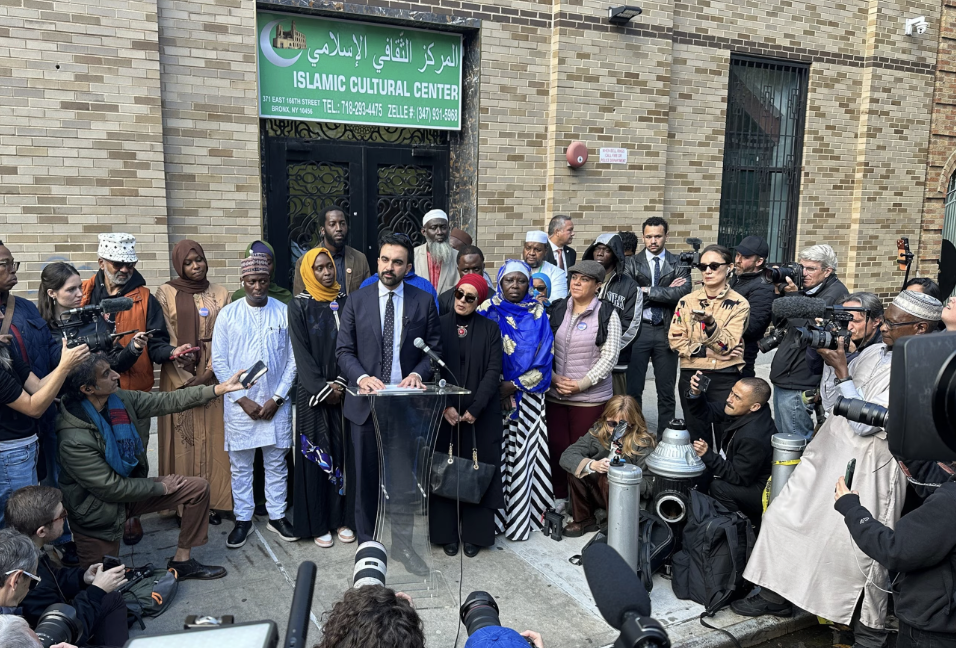
A popular Muslim streamer drew attention online Friday after celebrating Egypt’s victory over Australia in the 2026 FIFA World Cup with comments that quickly spread across social media.
The streamer is Nicolas Kenn De Balinthazy, a 27-year-old New York City native better known online as “Sneako.” In footage posted after the match, Balinthazy was seen celebrating in the streets with a group of fans. During the celebration, he told viewers, “This is the Islamic Republic of New Yorkistan.”
He continued, “Islam will be in every household, Inshallah. The whole world is Muslim. Welcome to Mamdani’s New York,” referring to New York City Democratic Mayor Zohran Mamdani, the first Muslim to hold that office.
Balinthazy added, “You see this city? You see how it looks? Inshallah, your city looks just like this too.”
Additional footage posted to X by Lawstreet Journal showed Balinthazy shouting, “Allahu Akbar,” an Arabic phrase meaning “God is greatest.”
The video was predictably divisive. Some viewers saw it as little more than loud street celebration mixed with online provocation. Others heard something more serious: a political and religious message delivered in the language of conquest, not coexistence.
That distinction matters.
America protects freedom of religion, freedom of speech, and peaceful public expression. Those protections apply to Muslims, Christians, Jews, atheists, and everyone else. But those same freedoms also give the public the right to scrutinize rhetoric that sounds triumphalist, exclusionary, or hostile to the country’s pluralistic foundations.
Balinthazy’s comments were not made in a vacuum. New York is already a city where debates over immigration, religion, identity, and political power are deeply charged. When a public figure declares that “the whole world is Muslim” or frames an American city as an “Islamic Republic,” even jokingly or theatrically, many people will hear it as something more than celebration.