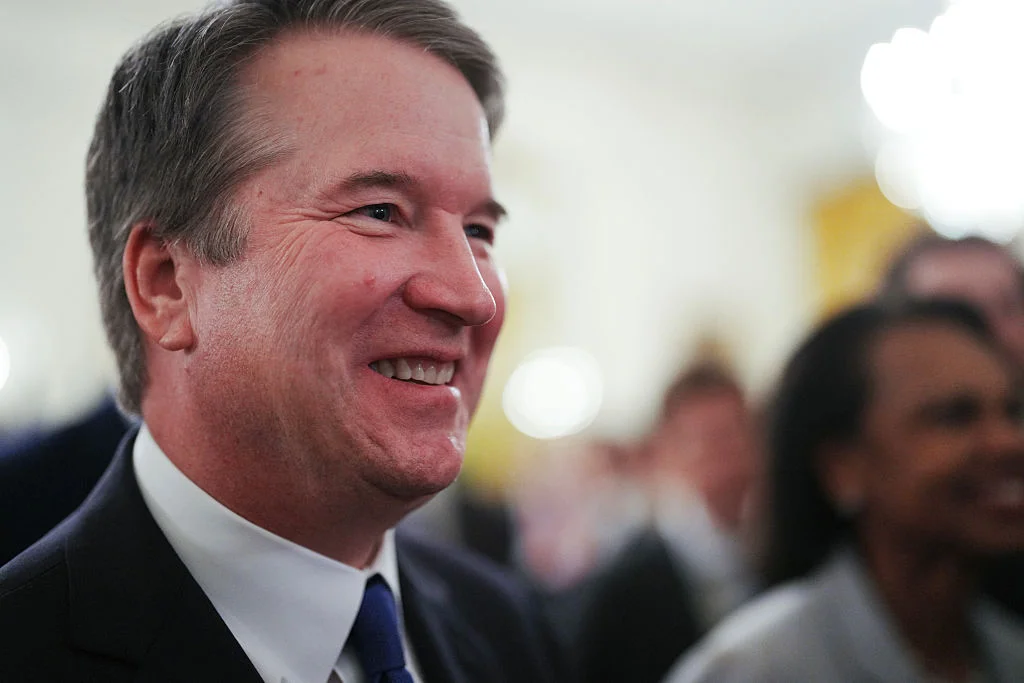



President Donald Trump's effort to limit Birthright Citizenship through executive order was rejected by the Supreme Court, but a concurring opinion from one of his own appointees is drawing attention for outlining another possible path.
According to Fox News, Justice Brett Kavanaugh joined the court's 6-3 majority in concluding that Executive Order 14160 could not take effect. At the same time, he argued that Congress—not the president—could attempt to change federal law governing Birthright Citizenship.
Kavanaugh wrote that Congress incorporated the Supreme Court's 1898 ruling in "United States v. Wong Kim Ark" into federal law when lawmakers adopted citizenship language in 1940 and later included it in the Immigration and Nationality Act of 1952.
Because of that, Kavanaugh said the president could not use an executive order to alter a law passed by Congress.
He suggested lawmakers could instead amend the statute or pass new legislation creating exceptions for children born to parents who are in the United States illegally or temporarily.
"Congress could — consistent with the Fourteenth Amendment—amend §1401(a) or otherwise enact new legislation establishing exceptions to Birthright Citizenship for children born to foreign citizens unlawfully or temporarily in the country," Kavanaugh wrote.
He argued that modern immigration patterns and international travel have created circumstances that differ from those considered when the 14th Amendment was adopted.
Kavanaugh compared those categories to existing exceptions recognized for children of foreign diplomats and enemy forces occupying U.S. territory.
Although the majority did not adopt Kavanaugh's constitutional reasoning, several Republicans quickly pointed to Congress as the next avenue for pursuing changes.
House Speaker Mike Johnson said Birthright Citizenship has been "abused" and suggested that a constitutional amendment would likely be required.
President Trump, however, argued Congress could act through legislation rather than pursue a constitutional amendment.
"No long and unwieldy Constitutional Amendment is necessary!" Trump wrote on Truth Social. "Congress should start TODAY to work on ending expensive and unfair to our Country, Birthright Citizenship."
Republican lawmakers also highlighted existing proposals, including Sen. Tom Cotton's Constitutional Citizenship Clarification Act and legislation from Sens. John Cornyn and Rick Scott targeting birth tourism.
The Justice Department indicated it will focus on enforcing existing laws by cracking down on alleged birth tourism involving visa fraud instead of attempting to implement Executive Order 14160.
Legal experts caution that any legislation restricting Birthright Citizenship would almost certainly face constitutional challenges.
The court's 5-4 ruling on the constitutional issue concluded that the Citizenship Clause protects Birthright Citizenship, leaving a constitutional amendment as the clearest path to changing that interpretation.