



Supreme Court Justice Issues Warning
Supreme Court Justice Samuel Alito warned Monday that the Court’s decision on mail-in ballots could create new openings for voter fraud and deepen public mistrust in American elections. In a 5-4 ruling written by Justice Amy Coney Barrett, who was appointed by President Donald Trump, the Supreme Court held that federal law permits states to […]
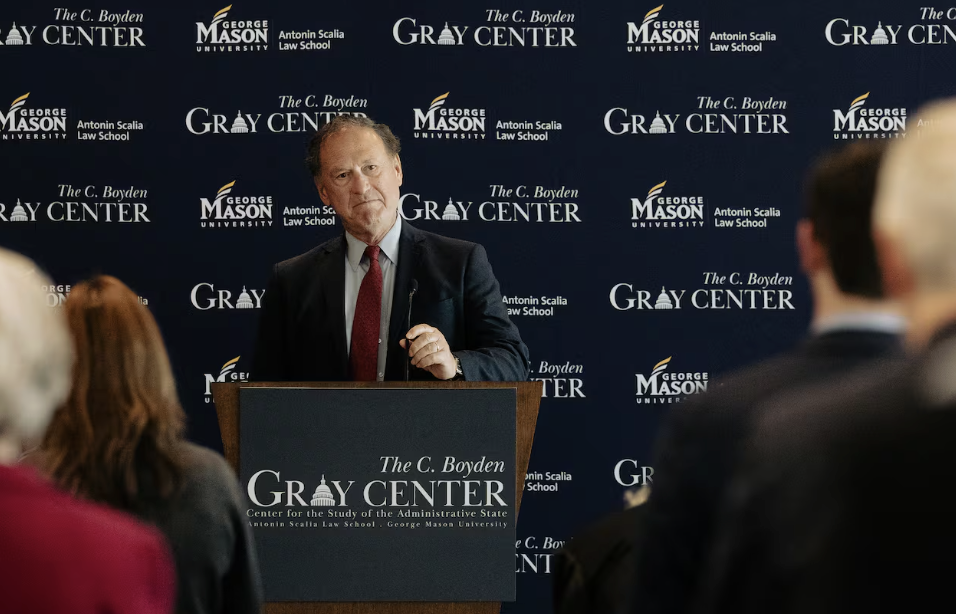
Supreme Court Justice Samuel Alito warned Monday that the Court’s decision on mail-in ballots could create new openings for voter fraud and deepen public mistrust in American elections.
In a 5-4 ruling written by Justice Amy Coney Barrett, who was appointed by President Donald Trump, the Supreme Court held that federal law permits states to count non-military mail-in ballots that arrive after Election Day. Alito dissented from the ruling, arguing that the decision leaves unresolved questions that could affect how states handle absentee and mail-in voting.
The decision, Alito wrote, “leaves open opportunities for voter fraud that may further undermine Americans’ faith in the integrity of this country’s elections.”
Alito pointed to past concerns about absentee voting as part of his dissent. He cited a 2005 commission led by former President Jimmy Carter and former Secretary of State James Baker, which described absentee ballots as “the largest source of potential voter fraud” in American elections.
“Diverse sources have recognized that mail-in ballots increase the potential for fraud,” Alito wrote.
He also referenced a 2008 case in which the late Justice John Paul Stevens acknowledged that the risk of fraud involving absentee ballots was “real” and could potentially affect the outcome of a close race.
Alito argued that the majority opinion creates uncertainty for states trying to follow federal election law. In his view, the ruling does not clearly answer when a voter’s choice becomes final if a ballot is mailed before Election Day but received afterward.
“Given that fact, is a voter’s ‘selection’ truly ‘final’ when he or she puts a ballot in the mailbox?” Alito wrote. “The majority dodges this question, offering the passing suggestion that Mississippi’s statute would be preempted only insofar as it allows voters to recall their ballots.”
He continued by raising several questions about how the ruling might be applied in future cases, including whether state law must explicitly ban voters from recalling mailed ballots and whether mail-recall policies from the Postal Service or private carriers could conflict with federal election statutes.