The Quiet Battle Inside Congress Over A Defense Industry Cash Cow
A battle is quietly being waged inside the halls of Congress as some lawmakers push for the U.S. military to own the information it needs to maintain its equipment in an effort to save taxpayers billions. Republican…

A battle is quietly being waged inside the halls of Congress as some lawmakers push for the U.S. military to own the information it needs to maintain its equipment in an effort to save taxpayers billions.
Republican North Carolina Rep. Pat Harrigan and Democratic New Hampshire Rep. Maggie Goodlander introduced the amendment to the 2027 National Defense Authorization Act (NDAA), which Republican House Armed Services Committee Chairman Mike Rogers and several other Republicans opposed. The current lack of the right to repair could be costing U.S. taxpayers “tens of billions annually,” according to the Project On Government Oversight.
Some defense contractors do not allow the U.S. military to know how the equipment that it purchased with taxpayer dollars works, causing increased costs and delays in maintenance and repairs.
“Without the ability to repair its own equipment without action by contractors that control key data, there is an unnecessary extra step in the repair process,” William Hartung, a senior research fellow at the Quincy Institute for Responsible Statecraft, told the Daily Caller News Foundation. “Contractors have the government over a barrel and have the ability to charge exorbitant prices for repair work.”
The amendment was incorporated into the NDAA by voice vote during the House Armed Services Committee markup on June 4; however, it still must pass the full House and Senate and be signed by the president before it can become law.
Language that would provide the right to repair for the U.S. military was included in the 2026 NDAA but did not make the final document after pushback from the defense industry, Federal News Network reported.
“The Army is advocating for the ‘right to repair’ policy to reduce delays and costs associated with operational readiness,” U.S. Army Spokesperson Ellen Lovett told the DCNF.
The branch is “leaning forward to avoid right to repair issues in the future,” Lovett said. “For example, we’re identifying right to repair constraints in current contracts and ensuring we have contract language to address repair needs going forward; establishing a central repository to track IP; and updating internal policies and processes.”
Former Navy Secretary John Phelan told senators that sailors should be able to perform maintenance on their own equipment rather than waiting for contractors during a Senate Armed Services Committee hearing on June 10, 2025. He cited one instance where the ovens broke on a U.S. aircraft carrier, and the sailors had to wait for contractors to complete the repairs.
“I went on the carrier; they had eight ovens — this is a ship that serves 15,300 meals a day,” Phelan said. “Only two were working. Six were out .”
“For decades, our service members have been forced to rely on a deeply broken system, a status quo that has made repairing equipment on the battlefield impossible,” Goodlander said during the committee markup. “It has threatened our readiness. It has cost American taxpayers billions of dollars, and for this reason, we have seen every service secretary that has come before this committee support our amendment and our effort to try to codify the right to repair and to fix this broken status quo system.”
Rogers argued the amendment could scare away defense contractors, and thereby hinder the government’s access to “cutting-edge” technologies.
“This amendment would force companies to choose between protecting their IP and doing so with the Department of Defense. Many will choose to protect their IP,” Rogers said during the markup hearing. “The result will be fewer innovative companies in the defense market, and thus fewer cutting-edge capabilities available to the warfighter.”
“Data rights challenges can drive up sustainment costs and lengthen repair timeframes by creating vendor lock where programs are forced to rely on a single OEM or supplier for their sustainment needs, often through sole source contracts,” Shelby S. Oakley, the director of Contracting and National Security Acquisitions at the Government Accountability Office, told the DCNF. “We have found that issues with technical data and data rights are pervasive among DOD systems.”
Harrigan and Rogers could not provide comments in time for publication.
Monopoly!
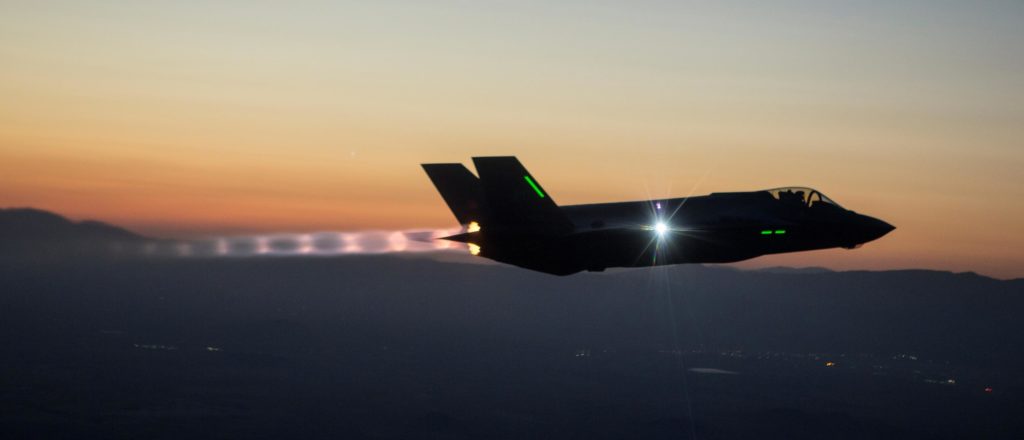
These “exorbitant prices” for repairs can be seen in platforms like Lockheed Martin’s F-35 Joint Strike Fighter.
“The F-35 repair software is controlled by the prime contractor, Lockheed Martin,” Hartung told the DCNF. “The plane has had many, many delays, and is still only ready for combat a little over half the time, with the rest of the time spent awaiting repairs. Right to repair could fix much of this.”
The Pentagon paid Lockheed Martin $1.7 billion in June 2024 for the F-35 program even though the fleet did not have the minimum percentage of airworthy units, according to the Department of Defense Office of Inspector General.
Lockheed Martin did not respond to a request for comment, and the Pentagon declined to comment on the amendment.
The right to repair affected the U.S. Army when it was unable to acquire the data needed to maintain its Stryker armored fighting vehicles, which eventually forced it to go to General Dynamics Land Systems, according to the GAO report.
“The program has tried unsuccessfully over time to acquire unlimited data rights for the base vehicle,” according to the GAO report. “As a result, in 2024, the Army established a technical support contract with the prime contractor for the base vehicle on a sole source basis at a cost of about $534 million over 5 years.”
General Dynamics declined to comment.
The NDAA is an annual defense policy bill that authorizes national defense programs and sets guidelines for how defense-related funds may be used, but it does not itself provide the money. Congress must still pass separate appropriations legislation to actually fund the programs authorized in the NDAA.
The 2027 NDAA authorizes nearly $2 billion for defense-related programs involving Iraq, Syria’s formerly al-Qaeda-linked regime, NATO and the Israeli government.
The Pentagon is also pushing relaxed restrictions on how soon certain former senior officials and civilian employees are allowed to lobby for defense manufacturers.
As global military tensions rise from multiple regional conflicts, so too do profits in the defense industry. Global military spending reached $2.887 trillion in 2025 in the eleventh consecutive year of growth, according to the Stockholm International Peace Research Institute.
“I offered this amendment for a very straightforward reason: to vindicate a principle that is both common sense and deeply American — that our service members should have the tools and the ability to fix and maintain the equipment they rely on to accomplish their missions,” Goodlander said in a statement provided to the DCNF. “For decades, our military has been forced to operate under a broken system that makes even routine repairs unnecessarily difficult, threatens readiness, and costs taxpayers billions of dollars. This amendment cuts red tape, closes loopholes, and helps ensure our warfighters can do the jobs we’ve asked them to do.”
When the DOW doesn’t have the necessary data on the systems that it operates, it must pander to the defense contractors that can then become the sole providers of the services.
“In many cases, the software or data in question has been developed under U.S. government contracts, and should not be proprietary information of the contractors to begin with,” Hartung told the DCNF. “The current balance is far too skewed towards contractors and away from the government and the taxpayer. Goodlander-Harrigan would help fix that.”
All content created by the Daily Caller News Foundation, an independent and nonpartisan newswire service, is available without charge to any legitimate news publisher that can provide a large audience. All republished articles must include our logo, our reporter’s byline and their DCNF affiliation. For any questions about our guidelines or partnering with us, please contact [email protected].