
President Donald Trump is planning ahead to when the U.S. has “finished off” Iran.
The focus of Wednesday’s Truth Social post was what to do with the Strait of Hormuz.
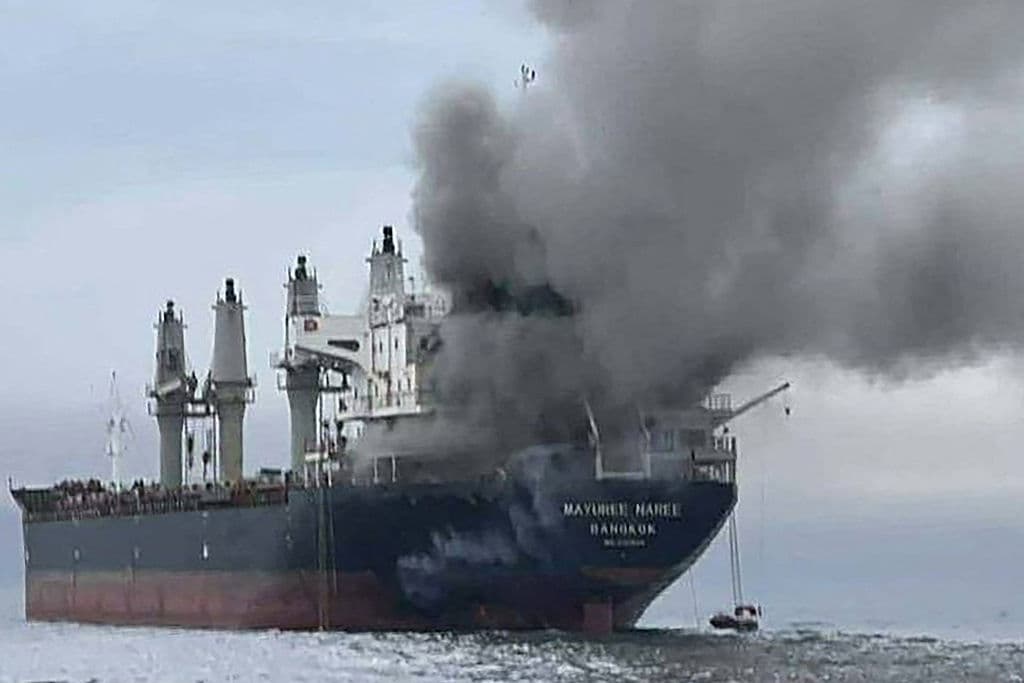
The Strait of Hormuz, one of the most critical maritime chokepoints in global energy markets, has been closed, a move that has led the U.S. to call for international help.
“I wonder what would happen if we ‘finished off’ what’s left of the Iranian Terror State, and let the Countries that use it, we don’t, be responsible for the so-called ‘Strait?’ That would get some of our non-responsive ‘Allies’ in gear, and fast!!!” Trump wrote.
He added another post, writing, “Remember, for all of those absolute ‘fools’ out there, Iran is considered, by everyone, to be the NUMBER ONE STATE SPONSOR OF TERROR. We are rapidly putting them out of business!”
Trump has grown frustrated with NATO members who have resisted his appeals to help guard the shipping route.
The president has pressed U.S. partners the past week to take a more active role in reopening the waterway.
He said many of the countries most affected by the closure depend heavily on the route for energy shipments.
Trump’s comments come as the strategic corridor has effectively been shut down by Iranian actions, including the use of mines, drones, and ships.
The disruption has halted roughly 27% of global maritime energy traffic, sending some oil futures soaring past $100 per barrel.
The situation has drawn sharp criticism from President Donald Trump, who has publicly blasted European allies, including France and the United Kingdom, for declining to assist in reopening the vital passage.
Military officials say the campaign is far from over.
The U..S will “continue to rapidly deplete Iran’s ability to threaten freedom of navigation in and around the Strait of Hormuz,” said Adm. Brad Cooper, commander of CENTCOM.
“Our progress remains steady, and we remain vigilant against the enemy,” Cooper continued.
Nonetheless, as the conflict intensifies, the fate of one of the world’s most important shipping lanes remains largely uncertain.