
President Donald Trump teased bringing the long-stalled Keystone XL pipeline back to life Tuesday as part of a preliminary trade agreement with Canada that prompted him to delay the planned 50% tariffs on Canadian goods.
Trump announced the three-day tariff pause hours before the duties were scheduled to take effect, saying the U.S. and Canada had reached a deal pending final documents, while suggesting the agreement could include resurrecting the Keystone XL pipeline. The White House has not released details of the agreement, while the Office of the U.S. Trade Representative said the deal would include broader market access for American goods and economic security commitments, POLITICO reported.
The tariffs would have slapped a 50% duty on roughly $20 billion worth of Canadian goods, including hockey equipment, alcohol, dairy products and other consumer goods. The tariffs were scheduled to take effect Wednesday before Trump delayed them until the end of Aug. 21 as negotiators work to finalize the agreement. The tariffs would have affected about $20 billion in Canadian goods, Reuters reported
But while the tariff fight centers on consumer goods, Trump’s comments about Keystone XL could have a much broader impact on Americans by opening the door to substantially more Canadian crude flowing into U.S. refineries.
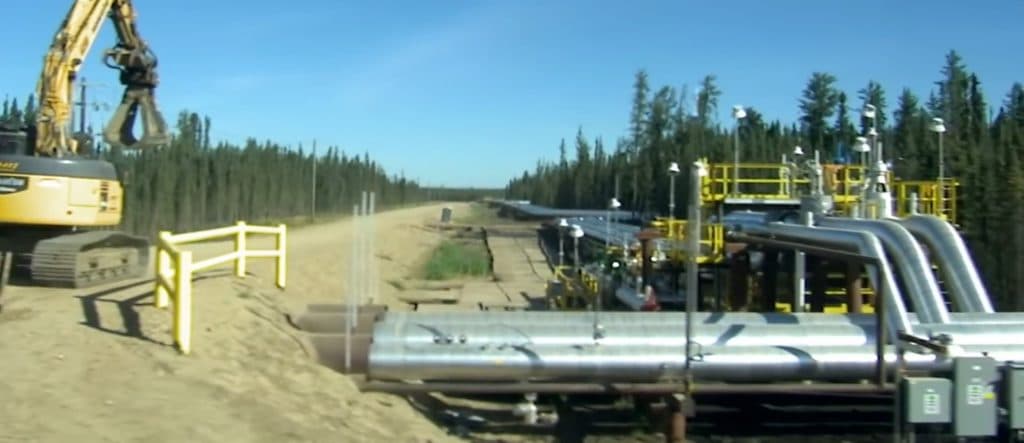
The original Keystone XL project was killed after then-President Joe Biden revoked its presidential permit in 2021, but a separate pipeline system that could revive much of the broader project is already moving through development. South Bow Corp.’s proposed Prairie Connector would run from Hardisty, Alberta, to the Canada-U.S. border, where it would connect with Bridger Pipeline’s U.S. facilities. South Bow’s project announcement says the proposed project would include approximately 380 kilometers of new 36-inch pipeline and utilize roughly 150 kilometers of previously installed and preserved pipeline.
Trump gave the U.S. portion of the project a major boost in April when he issued a presidential permit for Bridger pipeline, authorizing the company to construct, connect, operate and maintain pipeline facilities at the Canadian border in Montana. The permit covers the transportation of crude oil and petroleum products, including jet fuel, gasoline and diesel.
South Bow announced in May that Prairie Connector had secured 20-year binding commitments for firm transportation service from Hardisty to U.S. delivery points, allowing the company to advance the project toward a final investment decision targeted for mid-2027. The company’s May announcement said the project will connect Alberta crude with U.S. delivery points while advancing toward a targeted mid-2027 final investment decision.
The connected system is designed to initially transport roughly 550,000 barrels of crude oil per day, according to Montana’s Department of Environmental Quality, with additional expansion potential. The Bridger portion would run approximately 647 miles from the Canadian border in Phillips County, Montana, to an existing terminal near Guernsey, Wyoming.
More pipeline capacity would allow Canadian crude to reach U.S. refiners more reliably, potentially putting downward pressure on gasoline, diesel and jet fuel prices while giving refiners greater access to a large, nearby source of oil.
The added supply would not guarantee cheaper prices at the pump, since fuel costs are also influenced by global crude prices, refining capacity, transportation costs and taxes. But Canada is already the largest source of U.S. crude imports, making additional Canadian pipeline capacity significant for the U.S. refining system.
The project still faces regulatory hurdles. Montana regulators revoked a waiver in July that allowed Bridger Pipeline to omit certain environmental and financial information from its application, requiring the company to submit additional information before the state’s permitting process could move forward. Montana regulators revoked the waiver following a legal challenge, Pipeline and Gas Journal reported.
South Bow also still needs to acquire remaining permits, secure government assurances regarding permit durability, finalize project costs, engage with communities, landowners and Indigenous groups and secure financing before making its final investment decision. The company is targeting that decision for mid-2027. South Bow’s filing outlines those remaining pre-FID requirements.
All content created by the Daily Caller News Foundation, an independent and nonpartisan newswire service, is available without charge to any legitimate news publisher that can provide a large audience. All republished articles must include our logo, our reporter’s byline and their DCNF affiliation. For any questions about our guidelines or partnering with us, please contact [email protected].