
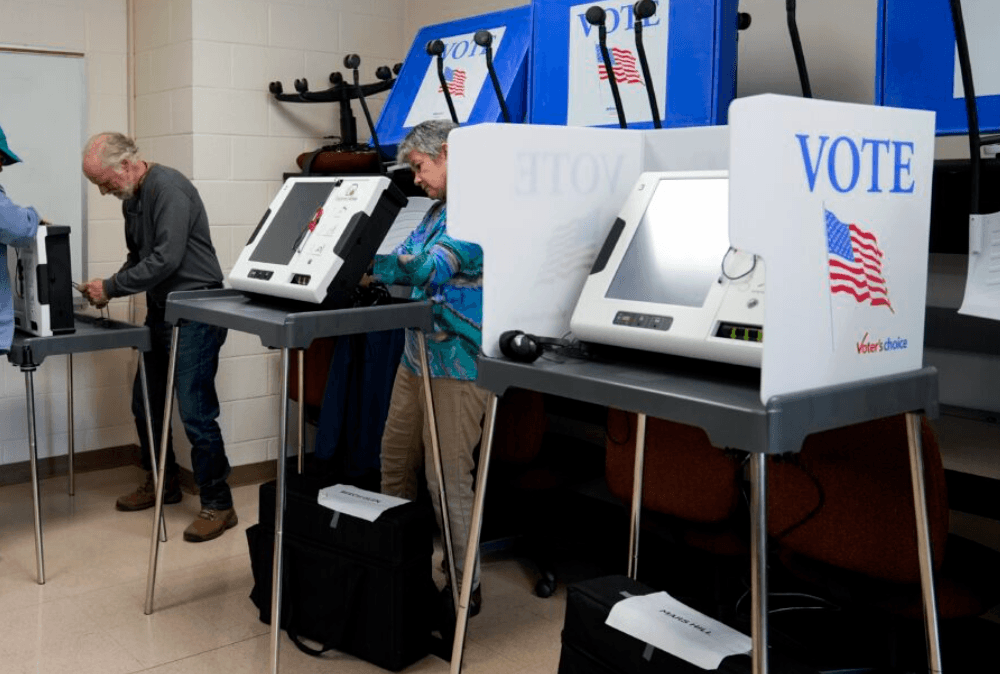
According to Just the News, a hacker was able to obtain roughly 633,000 voter registration files from Maricopa County, Arizona’s largest county and home to Phoenix. Among those records were files belonging to about 930 people whose information was considered especially sensitive, including domestic violence victims, judges, and law enforcement officers.
Despite the scale of the breach, no criminal charges were ultimately filed.
FBI Director Kash Patel said in a letter released this week that the bureau spent substantial resources investigating the incident and identifying the person responsible. According to the letter, the findings were presented to the U.S. Attorney’s Office for the District of Arizona, the Arizona Attorney General’s Office, the Maricopa County Attorney’s Office, and the Pinal County Attorney’s Office.
All declined to prosecute.
That fact alone is enough to raise questions, particularly given how serious the FBI apparently considered the intrusion.
At the same time, it is important to separate what the hacker actually accessed from what he did not. Possessing voter registration records would not, by itself, allow someone to alter ballots, change vote totals, or simply cast fraudulent votes. The documents released so far do not establish that the 2020 election result in Arizona was manipulated.
But that does not make the breach meaningless.
According to a newly declassified FBI interview from Nov. 5, 2020, the suspect described himself as a “hacker or tinkerer” and said he discovered a weakness in the Maricopa County Recorder’s website after noticing that his voter identification number appeared in the URL connected to his registration information.
He then developed a PowerShell script that could automatically access and extract voter registration data.
The first attempt was relatively small. The suspect told investigators that he collected somewhere between 100 and 1,000 records during what he called a “trial run.” After modifying the script, however, he began extracting substantially more information.
According to the FBI document, he continued running the program until around Nov. 2, 2020, when Maricopa County changed its firewall settings and blocked the activity.
The suspect said he probably would have kept going if the vulnerability had remained open.
Perhaps the most striking detail is his own estimate of how much information he collected. He told investigators that between one million and two million voter registration records had been downloaded and stored as text files on his personal hard drives, totaling roughly four gigabytes of data.
That figure is higher than the 633,000 records cited elsewhere in reporting on the case, but either number points to a substantial breach.
The suspect reportedly told the FBI that he had no intention of selling the information because much of it was publicly obtainable. He admitted that he could have purchased the records legally but wanted to get the data without paying for it.
Eventually, he said, he realized the seriousness of what he had done and became frightened.
He also told investigators that he had considered contacting the news media but decided against it because public disclosure during the election would have created a political firestorm.
That disclosure makes the way the incident was initially described even more interesting.
At the time, local election officials reportedly downplayed the breach, saying the attacker had accessed a voter registration website and suggesting that little more than voter registration numbers had been exposed.
The newly released FBI records suggest the situation was considerably broader than that early description implied.
None of this proves widespread voter fraud. It does not establish that ballots were changed, votes were manufactured, or the presidential election was stolen. Those are separate claims, and the available evidence here does not support them.
What the case does show is that serious vulnerabilities existed in election-related systems containing sensitive voter information.
That distinction matters.
Election security is not limited to protecting voting machines or counting ballots correctly. It also involves safeguarding voter databases, registration systems, personal information, and the infrastructure surrounding an election from unauthorized access.
The Arizona case is now being cited by supporters of the SAVE America Act, a Republican-backed election bill that includes a proof-of-citizenship requirement for federal voting.
Supporters say incidents like this demonstrate why stronger election safeguards are necessary. Critics of such legislation argue that additional documentation requirements can create unnecessary barriers for eligible voters.
Whatever one thinks of that broader legislative fight, the Arizona breach deserves scrutiny on its own merits.
If someone who described himself as a tinkerer could discover a weakness, write a relatively simple script, and download an enormous amount of voter data before being stopped, it is fair to ask what a sophisticated foreign intelligence service, organized cybercrime group, or better-funded actor might be able to accomplish.
That is where the “safest and most secure election” rhetoric starts to sound too absolute.
The evidence released so far does not show that the 2020 election outcome was altered. But it does show that parts of the surrounding election infrastructure were vulnerable enough to be exploited on a very large scale.