
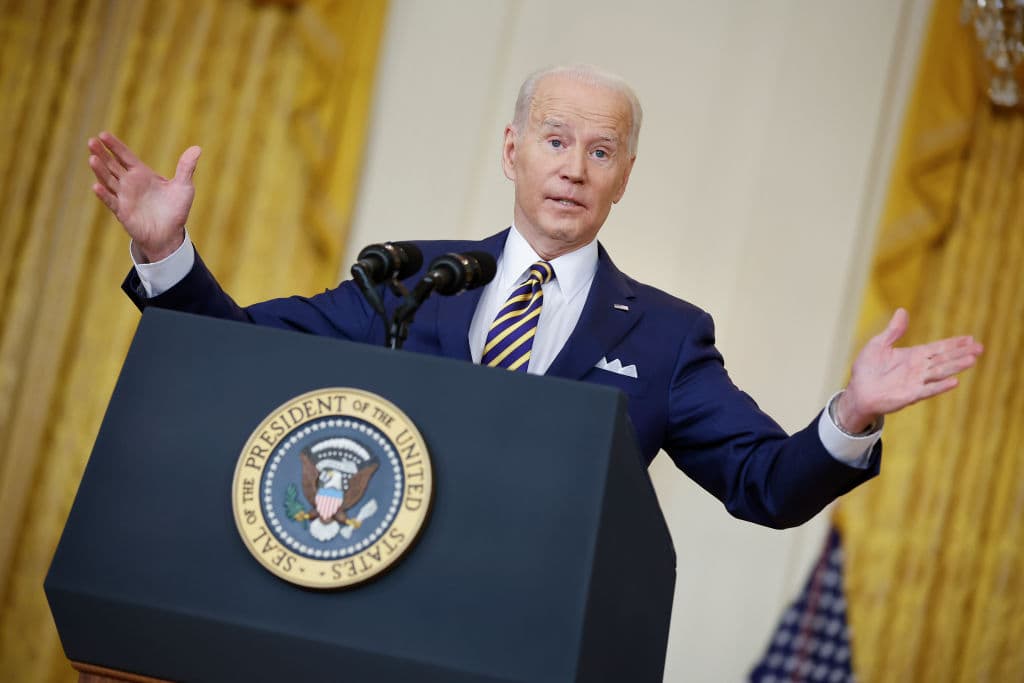
Steven Rattner, an Obama-era Treasury Department official, is urging President Joe Biden’s administration to be “more honest” about inflation.
In a guest essay published in The New York Times on Thursday, Rattner noted that during a recent interview with NBC News, Biden spoke about inflation and claimed, “The reason for the inflation is the supply chains were cut off.”
“Well, no. That’s both simplistic and misleading,” Rattner asserted. “For starters, the supply chains have not been ‘cut off,’ just stretched. And supply issues are by no means the root cause of our inflation. Blaming inflation on supply lines is like complaining about your sweater keeping you too warm after you’ve added several logs to the fireplace.”
He continued, “The bulk of our supply problems are the product of an overstimulated economy, not the cause of it. Sure, there have been some Covid-related challenges, such as health-related worker shortages in factories and among transportation workers. But most of our supply problems have been homegrown: Americans have resumed spending freely, and along the way, they have been creating shortages akin to those in a shopping mall on Black Friday.”
Additionally, Rattner pointed out that Americans are not spending as much on travel but are spending more on “goods — particularly ‘durables’ like cars, electronics and building materials for housing — for which production and distribution capacity is limited.”
“It’s a classic economic case of ‘too much money chasing too few goods,’ resulting in both higher prices and, given the extreme surge in demand, shortages. A spending increase of the magnitude we’re seeing — 25 percent on durable goods in 2021 over 2020, according to the Bureau of Economic Analysis — would have challenged the capabilities of manufacturers under the best of circumstances,” he added.
Still, Rattner admitted that inflation was not “easily foreseeable” as he said the shift in spending was not predicted, nor were the effects of the surge in people quitting their jobs which led to labor shortages.
“Note to Mr. Biden: You can’t blame clogged ports for that,” he added.
He argued that the answer to inflation is “complicated” as he said “some shortages will ebb naturally” while others “will take longer to moderate and will require robust action, particularly by the Federal Reserve.”
“For its part, the White House needs to be more honest as it rolls out initiatives. It has promised robust antitrust enforcement, but while that is long overdue, it will have no discernible impact on competition or prices for years. And the high prices of meat and hearing aids, both of which Mr. Biden has vowed to address, are not at the heart of the current problem,” Rattner added.
Finally, he said the administration should “make deficit reduction as important as its other initiatives. (Smaller deficits reduce net spending by government, thus helping offset demand by consumers.)”
“That’s how Bill Clinton pivoted after he took office in 1993: He unexpectedly raised taxes in his budget to address the pressing matter of the federal budget deficit. That decision served the country well — and ultimately also served him well,” he added.