

In Washington, both parties increasingly talk about restoring American industry, protecting working communities and pushing back against corporate greed that leaves ordinary Americans paying the price. One place where that conversation has been largely absent, however, is U.S. fisheries policy.
That needs to change.
Forage fish like menhaden, herring and mackerel are the foundation of the marine food chain. They transfer energy from plankton to the larger species that support America’s commercial and recreational fisheries. Yet despite their ecological and economic importance, industrial-scale fishing operations have driven many of these fish populations to historic lows, with devastating impacts on marine ecosystems and coastal economies.
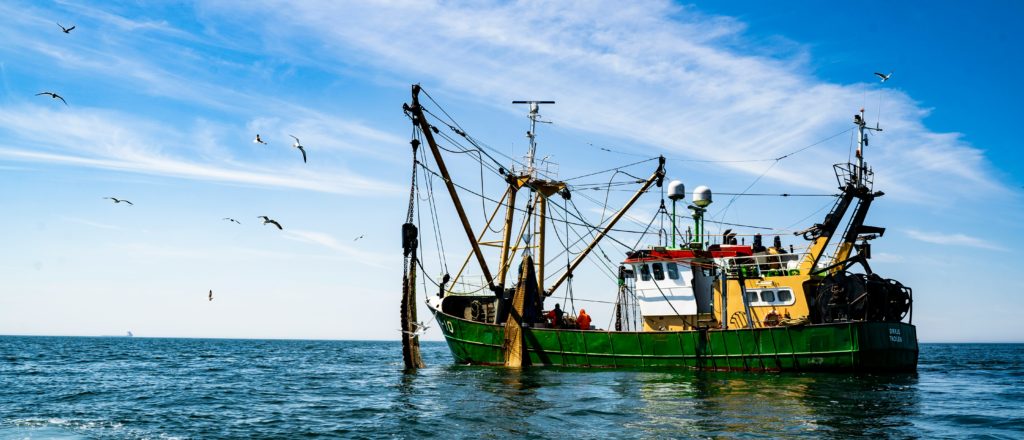
Globally, more than 30% by tonnage of all fish harvested are forage species, and nearly all are reduced into animal feed. In U.S. waters, the primary drivers are the Atlantic menhaden reduction fleet and the industrial midwater trawl fleet in the Northeast.
Americans have seen this story before.
In the 1970s, Congress created the 200-mile Exclusive Economic Zone after foreign factory fleets, particularly from the Soviet Union, devastated Atlantic herring and mackerel stocks off the East Coast. But after forcing foreign fleets out, the federal government subsidized the growth of domestic industrial fleets that ultimately repeated many of the same practices.
By 2019, Atlantic herring and mackerel fisheries had again collapsed after years of intense industrial harvesting by midwater trawlers dragging massive nets across the Northeast. The consequences spread far beyond the fishing industry itself. Maine lobstermen saw bait prices skyrocket more than fivefold. Lobster rolls that once cost $15 now regularly approach $40 in New England. Coastal businesses dependent on healthy fisheries have spent years absorbing the damage.
Meanwhile, industrial menhaden harvesting continues along the Atlantic and Gulf coasts at staggering scale. Using spotter planes, mother ships, chase boats and onshore processing facilities, reduction fleets remove more than 4 billion menhaden annually from U.S. waters.
That matters because menhaden are often called “the most important fish in the sea.” No species is more critical to striped bass, America’s most popular and economically important recreational saltwater fishery. According to the American Sportfishing Association, striped bass fishing contributes more than $13 billion annually to the U.S. economy and supports more than 100,000 jobs.
Yet striped bass populations have declined for years. Harvest limits are now at their lowest levels in decades, and fishing-dependent businesses from North Carolina to Maine continue to struggle.
The ecological warning signs are becoming impossible to ignore. In parts of the Chesapeake Bay, osprey chicks are starving in their nests because adult birds cannot find enough menhaden to feed them. Scientists have also linked industrial menhaden harvests to significant declines in striped bass abundance, particularly in the Bay, where 70% of striped bass along the East Coast are born.
Last fall, the Atlantic States Marine Fisheries Commission acknowledged that it used faulty science to set Atlantic menhaden quota in 2020, leading to significant overharvest. For five years, the quota remained too high while striped bass, osprey and local fishing communities absorbed the consequences.
But even after acknowledging the mistake, regulators largely chose to shield industrial profits rather than rebuild the forage base that sustains the broader ecosystem supporting coastal economies and American jobs.
Today, the primary beneficiary of Atlantic menhaden reduction fishing is a single foreign owned processing plant in Virginia employing fewer than 300 people. Every other Atlantic state has banned similar operations because of the damage they caused to local fisheries and coastal economies. In the Gulf, only Louisiana and Mississippi still permit industrial menhaden reduction fishing.
The economics no longer make sense.
We are sacrificing thousands of jobs tied to recreational fishing, tourism, bait shops and small commercial fisheries in order to protect a narrow industrial sector that exports much of its product overseas. Most of the fish meal and fish oil produced from U.S. forage fish is shipped abroad to feed foreign farmed salmon and shrimp that then compete directly against American seafood producers.
At a time when policymakers are debating economic resilience, food security, and the future of domestic industry, continuing to allow industrial fishing at this scale is increasingly difficult to justify.
Protecting America’s forage fish is not simply an environmental issue. It is a fisheries management issue, a coastal communities issue and an economic issue.
If Washington is serious about rebuilding American industries and protecting working waterfronts, then it is time to stop managing our oceans for the benefit of a handful of industrial operators and start managing them for the broader public good.
America’s fisheries are public resources. They should support abundant ecosystems, thriving coastal economies and future generations of fishermen — not short-term industrial extraction that leaves everyone else paying the price.
Whit Fosburgh is executive director of the Forage Fish Campaign and former longtime president and CEO of the Theodore Roosevelt Conservation Partnership.
The views and opinions expressed in this commentary are those of the author and do not reflect the official position of the Daily Caller News Foundation.
All content created by the Daily Caller News Foundation, an independent and nonpartisan newswire service, is available without charge to any legitimate news publisher that can provide a large audience. All republished articles must include our logo, our reporter’s byline and their DCNF affiliation. For any questions about our guidelines or partnering with us, please contact [email protected].