

• Latest
  • Trending
  • All
  • News
  • Business
  • Lifestyle
Fish With Legs Uses Them To ‘taste’ Seabed For Prey, New Research Reveals‌
‌

Fish With Legs Uses Them To ‘taste’ Seabed For Prey, New Research Reveals‌ ‌

September 28, 2024
Iran Fires On 3 Ships In Strait Of Hormuz

Iran Fires On 3 Ships In Strait Of Hormuz

April 22, 2026
California’s Bid To Unmask ICE Agents Goes Down In Flames

California’s Bid To Unmask ICE Agents Goes Down In Flames

April 22, 2026
Elizabeth Warren Snaps At CNBC Host Who Compared Her To Trump

Elizabeth Warren Snaps At CNBC Host Who Compared Her To Trump

April 22, 2026
Bill Clinton Surprises Cowboys Presser as Jerry Jones Nearly Falls Off Stage

Bill Clinton Surprises Cowboys Presser as Jerry Jones Nearly Falls Off Stage

April 22, 2026
Famous UFO Researcher Reportedly Dies Just A Few Years After Saying He Wasn’t Suicidal

Famous UFO Researcher Reportedly Dies Just A Few Years After Saying He Wasn’t Suicidal

April 22, 2026
Trump Cries Foul Over Virginia Redistricting Vote

Trump Cries Foul Over Virginia Redistricting Vote

April 22, 2026
Big Tech Group Jumps The Gun On Unreleased Bill, Raising Questions About Cozy Ties With Lawmakers

Big Tech Group Jumps The Gun On Unreleased Bill, Raising Questions About Cozy Ties With Lawmakers

April 22, 2026
Democratic Rep. David Scott Dies In Office

Democratic Rep. David Scott Dies In Office

April 22, 2026
‘Why Would I Do That?’ Scott Bessent Goes Off On Dem Senator For Tax Dodge Claims

‘Why Would I Do That?’ Scott Bessent Goes Off On Dem Senator For Tax Dodge Claims

April 22, 2026
Emmy-Winning Photographer Arrested in Hidden Camera Scandal

Emmy-Winning Photographer Arrested in Hidden Camera Scandal

April 22, 2026
Rep David Scott Dies At 80

Rep David Scott Dies At 80

April 22, 2026
4-Year-Old Nearly Drowns While Senate Candidate Father Sits at Florida Bar, Faces Felony Charges

4-Year-Old Nearly Drowns While Senate Candidate Father Sits at Florida Bar, Faces Felony Charges

April 22, 2026
  • Donald Trump
  • Tariffs
  • Congress
  • Faith
  • Immigration
Wednesday, April 22, 2026
  • Login
IJR
  • Politics
  • US News
  • Commentary
  • World News
  • Faith
  • Latest Polls
No Result
View All Result
IJR
No Result
View All Result
Home FaithTap

Fish With Legs Uses Them To ‘taste’ Seabed For Prey, New Research Reveals‌ ‌

by Zenger
September 28, 2024 at 3:04 pm
in FaithTap, News, Wire
241 12
0
Fish With Legs Uses Them To ‘taste’ Seabed For Prey, New Research Reveals‌
‌
492
SHARES
1.4k
VIEWS
Share on FacebookShare on Twitter


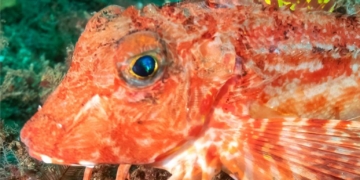
<p>According to the research, their legs are sensory organs used to detect buried prey—such as mussels and other shellfish—while digging. MIKE JONES VIA SWNS.</p>
<p>“></p><div class='code-block code-block-3' style='margin: 8px auto; text-align: center; display: block; clear: both;'>
<script async src=

A fish with legs uses them to “taste” the seabed for prey, reveals new research.

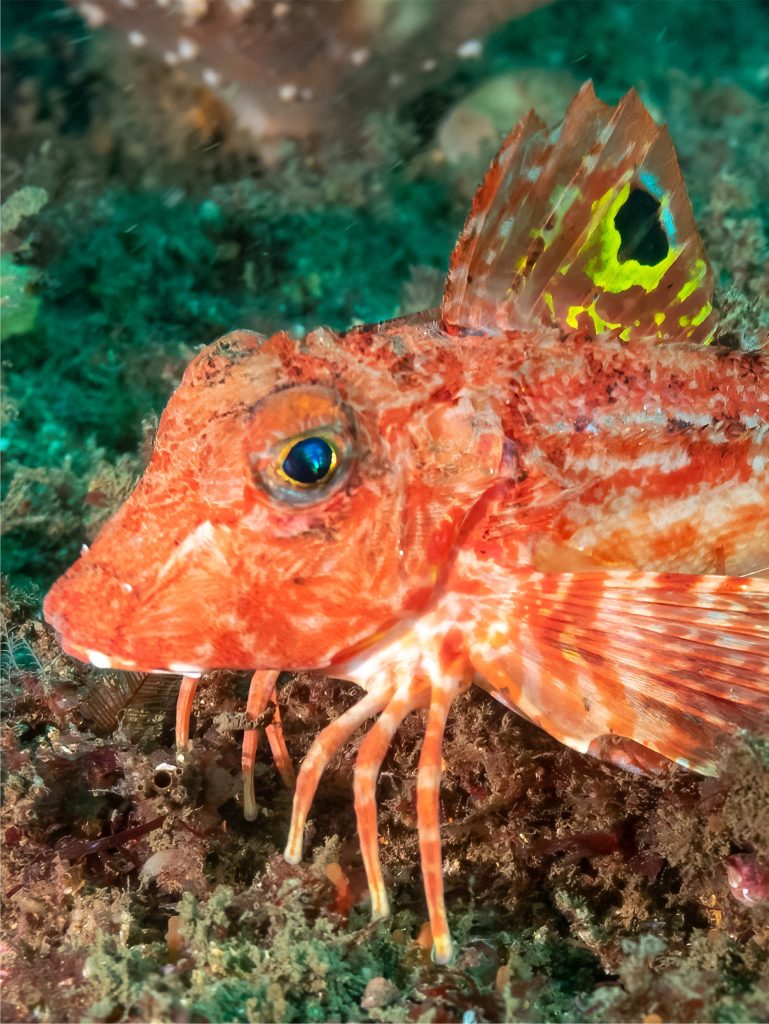
Sea robins have the body of a fish, the wings of a bird, and six legs, similar to a crab.

Two new studies have revealed that the legs aren’t just used for walking on the seafloor.

According to research published in the journal Current Biology, they are sensory organs used to detect buried prey—such as mussels and other shellfish—while digging.

American scientists explained that the legs are actually extensions of their pectoral fins, of which there are three on each side.

Professor Nicholas Bellono of Harvard University said: “This is a fish that grew legs using the same genes that contribute to the development of our limbs and then repurposed these legs to find prey using the same genes our tongues use to taste food – pretty wild.”

Bellono, Professor David Kingsley of Stanford University, and their colleagues didn’t set out to study sea robins.

They came across the unusual species during a trip to the Marine Biological Laboratory in Woods Hole, Massachusetts.

After learning that other fish follow the sea robins, apparently due to their ability to uncover buried prey, the researchers became intrigued and took some sea robins back to the lab to find out more.

They confirmed that the sea robins could indeed detect and uncover ground-up and filtered mussel extract and even single amino acids.

The team found that sea robins’ legs are covered in sensory papillae, each receiving dense innervation from touch-sensitive neurons.

The team found that sea robins’ legs are covered in sensory papillae, each receiving dense innervation from touch-sensitive neurons. ANIK GREARSON VIA SWNS.

They explained that the papillae also have taste receptors and show chemical sensitivity, which drives sea robins to dig.

Kingsley said: “We were originally struck by the legs that are shared by all sea robins and make them different from most other fish.

“We were surprised to see how much sea robins differ from each other in sensory structures found on the legs.

“The system thus displays multiple levels of evolutionary innovation from differences between sea robins and most other fish, differences between sea robin species, and differences in everything from structure and sensory organs to behavior.”

The research team confirmed that the papillae are a key evolutionary innovation that has allowed the sea robins to succeed on the seafloor in ways other species can’t.

The second study looked deeper into the genetic basis of the sea robin’s unique legs.
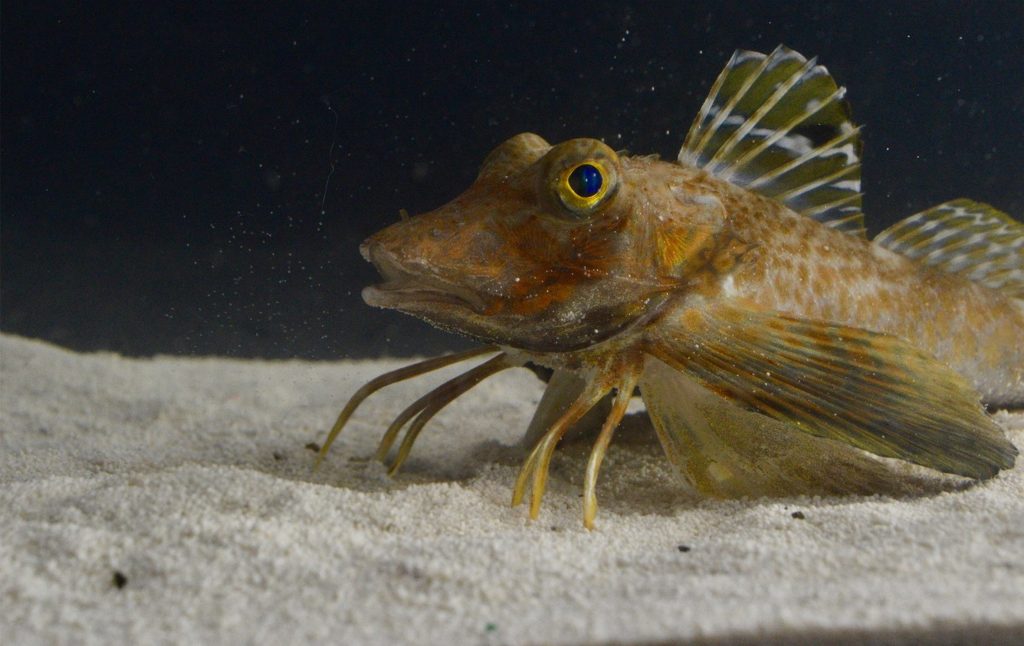
The research analyses identified an ancient and conserved transcription factor, tbx3a, as a major determinant of the sea robins’ sensory leg development. ANIK GREARSON VIA SWNS.

They used state-of-the-art genome sequencing, transcriptional profiling, and the study of hybrid species to understand the molecular and developmental basis for leg formation.

Their analyses identified an ancient and conserved transcription factor, called tbx3a, as a major determinant of the sea robins’ sensory leg development.

Genome editing confirmed that they depend on the regulatory gene to develop their legs normally.

The researchers explained that the same gene also plays a “critical” role in the formation of sea robins’ sensory papillae and their digging skills.

Kingsley added: “Although many traits look new, they are usually built from genes and modules that have existed for a long time.

“That’s how evolution works: by tinkering with old pieces to build new things.”


              Produced in association with SWNS Talker

              Tags: U.S. NewsZenger
              Share197Tweet123
              Zenger

              Zenger

              Advertisements

              Top Stories June 10th
              Top Stories June 7th
              Top Stories June 6th
              Top Stories June 3rd
              Top Stories May 30th
              Top Stories May 29th
              Top Stories May 24th
              Top Stories May 23rd
              Top Stories May 21st
              Top Stories May 17th

              Join Over 6M Subscribers

              We’re organizing an online community to elevate trusted voices on all sides so that you can be fully informed.


              IJR

                  Copyright © 2024 IJR

              Trusted Voices On All Sides

              • About Us
              • GDPR Privacy Policy
              • Terms of Service
              • Editorial Standards & Corrections Policy
              • Subscribe to IJR

              Follow Us

              Welcome Back!

              Login to your account below

              Forgotten Password?

              Retrieve your password

              Please enter your username or email address to reset your password.

              Log In
              No Result
              View All Result
              • Politics
              • US News
              • Commentary
              • World News
              • Faith
              • Latest Polls

                  Copyright © 2024 IJR

              Top Stories June 10th Top Stories June 7th Top Stories June 6th Top Stories June 3rd Top Stories May 30th Top Stories May 29th Top Stories May 24th Top Stories May 23rd Top Stories May 21st Top Stories May 17th