



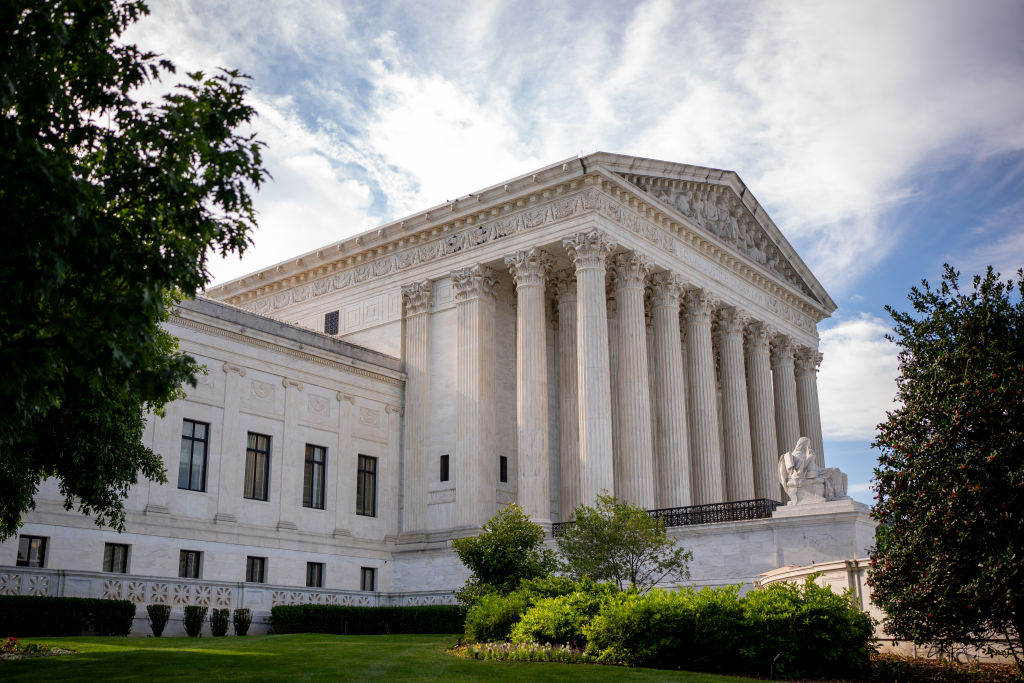
The Supreme Court announced Thursday it will hear a pivotal case this fall that could reshape the legal landscape for transgender student athletes.
The case centers on state laws in Idaho and West Virginia that restrict which school sports teams transgender students can join — laws that have sparked intense national debate, according to the Associated Press.
This decision comes just two weeks after the Court upheld a ban on gender-affirming care for minors, signaling a continued focus on transgender rights.
At issue are lower court rulings that sided with transgender athletes, including West Virginia’s Becky Pepper-Jackson and Idaho’s Lindsay Hecox.
Pepper-Jackson, who has identified as a girl since third grade and takes puberty blockers, sued West Virginia after being barred from joining her school’s girls cross country and track teams. She later qualified for the state track meet, placing third in discus and eighth in shot put.
The 4th U.S. Circuit Court of Appeals ruled in her favor, citing violations of the Equal Protection Clause and Title IX, the federal law prohibiting sex discrimination in education.
Hecox, a transgender woman who hoped to compete for Boise State University, challenged Idaho’s 2020 law — the first of its kind in the U.S. — which bans transgender women and girls from participating in women’s sports.
The American Civil Liberties Union and Legal Voice filed suit on her behalf, and lower courts blocked the law while litigation continues.
More than two dozen states have enacted similar bans, though some have been halted by legal challenges.
At the federal level, the Trump administration has supported restrictions, including lawsuits and investigations targeting inclusive school policies.
President Donald Trump also reversed protections for transgender military personnel, a move upheld by the Supreme Court in May.
This week, the University of Pennsylvania revised records set by transgender swimmer Lia Thomas and issued an apology to female athletes affected by her participation—part of a federal civil rights resolution.
While the Court agreed to hear the Idaho and West Virginia cases, it declined to act on a similar challenge from Arizona.












