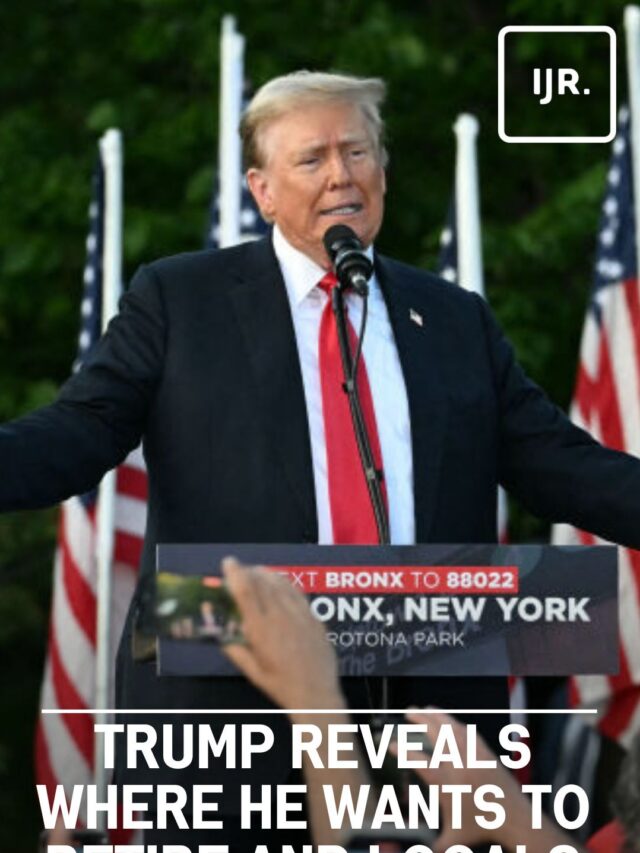




With President Donald Trump’s sweeping tariffs set to take effect Friday, some major trading partners have locked in deals while others face the looming threat of steep penalties.
The Aug. 1 deadline marks the launch of Trump’s so-called “Liberation Day” tariff rates, first unveiled in April, targeting nearly every trading partner in the world over what he calls unfair trade practices. Major questions remain unresolved, including the lack of a permanent agreement with China, America’s largest trade partner, and legal challenges that threaten to undermine the president’s broader trade strategy.
The tariffs were originally set to take effect on July 9, but the administration extended the deadline to August to allow more time for negotiations.
Trump has insisted that the August deadline will hold, writing Wednesday on his Truth Social Platform that it “stands strong, and will not be extended.” On Thursday, however, he announced that Mexico would be granted a 90-day extension to strike a deal before a 30% tariff rate kicks in.
Many key trading partners have already secured agreements to avoid the full “reciprocal tariff” rates announced in April.
Japan, which faced a 25% tariff on its exports, negotiated the rate down to 15% in exchange for opening its markets to U.S. agricultural goods and automobiles. Tokyo also pledged to invest $550 billion in U.S.-based projects, with 90% of profits generated from those investments to remain in the U.S., according to the Trump administration.
“When I say it’s historic, what that means is it’s completely, intellectually above anything anybody’s ever done before,” Commerce Secretary Howard Lutnick said about the U.S.-Japan deal at a Daily Caller event on July 25.
However, Japanese officials have indicated that the country would invest “up to” $550 billion, with profit distributions determined by “the degree of contribution and risk taken by each party,” according to the Financial Times.
The U.K. was the first country to reach a deal in May, agreeing to a 10% tariff rate and expanded market access for American exports. The Trump administration agreed to lift tariffs on U.K. steel and aluminum, provided that British companies comply with supply chain transparency and foreign ownership requirements, in a move aimed at curbing Chinese influence.
The trade deal with Vietnam includes similar provisions targeting Beijing’s practice of rerouting shipments to third countries in order to evade U.S. tariffs imposed on Chinese goods.
The European Union reached an agreement with the Trump administration on Sunday, accepting a 15% tariff on most goods, along with a pledge to purchase $750 billion in American energy and invest another $600 billion in the U.S. economy.
On Wednesday, South Korea secured a 15% tariff deal and committed to invest $350 billion into projects “owned and controlled” by the U.S., potentially including the American shipbuilding industry. Other smaller trading partners, such as Indonesia and the Philippines, have also landed agreements ahead of the August deadline.
“It’s Trump trying to open markets to key commodities and secure promises by these countries to invest more in the U.S.,” Kenneth Rapoza, a global trade analyst for the Coalition for a Prosperous America, told the Daily Caller News Foundation. “And if it comes to fruition, it’s going to be a huge boom.”
However, Rapoza warned, “the devil is in the details,” and it could take months or even years to determine whether countries follow through on their pledges, particularly large investment commitments.
Meanwhile, U.S. and Chinese officials met in Switzerland earlier this week to extend a trade truce struck in June, which is set to expire on Aug. 12. Both sides aim to maintain existing tariffs — 30% on Chinese goods and 10% on U.S. products — while negotiations continue toward a more lasting agreement.
As part of the détente reached in June, China agreed to ease export controls on rare earth minerals, which are critical to defense and other high-tech industries. In exchange, the U.S. lifted restrictions on the exports of chip design software and allowed major U.S. chip company Nvidia to resume sales of its H20 artificial intelligence chip to China.
“I think getting more critical minerals from China and into our manufacturers is a good idea,” Richard Stern, director of the Thomas A. Roe Institute for Economic Policy Studies at the Heritage Foundation, told the DCNF. “However, I think there are some real concerns that we’ve relaxed what we’re willing to export to them a little bit too much.”
The issue of China’s ongoing purchase of Russian oil remains a major sticking point in the negotiations. Treasury Secretary Scott Bessent warned this week that China could face tariffs exceeding 100% if it continues to buy oil from Moscow.
Separately, the Trump administration has moved to close the so-called “de minimis” loophole, which allowed packages valued under $800 to enter the U.S. without formal customs entries. Chinese shippers have exploited this exemption to smuggle fentanyl and other contraband across the border.
In addition to China, many of America’s largest trading partners have yet to reach agreements with the Trump administration.
Canada — America’s third-largest supplier of goods — faces a 35% tariff unless deals are reached by Friday. Trump said on Wednesday that it would be “very hard” for Canada to reach a deal with the U.S. after Canadian Prime Minister Mark Carney announced that his country would recognize a Palestinian state.
Imports from India will be subject to a 25% tariff, while Brazil was hit Wednesday with a 50% levy on most of its exports. Increased tariffs will be applied to dozens of other countries starting Friday.
“Countries that come to the president and say, ‘We have barriers that are bad, and we’re willing to renegotiate them,’ are finding more success,” said Stern. “But there are a lot of countries that want to maintain closer ties with China. Those countries have been more resistant, and they’re having less luck with the trade deals.”
However, legal trouble lies ahead for the new tariffs.
Most of the “Liberation Day” tariffs have been implemented under the International Emergency Economic Powers Act (IEEPA). The President invoked IEEPA by declaring that “large and persistent” trade deficits “constitute an unusual and extraordinary threat to the national security and economy of the United States.”
However, IEEPA has never been used to impose tariffs, and the Trump administration’s unprecedented move is now being challenged in court. The U.S. Court of Appeals is set to hear oral arguments on the matter Thursday.
“There’s a high risk that these tariffs are deemed illegal. The Supreme Court may even agree,” said Rapoza. He noted that such an outcome would be “bad news” for the Trump administration, which has already collected record tariff revenue that contributed to a government surplus in June.
Still, Rapoza said the Trump administration has other legal tools at its disposal, including Section 301 of the Trade Expansion Act of 1962, as well as Sections 122 and 201 of the Trade Act of 1974 and the option to push Congress to enact a global tariff rate of at least ten percent to raise revenue.
By contrast, the tariffs on commodities like steel, aluminum, and, most recently, copper, were implemented under Section 232 of the Trade Expansion Act, which allows the president to restrict imports that threaten national security. These tariffs are not currently being challenged, as they follow longstanding precedent established by many prior administrations, including Trump’s first term.
Looking ahead, Stern said he hopes the administration uses tariffs as a short-term tool rather than a permanent fixture, and that even the deals already reached will be renegotiated to lower rates.
“Tariffs are great as a short-term negotiation tool to get other wins and victories. But in the long run, we really don’t want tariffs to stick around,” said Stern. “Tariffs, at the end of the day, are something that breaks the domestic arrangement, which certainly harms the foreign producer but also the domestic consumer.”
All content created by the Daily Caller News Foundation, an independent and nonpartisan newswire service, is available without charge to any legitimate news publisher that can provide a large audience. All republished articles must include our logo, our reporter’s byline and their DCNF affiliation. For any questions about our guidelines or partnering with us, please contact [email protected].