



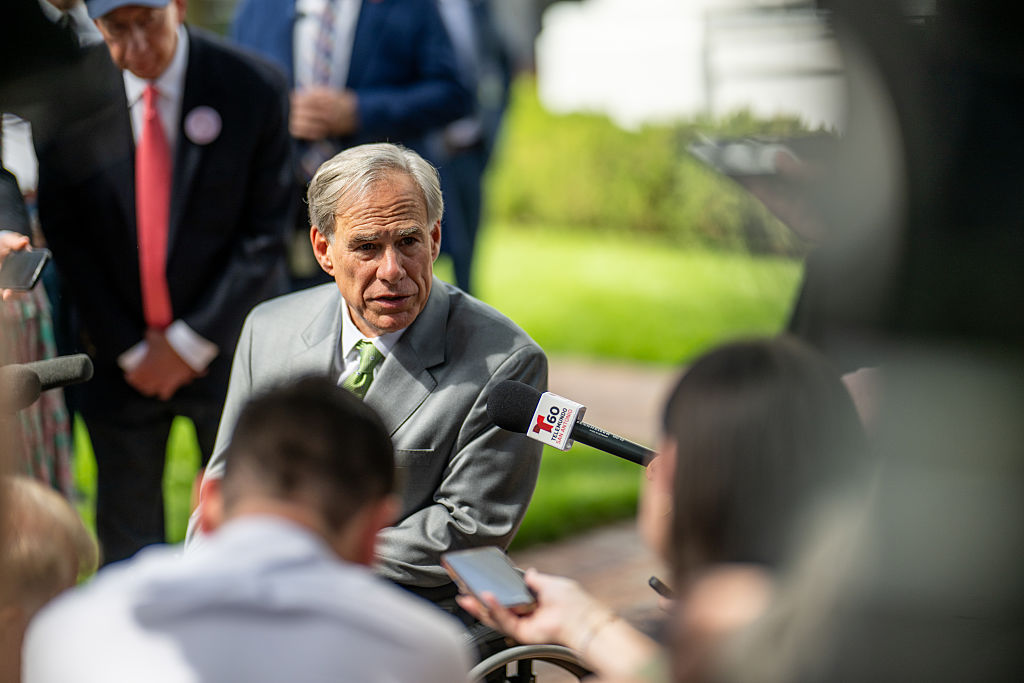
Tensions rose sharply in Texas this week after Governor Greg Abbott announced a ban on Sharia law in the state, following a viral video that showed a Houston-area imam urging Muslim-owned businesses to stop selling pork, alcohol, and lottery tickets.
The controversy began when Imam F. Qasim ibn Ali Khan of Masjid At-Tawhid confronted a store employee on camera, accusing the business of selling “haram” products forbidden under Islamic law. The video spread quickly online, sparking heated debate over religious freedom, cultural expectations, and state authority.
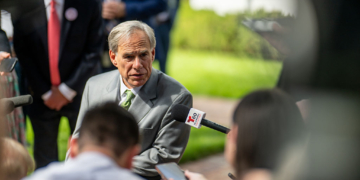
In response, Abbott moved quickly. On Tuesday, he declared, “I signed laws that BAN Sharia Law and Sharia Compounds in Texas. No business and no individual should fear fools like this.” He added a direct warning: “If this person, or ANYONE, attempts to impose Sharia compliance, report it to local law enforcement or the Texas Dept. of Public Safety.”
Abbott’s office issued a follow-up statement reinforcing his stance. “In Texas, we believe in equal rights under the law for all men, women, & children. Any legal system that flouts human rights is BANNED in the state of Texas.”
I signed laws that BAN Sharia Law and Sharia Compounds in Texas.
No business & no individual should fear fools like this.
If this person, or ANYONE, attempts to impose Sharia compliance, report it to local law enforcement or the Texas Dept. of Public Safety. https://t.co/cVV2MJItLH
— Greg Abbott (@GregAbbott_TX) September 8, 2025
While Abbott did not cite a new bill, his remarks appeared to reference a 2017 law he signed that prohibits judges from applying foreign law, including Islamic law, in Texas courtrooms.
And Sharia law is outlawed in Texas under a law I signed in 2017.
Texas is investigating EPIC City for many allegations, including attempts to circumvent that law.
All entities in Texas must follow state law, not Sharia law. https://t.co/lrlefjelOV
— Greg Abbott (@GregAbbott_TX) April 1, 2025
Khan, who leads a mosque affiliated with the Nation of Islam, defended his campaign in multiple TikTok posts to his 17,000 followers. Standing outside Muslim-owned stores with protest signs, he accused merchants of betraying their faith for profit. “This is the beginning of the campaign,” he said. “We’re serving notice to America and the world that enough is enough. The people that call themselves Muslims should not be selling haram in their stores.”
He went further, threatening boycotts and coordinated demonstrations against businesses that did not comply. “They have until the end of the month to change their inventory—or move to a different neighborhood,” he warned.
Khan insisted his actions were lawful, framing them as a form of religious outreach known as da’wah. He also said the protests were intended to launch a nationwide movement targeting Muslim businesses that violate Islamic teachings.
The Council on American-Islamic Relations (CAIR) condemned Abbott’s announcement, calling it “fearmongering.” In a statement, CAIR explained that Sharia is a broad term that includes personal acts of faith such as prayer, fasting, and charity, likening it to Halacha in Judaism or Canon law in Catholicism. “When Texas Muslims pray to God five times a day, donate (to) charity, fast in Ramadan, or speak up against injustice, among many other practices, they are observing Sharia,” the group said.
CAIR emphasized that it is misleading to suggest Sharia is “banned” in Texas, pointing out that Abbott’s law applies specifically to court proceedings, not private religious practice.
So far, officials have not reported any laws being broken. Peaceful protests, even those targeting businesses, are protected under the First Amendment as long as they remain nonviolent. Authorities also confirmed that no threats of violence have been linked to Khan’s campaign.
The incident has nonetheless ignited a larger debate. Abbott’s firm response has been praised by supporters who see it as a defense of state law and individual freedom, while critics argue it risks stoking unnecessary fear and misunderstanding of Muslim communities.
For now, Muslim-owned businesses across Texas remain in the spotlight as Khan pushes forward with his protests, and state leaders double down on their pledge that no outside system of law will ever be recognized above Texas law. The clash has left many asking whether this moment will pass quietly—or whether it marks the beginning of a deeper conflict over identity, religion, and law in the Lone Star State.