



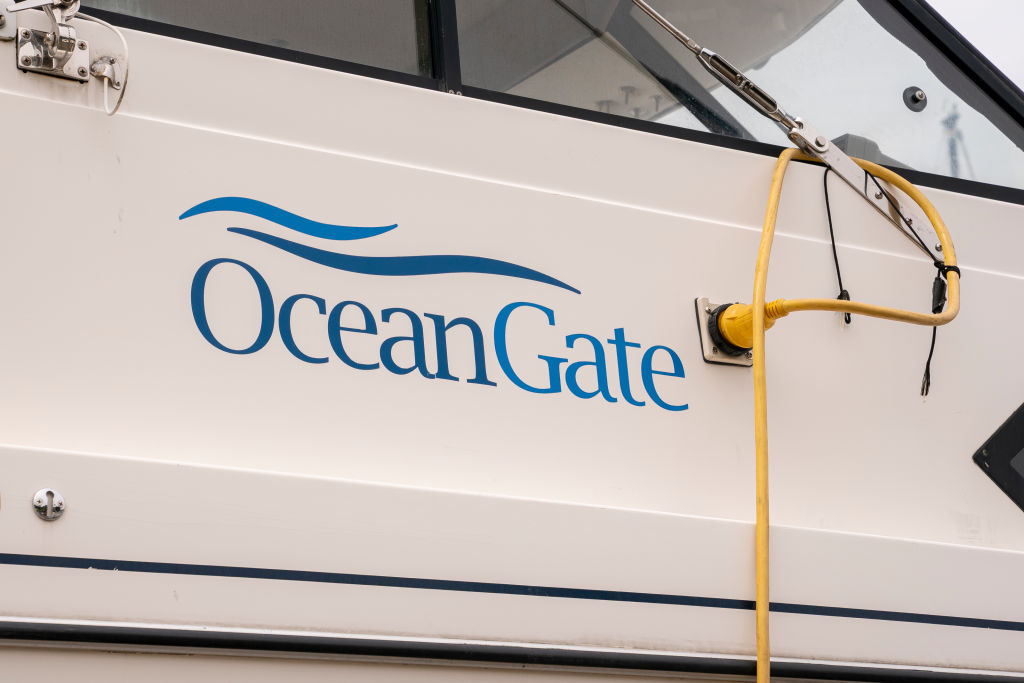
The catastrophic implosion of the OceanGate Titan submersible, which killed five people during a 2023 dive to the wreck of the Titanic, was caused by faulty engineering and inadequate safety testing, according to a final report released Wednesday by the National Transportation Safety Board (NTSB).
According to The Associated Press, the NTSB found that design flaws in the Titan’s carbon fiber composite hull “resulted in the construction of a carbon fiber composite pressure vessel that contained multiple anomalies and failed to meet necessary strength and durability requirements.” Investigators concluded that OceanGate failed to properly test the vessel and was unaware of its true structural limits.
All five people aboard the Titan — including OceanGate CEO Stockton Rush — were killed instantly when the submersible suffered a catastrophic hull failure deep in the North Atlantic in June 2023.
The NTSB said the company’s failure to follow established emergency procedures also delayed the discovery of the wreckage, noting that compliance “would have saved time and resources even though a rescue was not possible in this case.”
The findings mirror a separate Coast Guard report released in August, which determined the implosion was preventable and that OceanGate’s safety procedures were “critically flawed.” The Coast Guard also found “glaring disparities” between the company’s stated safety protocols and its actual operations.
OceanGate suspended operations in July 2023 and has since wound down. The company declined to comment on the NTSB’s report Wednesday.
The Titan’s final dive on June 18, 2023, ended in tragedy about two hours after losing contact with its surface support ship. The implosion claimed the lives of Rush, French explorer Paul-Henri Nargeolet — often called “Mr. Titanic” — British businessman Hamish Harding, and Pakistani father and son Shahzada and Suleman Dawood.
The NTSB urged the Coast Guard to convene a panel of experts to study submersible safety standards and create new regulations for privately operated deep-sea vehicles. It said current laws for small passenger vessels “enabled OceanGate’s operation of the Titan in an unsafe manner.”
The report also highlighted concerns about OceanGate’s corporate culture, citing a former technician who said the company prioritized marketing over safety. When the technician raised concerns about calling paying passengers “mission specialists,” CEO Stockton Rush allegedly replied that “if the Coast Guard became a problem … he would buy himself a congressman and make it go away,” according to the report.
The Titan had made multiple voyages to the Titanic site since 2021. Its final mission — which captivated global attention during the multiday search — ended in disaster, prompting international calls for tighter oversight of private deep-sea exploration.