



Africa has become the new great-power chessboard. The pieces aren’t soldiers or diplomats—they’re ports, railways, and fiber-optic cables. And behind many of them stands China.
For two decades, Beijing has poured hundreds of billions into African infrastructure through its Belt and Road Initiative. From Kenya’s railways to Nigeria’s highways to Djibouti’s deep-water port, China’s presence is everywhere. But as global scrutiny over “debt-trap diplomacy” grows, Beijing has changed tactics. The new strategy is proxy investment—a maze of shell companies, offshore funds, and nominally “private” ventures that disguise state control. This is influence without visibility.
China remains Africa’s largest trading partner and one of its biggest lenders. Increasingly, though, Chinese money no longer flows directly from state banks. It moves through holding companies in Hong Kong, Dubai, Mauritius, or Singapore—jurisdictions with minimal disclosure rules. On paper, these firms look private. In reality, many trace back to state-linked investors. The purpose is clear: to expand Chinese control in strategic sectors such as mining, telecommunications, and digital infrastructure—the commanding heights of the modern economy.
Proxy investment helps Beijing sidestep Western scrutiny, obscure its lending footprint, and operate in unstable or sanctioned markets. It also shields China from political backlash. In Zambia, Mauritius-registered firms backed by Chinese capital now hold key mining stakes. In Angola and Nigeria, investment vehicles based in the UAE channel Chinese funds into oil and energy projects. On paper, these are private deals; in practice, they extend Beijing’s reach.
To African governments, such capital can look like ordinary globalization. Yet opacity hides risk. When ownership chains snake through offshore jurisdictions, it becomes nearly impossible for host nations to know who controls critical assets—or how debts are structured. That secrecy breeds inflated costs, hidden liabilities, and weakened sovereignty. Kenya’s railway loans were kept secret for years, sparking public outrage. In Zambia, even officials admit they can’t identify who ultimately owns certain mines. Infrastructure meant to boost development instead fuels distrust.
Washington understands Africa’s strategic importance—for energy, trade, and global supply chains—but America’s weakness isn’t capital; it’s clarity. There is no coordinated U.S. effort to track Chinese proxy flows. Once money disappears behind shell layers, it vanishes from oversight. By the time a project becomes public, China already holds leverage. This intelligence gap keeps Washington reactive while Beijing moves quietly ahead.
The solution isn’t to outspend China—it’s to outshine it. The United States should wield transparency as a strategic weapon. Every major infrastructure deal in Africa should disclose its ultimate owners, beneficiaries, and intermediaries. Washington can lead by example and by partnership.
A practical five-point plan would include:
- A U.S.–Africa Transparency Task Force uniting the Departments of Treasury, State, Commerce, and intelligence agencies to map proxy flows;
- Support for beneficial-ownership registries in African nations through U.S. technical aid;
- AI-driven analytics to trace offshore capital patterns;
- Tying IMF and World Bank lending to public disclosure standards; and
- Allied investment frameworks with Japan, South Korea, and the European Union to offer clean, rule-based alternatives.
Transparency isn’t just good governance; it’s economic defense. When citizens know who owns what, corruption shrinks, accountability rises, and Beijing loses its cloak.
The stakes extend beyond Africa. China is using the same playbook elsewhere. In South Korea, Chinese investors now dominate foreign real-estate purchases, many financed by state-linked banks. Hidden leverage can become political influence—quietly turning economic presence into strategic control.
At the Busan summit, Presidents Xi Jinping and Donald Trump pledged to stabilize trade. But beneath the diplomatic smiles lies the real contest: who will control the world’s resource corridors and technology supply chains. China is doubling down on its global infrastructure campaign. America, for its part, is signaling that it will compete through clean capital and transparent financing—the foundation for resilient supply chains across Africa, Asia, and the Americas.
For African leaders, this isn’t a choice between China and the United States. It’s a test of sovereignty. Those who demand transparency can attract rule-based capital and reduce dependence on opaque financiers. The new race for influence won’t be won by dollars alone. In the 21st-century scramble for Africa, the most valuable resource isn’t money—it’s credibility.
China hides its power behind shell companies. America should counter with sunlight.
Jacob Choe is a member of the Bretton Woods Committee and serves as the Eurasia Center’s Asia Program Director. James Carter is a Principal with Navigators Global. He previously served as Deputy Undersecretary for International Affairs at the U.S. Department of Labor (2006-07) and as the Director of the America First Policy Institute’s Center for American Prosperity (2021-23).
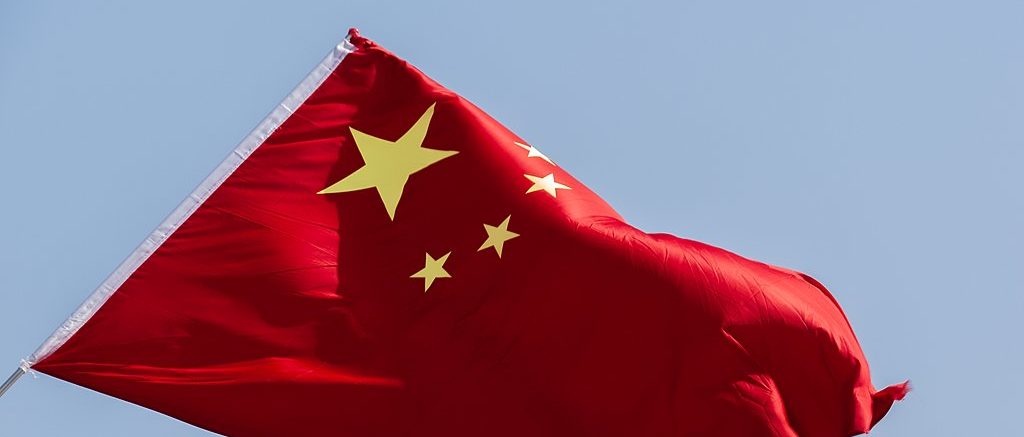
(Featured Image Media Credit: Ermell / Wikimedia Commons)
All content created by the Daily Caller News Foundation, an independent and nonpartisan newswire service, is available without charge to any legitimate news publisher that can provide a large audience. All republished articles must include our logo, our reporter’s byline and their DCNF affiliation. For any questions about our guidelines or partnering with us, please contact [email protected].