



Two Massachusetts college students are facing federal charges after allegedly setting off fireworks inside a Harvard Medical School building over Halloween weekend — an incident authorities say could have had “catastrophic consequences.”
According to The Associated Press, the suspects, Logan David Patterson, 18, of Plymouth, and Dominick Frank Cardoza, 20, of Bourne, were arrested Tuesday and charged with conspiracy to damage property by means of fire or an explosive.
The pair appeared in U.S. District Court in Boston later that day, handcuffed as family members looked on. Judge Jessica Hedges ordered both men released pending trial but barred them from possessing explosives or visiting Harvard while out on bond.
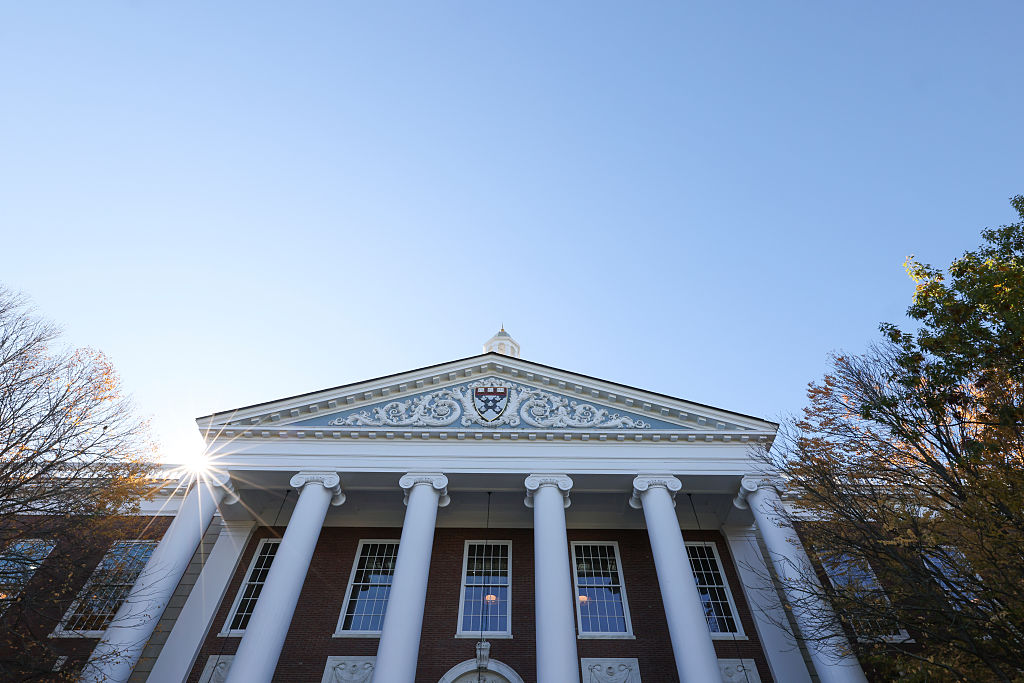
According to prosecutors, the explosion occurred around 2:45 a.m. Saturday inside the Goldenson Building, which houses Harvard’s neurobiology labs and offices. The building was empty at the time, and no one was injured.
Video surveillance captured two individuals wearing face coverings walking toward the building before the blast. Investigators say Patterson and Cardoza gained access by climbing scaffolding to the roof and entering through an unsecured area.
Witnesses told authorities the two men — who had been in the Boston area attending Halloween parties at the Wentworth Institute of Technology — set off a roman candle outside the building before lighting a cherry bomb inside a locker, triggering a small explosion.
Responding officers encountered two people running from the building shortly after the fire alarm went off, according to Harvard police.
At a press conference Tuesday, FBI Special Agent in Charge Ted Docks condemned the act:
“Let me be clear: Setting off an explosive device inside a locker at an institution geared toward higher education is not some harmless college prank. It’s selfish, it’s shortsighted, and it’s a federal crime.”
He declined to speculate on a motive.
U.S. Attorney Leah B. Foley also emphasized how seriously federal authorities are taking the case.
“Anxiety levels naturally rise when the public learns that an explosion was intentionally caused. I would say those levels may rise even higher in the Boston area,” Foley said, referencing the city’s history with bomb-related tragedies.
Defense attorney Stefan Rozembersky, representing Cardoza, criticized the federal government’s handling of the case.
“We’re dealing with property damage — this would ordinarily be a state charge,” he said, calling the prosecution an example of “significant overcharging.”
Harvard Medical School officials said the explosion caused no structural damage and that research equipment and labs remained intact.
Investigators identified the suspects after releasing surveillance photos to the public, which led to multiple tips.
Federal prosecutors said the investigation remains ongoing but stressed that there is no ongoing threat to Harvard or the public.
If convicted, both Patterson and Cardoza could face up to five years in prison and significant fines.












