




The era of “independent agencies” might soon be over.
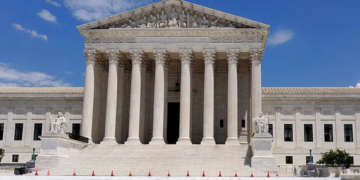
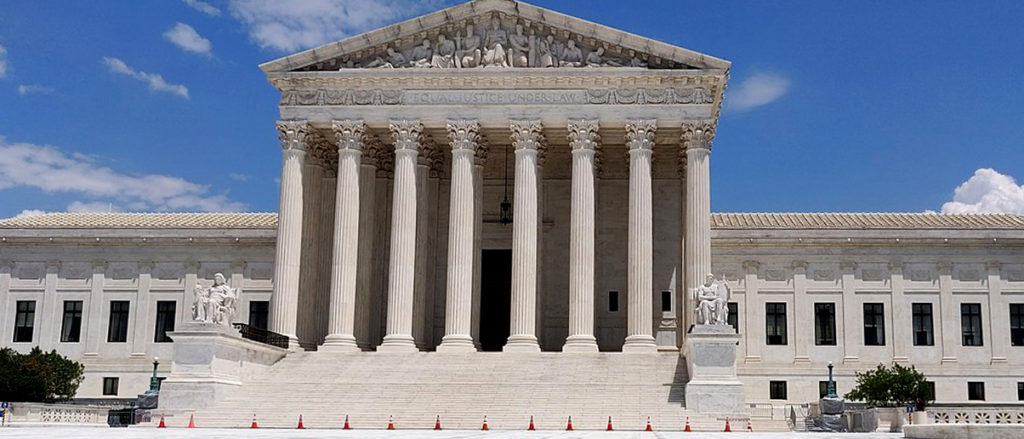
The Supreme Court seemed inclined on Monday to allow the president to fire members of “independent” multi-member coalitions, which the Trump administration argues are really a “headless fourth branch” of government that operates without political accountability or democratic control.
The case, Trump v. Slaughter, centers on a simple question: can President Donald Trump fire Federal Trade Commissioner Rebecca Slaughter? Standing in the way of his decision is a 90-year-old precedent, Humphrey’s Executor v. United States, which limits the president’s ability to remove members of multi-member commissions like the FTC without cause.
The conservative justices have greenlit several of Trump’s attempts to remove other agency officials since he took office in January, including members of the National Labor Relations Board (NLRB), the Merit Systems Protection Board (MSPB) and Consumer Product Safety Commission (CPSC).
Court watchers interpreted these emergency docket decisions as an indication the justices were ready to do away with Humphrey’s Executor entirely. Strong signals during oral arguments from the majority seemed to confirm this is the likely outcome.
Chief Justice John Roberts called the precedent a “dried husk of whatever people used to think it was” because the FTC looks far different today than it did in 1935.
‘Real World Realities’
Over the past century, Congress has handed legislative and judicial powers to agencies with the expectation it would not be entirely under the control of the president, Justice Eleana Kagan noted. She told Solicitor General John Sauer the formal constitutional argument should not blind him to the “real world realities” of reversing Humphrey’s Executor, essentially, creating a president that has “control over everything.”
Justice Neil Gorsuch suggested the real problem was the Supreme Court letting Congress get away with delegating its legislative authority to the executive branch.
“This court has allowed that for a very long time,” he said. “I take the point that this has allowed a bargain where a lot of legislative power has moved into these agencies. If they’re now going to be controlled by the president, it seems all the more imperative to do something about it.”
Justice Brett Kaganaugh questioned why no president in the past 90 years has directly challenged this precedent.
“The president sometimes may have a political incentive to allow decisions to be outsourced to agencies he doesn’t have control over,” Sauer suggested.
Where Are The Limits?
Several justices probed how far the logic of Slaughter’s position goes, asking whether Congress could take over existing agencies and convert them into multi-member commissions, letting “experts” dictate policy while gutting the president’s removal power.
“Could Congress convert all these departments into multi-member commissions?” Justice Brett Kavanaugh asked. “The commerce, the EPA, Department of Homeland Security, Department of State?
Amit Agarwal, representing the fired FTC commissioner, said several of these agencies are wielding too much of the president’s authority to be converted.
“One thing history shows is we can’t anticipate what might happen,” Justice Amy Coney Barrett said. “If we decide this case in your favor now, we don’t know what a Congress in 15, 20, 30 years might do.”
All content created by the Daily Caller News Foundation, an independent and nonpartisan newswire service, is available without charge to any legitimate news publisher that can provide a large audience. All republished articles must include our logo, our reporter’s byline and their DCNF affiliation. For any questions about our guidelines or partnering with us, please contact [email protected].