



Senators left Washington bitter and tired as the year ended, abandoning a major funding package that many believed could have eased pressure ahead of the next looming shutdown deadline.
According to Fox News, what began as a final sprint by Senate Republicans to push through a five-bill spending bundle ended in a late-night stall, with Senate Democrats blocking the effort and sending both parties home empty-handed.
The breakdown came after weeks of negotiations following the last government shutdown, with lawmakers attempting to piece together a deal that would cover large swaths of federal operations.
The package included funding for the departments of Defense, Labor, Health and Human Services, Education, Commerce, Justice, Interior, Transportation, and Housing and Urban Development. The proposal represented some of the most significant spending responsibilities Congress faces each year.
Instead, the work stopped abruptly. With the Senate lights shutting off for the final time in 2025, lawmakers streamed out of the Capitol, frustrated by the lack of progress.
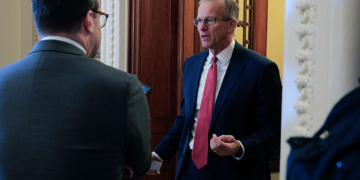
Senate Majority Leader John Thune, R-S.D., said he was confident negotiations would resume once the chamber returns.
“The Democrats are indicating that they want to do them, they just didn’t want to do them today,” Thune said. “So hopefully, when we get back, we’ll test that proposition, and hope that we’ll take them to face value, and hopefully we’ll get moving, and get moving quickly, because we’ve got a lot to do.”
Hours earlier, there was still belief a deal could come together. Senate Republicans continued calling, negotiating, and searching for a way forward.
Senate Appropriations Committee Chair Susan Collins, R-Maine, said Republicans had cleared their internal roadblocks after spending weeks addressing concerns from GOP fiscal hawks who demanded amendment votes on earmarks and other spending issues.
By late in the evening, Collins said just one obstacle remained — a hold driven by Sens. John Hickenlooper, D-Colo., and Michael Bennet, D-Colo. The pair objected to President Donald Trump’s plan to break up the National Center for Atmospheric Research in Boulder, Colo.
Office of Management and Budget Director Russ Vought described the facility as “one of the largest sources of climate alarmism in the country,” posting on X that the administration was reviewing its operations and planned to relocate essential research activity.
Hickenlooper insisted any agreement must include a guaranteed vote protecting NCAR.
“We need to find some Republican supporters. All we’re trying to do is just protect the budget that was already there,” he said. “So, whatever disagreement there is between the state, the governor of Colorado, and the President of the United States, that shouldn’t affect a scientific institution. Science should be free of that kind of politics.”
Senate Minority Leader Chuck Schumer, D-N.Y., sharpened that message.
“What the president did to Colorado is disgusting, and Republicans ought to get him to change,” Schumer said.
Republicans kept the chamber open late, even adding extra votes to buy time as they worked to complete confirmations of President Donald Trump’s nominees. But Senate Democrats refused to move.
Sen. Katie Britt, R-Ala., chair of the Senate Homeland Security Appropriations subcommittee, had hoped for a different outcome.
“If we want the Senate to matter, we should figure it out,” she said before the final votes.
The setback doesn’t guarantee another shutdown next month, but it pushes the pressure forward into what already promises to be a volatile January. On top of the spending deadline, lawmakers face disappearing Obamacare subsidies on Dec. 31 — a deadline many hope to extend.
Any finished bill, however, must clear the House and ultimately win Trump’s approval.
For now, both sides appear intent on avoiding another shutdown, even if they have yet to find the path to prevent it.
“I don’t think either side wants to see that happen,” Thune said. “I think that’s toxic for both parties. So I’m hoping that there will be goodwill, and we’ll figure out how to fund the government.”