





The Department of Health and Human Services (HHS) has pared back its recommended childhood vaccines from shots against 17 diseases to ten diseases, ending the chockablock schedule that made the U.S. an outlier among peer nations.
A 34-page scientific review recommended that the Centers for Disease Control and Prevention (CDC) harmonize the U.S. schedule more closely with 20 other developed nations. President Donald Trump signed an executive order asking for the review on Dec. 5.
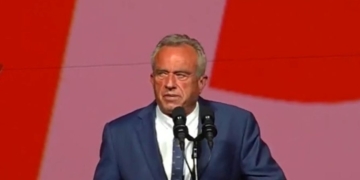
“President Trump directed us to examine how other developed nations protect their children and to take action if they are doing better,” Secretary Robert F. Kennedy Jr. said in a statement. “After an exhaustive review of the evidence, we are aligning the U.S. childhood vaccine schedule with international consensus while strengthening transparency and informed consent. This decision protects children, respects families, and rebuilds trust in public health.”
The overhaul aims to restore childhood vaccination rates, which dipped during the COVID-19 lockdowns and never fully recovered amid growing distrust of CDC, the Food and Drug Administration, and other scientific intuitions following controversial pandemic decision-making.
Synchronizing the American schedule with those abroad could help restore confidence that HHS recommendations stem from the best scientific evidence rather than rigid dogma, ideally improving uptake of the most critical vaccines, HHS officials told reporters on a press call Monday.
At the same time, the policy does not revoke access to any vaccine, ensuring families will not have to purchase immunizations out of pocket even if HHS does not recommend them for all children. The previous immunization schedule will still be available through federal insurance programs including Medicaid, the Children’s Health Insurance Program and the Vaccines for Children program.
HHS now categorizes ten vaccines as the “consensus vaccines” for which the analysis found broad international precedent: measles, mumps, rubella, polio, pertussis, tetanus, diphtheria, Haemophilus influenzae type B (Hib), pneumococcal disease, and human papillomavirus (HPV). HHS also recommends varicella (chickenpox), which the analysis found necessary given unique epidemiology in the U.S.
The CDC is breaking from American precedent but following the lead of other developed nations and recommending one dose of the HPV vaccine.
HHS recommends other immunizations for high-risk children, namely respiratory syncytial virus (RSV), hepatitis A, hepatitis B, dengue, meningococcal ACWY, and meningococcal B. They recommended others through shared clinical decision making when it is not possible for public health authorities to clearly define who will benefit from an immunization, namely for rotavirus, COVID-19, influenza, meningococcal disease, hepatitis A, and hepatitis B.

The move does not lift the pharmaceutical companies’ shield from legal liability for vaccine injuries.
HHS also signaled it will deploy more randomized controlled trials and conduct other observational studies in order to fill in gaps in knowledge about childhood immunizations. Evidence is also scare about whether simultaneous administration of multiple vaccines incurs risks. This knowledge gap led HHS to take a more cautious approach to recommending vaccines.
American children in 1980 received 23 vaccine doses in 7 shots against 7 different diseases plus 4 oral polio vaccine drops, the assessment states. In 2024, a parent following the recommended schedule would ensure their child receive 84 vaccine doses in at least 57 shots for 17 diseases, plus the RSV monoclonal antibody immunization for a total of 18 diseases.
“Public health works only when people trust it,” said FDA Commissioner Marty Makary in a statement. “That trust depends on transparency, rigorous science, and respect for families. This decision recommits HHS to all three.”
HHS officials said peer nations are often reluctant to add more vaccines to the schedule if there is a lower opportunity for benefit and if it may hurt uptake of the critical shots, and that the U.S. should follow that protocol.
All content created by the Daily Caller News Foundation, an independent and nonpartisan newswire service, is available without charge to any legitimate news publisher that can provide a large audience. All republished articles must include our logo, our reporter’s byline and their DCNF affiliation. For any questions about our guidelines or partnering with us, please contact [email protected].