



In an unprecedented move, NASA executed the first-ever emergency medical evacuation from the International Space Station, rushing four astronauts back to Earth after a serious health issue onboard.
The crew, aboard the SpaceX Dragon capsule, splashed down in the Pacific Ocean off the coast of San Diego at 3:41 a.m. ET Thursday, ending a tense 10-hour journey from orbit. NASA confirmed the decision to evacuate came after flight surgeons determined the astronaut’s condition couldn’t be properly addressed in microgravity.
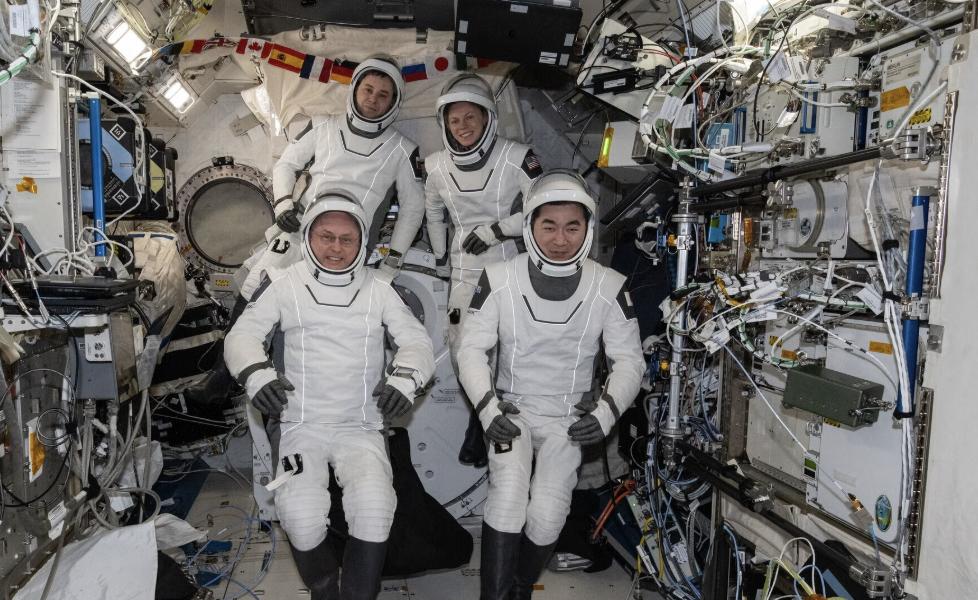
Onboard were NASA astronauts Zena Cardman and Mike Fincke, JAXA astronaut Kimiya Yui, and Russian cosmonaut Oleg Platonov. NASA has not revealed which crew member was affected, citing medical privacy, but officials have confirmed the condition was “serious” enough to require urgent treatment on Earth.
The Dragon capsule fired its engines for reentry at 2:50 a.m., enduring the fiery plunge through Earth’s atmosphere before parachutes slowed the descent. Within minutes of splashdown, recovery boats swarmed the capsule, eventually securing it to a recovery vessel.
Medical teams were first on the scene. The hatch opened at 3:19 a.m., delivering the crew their first breath of Earth air since launching to the ISS on August 1. Each astronaut was placed on a stretcher—standard procedure after over 100 days in zero gravity—and taken for immediate evaluations.
Mike Fincke was the first out, followed by Cardman, Platonov, and Yui. “It’s so good to be home,” said Cardman, the mission’s commander, as she was assisted from the capsule.
NASA Administrator Jared Isaacman emphasized the evacuation was done “out of an abundance of caution,” though the mission had been running smoothly until the unexpected medical episode. Dr. James Polk, NASA’s chief medical officer, confirmed last week the condition wasn’t life-threatening and was unrelated to any planned operations like the January 8 spacewalk that was canceled as a precaution.
SpaceX Crew-11 Dragon splashes down off San Diego in first ISS medical evacuation
Four astronauts return to Earth after undisclosed health concern cut mission short
y one month
Should NASA conduct future emergency medical evacuations for astronauts in space?167 days aboard the space station ends early
Three crew remain until Crew-12 arrives in February pic.twitter.com/QYQXE2EQw5
— Boi Agent One (@boiagentone) January 15, 2026
 y one month
The astronauts are expected to remain overnight at a facility near San Diego for further testing before heading to Houston’s Johnson Space Center.
According to NASA, the evacuation followed its strict contingency protocols outlined in the Spaceflight Human-System Standard—rules that had never been triggered before. Though simulations suggested a medical evacuation might be needed once every three years, this was the first real-world test.
The Crew-11 team was originally set to return in mid-February, after the planned arrival of Crew-12. That timeline is now accelerated. In the meantime, astronaut Chris Williams and others who arrived via Russian Soyuz remain on board to manage operations.
This emergency return underscores the real dangers of space exploration—and the precision planning required to handle even the most unpredictable scenarios.












