




Last Friday, the Justice Department served the Federal Reserve with grand jury subpoenas related to Fed Chair Jerome Powell’s congressional testimony regarding the Fed’s building renovations. Powell cried foul, claiming the real target is Fed independence and interest rates.
Whether or not Powell is right about central bank pressure, the fact remains that tension between presidents and the Fed is as old as the idea of a U.S. central bank itself. Presidents have been battling the Central Bankers since Andrew Jackson killed the Second Bank in 1832. LBJ strong-armed Fed Chair William McChesney Martin at his Texas ranch. Nixon allegedly planted stories about his Fed chair raising his own salary to undermine Arthur Burns. Even Alan Greenspan, the so-called “Maestro,” ignored George H.W. Bush’s pleas for rate cuts—Bush later blamed him for losing the 1992 election.
What is clear is that now Trump is saying out loud, and taking action, on what many presidents clearly believed: The Fed should work with the White House and not against it.
From Talk To Action
Trump has gone further than his predecessors. In August, he fired BLS Commissioner Erika McEntarfer after her agency revealed massive downward revisions to jobs data—cutting 258,000 jobs from May and June estimates alone. The Fed uses employment data to determine monetary policy as part of its dual mandate to have stable prices and maximum employment. In response, critics screamed about norms. But when a statistical agency releases data missing the mark by hundreds of thousands of jobs, maybe fresh leadership and a new approach isn’t the worst idea.
Trump also moved to fire Fed Governor Lisa Cook over alleged mortgage fraud—the first time a president has ever attempted to remove a Fed governor in accord with the Federal Reserve Act “For Cause.” That case goes before the Supreme Court on Jan. 21, and the ruling could reshape presidential authority over the central bank for a generation.
Meanwhile, when Gov. Adriana Kugler resigned last August, Trump moved quickly to install Stephen Miran, his Council of Economic Advisers chair, onto the Fed Board. Miran has been an outspoken critic of Fed consensus. Just last week, he argued publicly that policy is “clearly restrictive and holding the economy back” and called for over 100 basis points of cuts in 2026.
Biden Checked Out
Here’s what the Fed-independence crowd won’t tell you: Powell testified in July 2024 that he hadn’t had a substantive meeting with then-President Joe Biden in over two years. Biden never asked. Powell never offered.
That’s not independence. That’s two ships passing in the night while Americans got crushed by inflation.
During the 2008 crisis, Fed Chair Ben Bernanke and Treasury Secretary Hank Paulson talked daily. That coordination helped save the economy.
Trump wants a Fed that communicates and works with elected leadership. That’s not authoritarianism — it’s common sense. And let’s be clear: Fed independence is a product of tradition, not constitutional mandate; 14-year terms don’t mean 14 years of isolationism, and the Federal Reserve Act’s “for cause” removal provision has never been tested at the Supreme Court —until now.
The Next Chair
Powell’s term as chair expires in May. Trump says he’ll announce a replacement soon, with Kevin Hassett and Kevin Warsh widely seen as frontrunners. But watch for other names, in particular Stephen Miran. His current term expires Jan. 31, but Trump could nominate him for a full 14-year seat and the chairmanship. Miran offers a proven track record of alignment with Trump’s economic vision combined with serious credentials—Harvard Ph.D., Treasury experience, and private sector success. He’s already shown he’ll challenge Fed groupthink from the inside.
The Real Question
The subpoenas have escalated this fight to DEFCON 1. Republican Sen. Thom Tillis of North Carolina — a retiring Banking Committee Republican — is blocking Fed nominees until the legal mess is sorted. Markets are watching closely. Powell says he won’t resign.
But here’s the thing: while the President is consistently unorthodox in his approach, he has exposed a real problem. The Fed operates like a fourth branch of government—unelected and seemingly allergic to coordination with anyone. Its forecasts are routinely off. And its current leadership apparently believed that not meeting with the President for years was OK.
Powell declares he won’t bow to pressure. The Fed insists on its independence. But the real question isn’t whether the Fed stays independent—it’s whether a Fed that refuses to work with the President serves the American people better than one that actually works with our most powerful elected representative.
The President has raised the stakes and put the Fed’s relevance in the crosshairs. The results of this battle will impact jobs and affordability for decades to come. President Trump has made it clear – he will not back down until his vision for the economy becomes our reality for winning big.
Alan Rechtschaffen is senior lecturer of capital markets law at New York University, the author of “Capital Markets, Derivatives, and the Law,” and the upcoming self-help book “Trump Your Mind.” He is also a Trustee of the Woodrow Wilson Center for Scholars.
The views and opinions expressed in this commentary are those of the author and do not reflect the official position of the Daily Caller News Foundation.
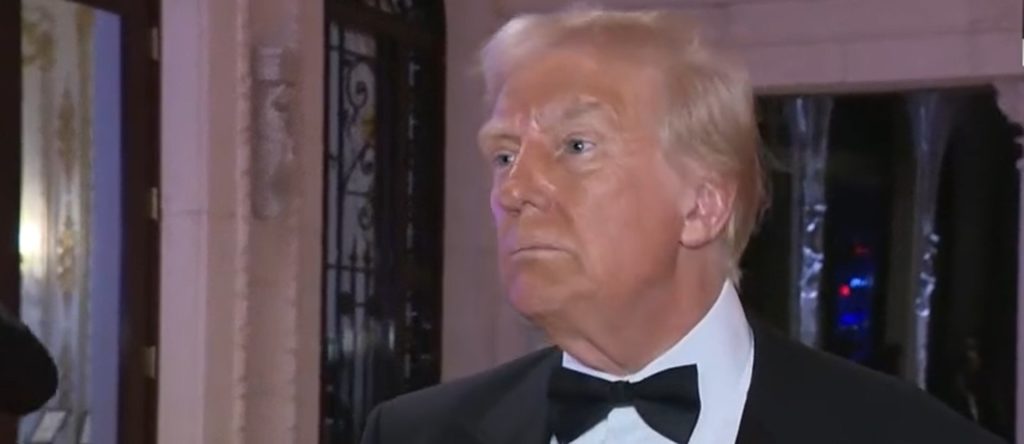
(Featured Image Media Credit: Screen Capture/CSPAN)
All content created by the Daily Caller News Foundation, an independent and nonpartisan newswire service, is available without charge to any legitimate news publisher that can provide a large audience. All republished articles must include our logo, our reporter’s byline and their DCNF affiliation. For any questions about our guidelines or partnering with us, please contact [email protected].