



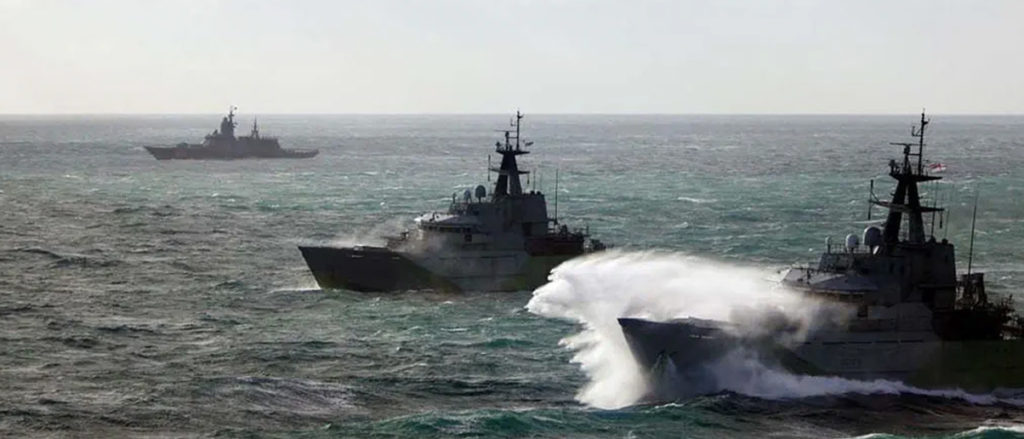

A Russian ship was forced out of British waters by the Royal Navy after it anchored dangerously close to undersea data cables critical to communications between Europe and the U.S.
The Russian cargo vessel Sinegorsk sailed into the Bristol Channel late Tuesday and appeared to drop anchor roughly two miles off the coast of southwest England, according to The Telegraph. The move quickly raised alarms due to its position being less than a mile from multiple subsea cables that carry vast amounts of internet and data traffic between the U.K., the U.S., Canada, and parts of Europe.
British authorities ordered the vessel to leave after the Russian crew claimed it had stopped to conduct “essential safety repairs,” according to the outlet. On Wednesday afternoon, the Royal Navy escalated its response and dispatched a Wildcat helicopter, after which the Russian ship promptly raised anchor and sailed back out to sea.
“We are acutely aware of the threat posed by Russia, which includes attempts to map undersea cables, networks, and pipelines belonging to both the UK and our allies, and we are tackling these threats head on,” a Ministry of Defence spokesman told the outlet.
The ship’s anchoring spot was especially sensitive, sitting within three-quarters of a mile of five major undersea cables that include direct links from the U.K. to New York, Canada’s key telecom hub in Nova Scotia, and critical connections to Spain and Portugal.
Although Sinegorsk is not under U.K. sanctions and is not believed to be part of Russia’s so-called “shadow fleet,” Western governments have increasingly linked Russian vessels to suspicious activity near critical undersea infrastructure.
Finnish authorities arrested the crew of a Russian tanker in 2025 after cables between Finland and Estonia were damaged. Earlier this year, Britain tracked the Russian vessel Yantar, which the U.K. Ministry of Defence described as a spy ship.
“We continue to take strong action against Russian-flagged ships, as well as to deter, disrupt and degrade the shadow fleet by stepping up our response through tough sanctions,” a U.K. Department For Transport spokesman told the outlet.
Russian is estimated to have hundreds of vessels in the so-called “shadow fleet,” enabling the export of oil despite international sanctions. Ships in the fleet frequently hide or spoof their location data and conduct ship-to-ship transfers at sea to obscure the origins of the cargo.
American forces on Jan. 7 seized a sanctioned oil tanker flying a Russian flag following a weeks-long pursuit of the vessel after it attempted to evade the blockade of Venezuela.
All content created by the Daily Caller News Foundation, an independent and nonpartisan newswire service, is available without charge to any legitimate news publisher that can provide a large audience. All republished articles must include our logo, our reporter’s byline and their DCNF affiliation. For any questions about our guidelines or partnering with us, please contact [email protected].