



Last week, President Donald Trump kicked off a national debate when he said he wants to cap credit card interest rates. Such price controls will likely hurt the poor as high-risk credit will be shot off. But you can support that idea or oppose it — the Republican Party is divided over it — but Trump’s clear intent is to help working Americans with lowering their interest rates. Now sponsors of the previous failed credit card agenda are trying to push their corporate welfare bills alongside Trump’s proposed price controls in a way that will raise, not lower, interest rates. When it comes to price controls, two bads don’t make a good.
In particular, Kansas Republican Sen. Roger Marshall is trying to free ride on Trump’s message to push a completely different big business and donor agenda, all while Illinois Democratic Sen. Dick Durbin, one of Trump’s most reliable Senate adversaries, watches approvingly from the sidelines as his dead legislation gets oxygen again.
Within days of Trump’s comments, Marshall rushed to the cameras promising legislation to deliver the 10 percent interest-rate cap the president wants.
But it’s a little more than convenient that he is using this news hook as fodder to pass another disastrous piece of legislation that he has tried — and failed — to pass for years along with Durbin. And he seems to be confusing conservative leaders in the process.
That bill is the Credit Card Competition Act. Versions of this legislation have been floating around Washington for years. Each time it has come up, Congress has declined to move it forward because of its main focus being helping donors and not consumers.
So now Marshall is trying to revive it using a different tactic. Instead of debating the bill openly. which has never worked in the past, he’s attempting to quietly attach it as an amendment to a massive, must-pass spending package — the kind of bill Congress must approve to keep the government running. This must be stopped.
This Marshall amendment is not focused on helping struggling families pay their credit card bills. It will indeed have the opposite effect of raising their fees and interest on their cards. Its aim is to help enrich companies like Walmart, Target, and Amazon by reducing fees they pay to the cards. This reduction will necessarily mean card companies have to make it up somewhere else, namely on you the card holder.
If Swamp creatures in D.C. successfully force financial institutions to incur more operating expenses as a favor to the incredibly wealthy but incredibly cheap big box stores, the financial institutions won’t choose to eat the cost. Like any good business, they will find other ways to recover it partly through higher, not lower, rates. In addition, if this Marshall plan moves forward, you can expect to see higher new fees, fewer rewards, smaller credit lines available to you, or all of the above.
You won’t see a line item that says, “government policy surcharge,” but you’ll certainly feel it every month when your credit card statement arrives.
While no one cares about helping banks or credit card companies, no company should have to suffer the consequences of a corporate welfare push for the Walmarts and Targets of the world — especially when the brunt of the costs will raise rates on cards.
Naturally, Marshall and Durbin have received hefty campaign contributions from the very corporate interests who would benefit from this policy being enacted, and history already indicates just how disastrous the results will be.
More than a decade ago, Durbin pushed a similar mandate on debit cards through the infamous Dodd-Frank bill, promising it would lower prices for consumers. What actually happened was the opposite. Welcome to the policy effects of price controls.
Studies show that consumers saw fee hikes, watched their free checking accounts disappear, and had their debit card reward programs gutted or eliminated outright. While consumers were promised that retailers would pass the cost savings onto their customers, multiple studies later found that this did not occur, leaving consumers worse off. An analysis from the Richmond Federal Reserve even uncovered that over 21 percent of retailers chose to increase prices following this legislation’s passage.
Consumers didn’t win. Big retailers did. Marshall’s credit card plan follows the exact same playbook.
And the damage doesn’t stop there. The Marshall amendment also hands enormous power to the worst actors in American politics by turning enforcement over to courts and state attorneys general. That means partisan prosecutors who have spent years weaponizing the legal system, would be the arbiters of what’s fair and what’s not. Turning the power to activist judges dictating our nation’s economic and consumer protection policies will be a collateral damage adding to the rate hikes of the legislation.
Like Trump’s interest rate cap idea or not, I tend not to, it’s clear that the president is trying to address a real problem facing working Americans. Marshall is using that message as cover to ram through a bill that has the opposite rate hike effect but greatly benefits his donors. Republicans should recognize this maneuver for what it is and stop it before it achieves the opposite intent of Trump’s agenda.
Tomas J. Philipson is an economist at the University of Chicago and served as a member and acting chairman of President Trump’s Council of Economic Advisers from 2017 to 2020.
The views and opinions expressed in this commentary are those of the author and do not reflect the official position of the Daily Caller News Foundation.
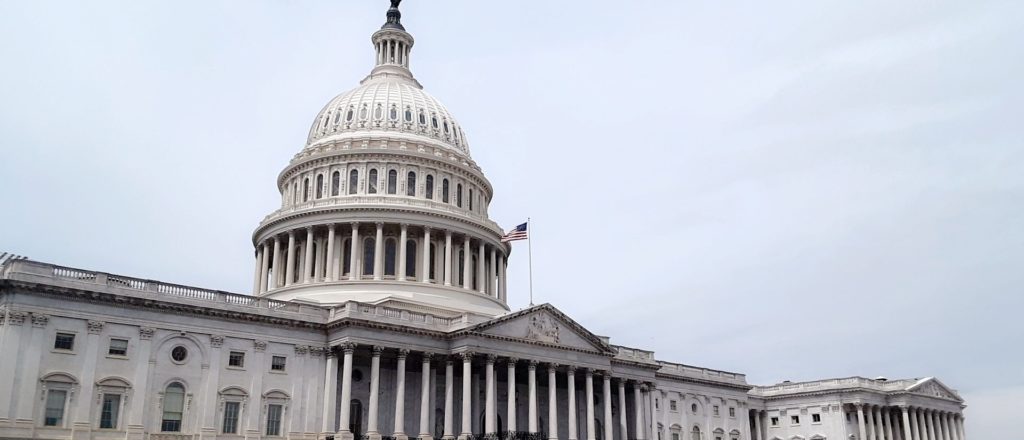
(Featured Image Media Credit: Jessica Rodriguez Rivas/Wikimedia Commons)
All content created by the Daily Caller News Foundation, an independent and nonpartisan newswire service, is available without charge to any legitimate news publisher that can provide a large audience. All republished articles must include our logo, our reporter’s byline and their DCNF affiliation. For any questions about our guidelines or partnering with us, please contact [email protected].