



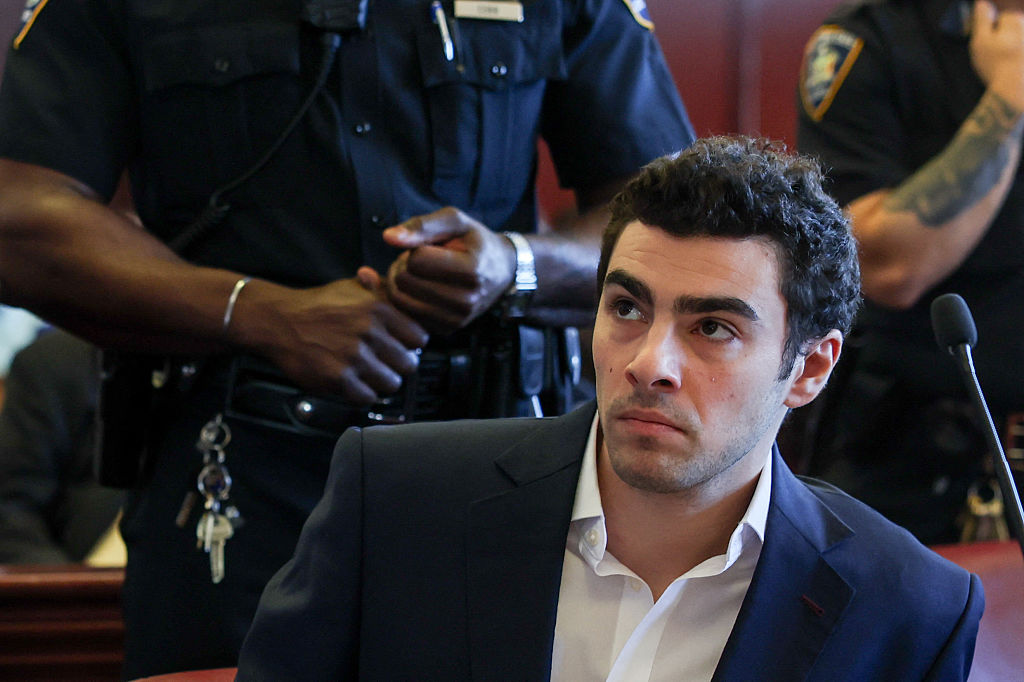
A federal judge ruled Friday morning that prosecutors cannot seek the death penalty against Luigi Mangione in the killing of UnitedHealthcare CEO Brian Thompson.
U.S. District Judge Margaret Garnett’s ruling hinders any hopes by the Trump administration to see Mangione executed, the Associated Press reported.
The administration has called Mangione’s act a “premeditated, cold-blooded assassination that shocked America.”
Garnett dismissed a federal murder charge that had enabled prosecutors to seek capital punishment and stated it was technically flawed.
She wrote she ruled to “foreclose the death penalty as an available punishment to be considered by the jury” as it consider whether or to convict Mangione.
Garnett also dismissed a firearm charge. Stalking charges that carry a maximum punishment of life in prison remain.
Prosecutors needed to show Mangione killed Thompson while committing another “crime of violence.”
Garnett wrote in her opinion stalking does not fit the definition of “crime of violence.”
The government could appeal the judge’s ruling.
The U.S. attorney’s office in Manhattan is prosecuting the federal case.
Garnett said her decision “may strike the average person — and indeed many lawyers and judges — as tortured and strange, and the result may seem contrary to our intuitions about the criminal law.”
She added it reflected her “committed effort to faithfully apply the dictates of the Supreme Court to the charges in this case. The law must the Court’s only concern.”
Mangione, 27, has pleaded not guilty to federal and state murder charges. The state charges carry the possibility of life in prison.
Jury selection in the federal case is scheduled to begin Sept. 8. Opening statements and testimony should begin Oct. 13.
Thompson, 50, was killed Dec. 4, 2024, as he walked to a midtown Manhattan hotel for UnitedHealth Group’s annual investor conference.
A surveillance video showed a masked gunman shooting him from behind.
Police said “delay,” “deny” and “depose” were written on the ammunition. This mimicked a phrase used to describe how insurers avoid paying claims.