



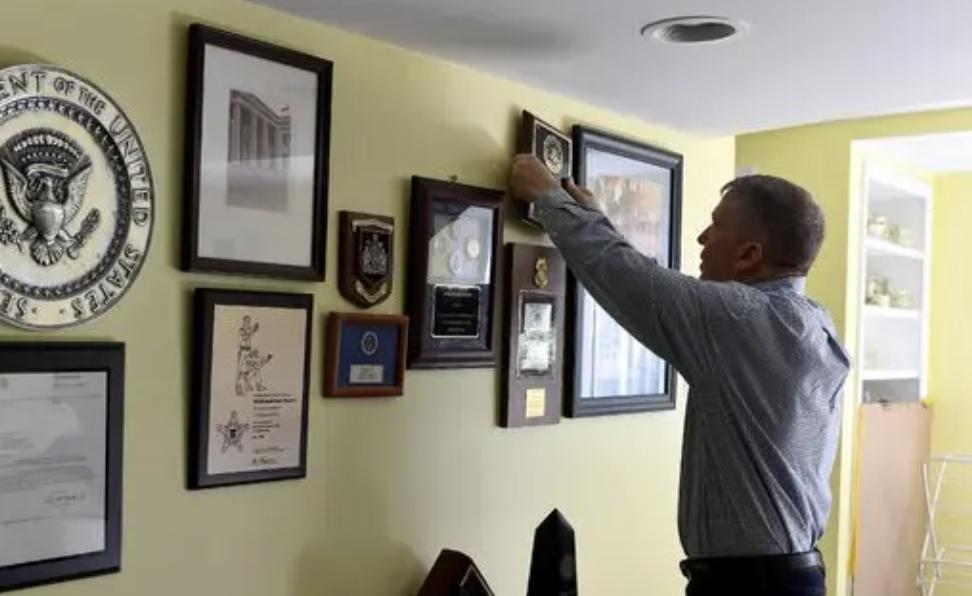
Michael Beck, the former National Security Agency officer widely believed to be the first person to experience symptoms later associated with Havana Syndrome, has died at the age of 65, his family confirmed.
Beck passed away on January 25 while out shopping, according to his daughter. The cause of death has not yet been determined. He is survived by his wife of 40 years, Rita Cicala, and his children, Ryan Lewis, Regan Gabrielle Beck, and Grant Michael Beck.
For decades, Beck’s case stood at the center of one of the most unsettling mysteries in modern U.S. intelligence history. Diagnosed with Parkinson’s disease at just 45 years old, Beck believed his condition was triggered by exposure to a directed-energy weapon during a classified overseas mission in 1996 — nearly 20 years before Havana Syndrome was publicly acknowledged.
Havana Syndrome first came to light in 2016, when U.S. diplomats and intelligence personnel stationed in Cuba began reporting severe neurological symptoms. Victims described sudden headaches, dizziness, ringing in the ears, head pressure, cognitive problems, and balance issues. In some cases, the symptoms were debilitating and long-lasting.
Despite deteriorating health and limited institutional support, Beck remained with the NSA until 2016, when his condition forced him into retirement. A year later, he told investigators he believed a weaponized microwave attack was slowly killing him, a claim that intensified debate over whether hostile foreign actors were targeting U.S. personnel using advanced energy-based weapons.
Michael Beck, 65, Dies; First to Report Symptoms of ‘Havana Syndrome’: As an employee with the N.S.A., he claimed he was exposed to a direct-energy device that led to a diagnosis of Parkinson’s disease at the age of 45. #BreakingNews pic.twitter.com/rl0WABPlSA
— Chombler.com (@Chomblr) January 30, 2026
Beck’s background made his warnings difficult to ignore. He earned a degree in administration of justice from Penn State in 1983, began his career with the U.S. Secret Service, and joined the NSA in 1987, where he spent the bulk of his professional life.
In 1996, Beck and another NSA officer, Charles Gubete, were sent to what Beck later described as a hostile country to evaluate whether a U.S. facility under construction had been compromised with listening devices. Beck was prohibited from revealing operational details, but he later said both men encountered a “technical threat” during the second day of the mission.
Soon afterward, Beck experienced severe and unusual symptoms. However, it took nearly a decade before his health began to decline significantly. A neurologist eventually diagnosed him with Parkinson’s disease, a condition not known to run in his family.
Years later, Beck encountered Gubete at NSA headquarters and was alarmed by his colleague’s stiff movements and awkward gait. Gubete revealed he too had been diagnosed with Parkinson’s.
In 2017, Beck obtained a classified intelligence report that he believed confirmed both men had been exposed to a high-powered microwave system capable of weakening or killing targets over time without leaving physical evidence. The report allegedly linked the technology to the same hostile country involved in their 1990s mission.
“I was sick to my stomach,” Beck told The Washington Post at the time. “It felt raw and unfair.”
Between 2016 and 2018, more than 200 U.S. government employees reported similar symptoms, most of them stationed at the U.S. Embassy in Havana. Later cases emerged in Russia, Canada, and even Washington, D.C. The Foreign Policy Research Institute estimates as many as 1,500 American officials may have suffered related neurological injuries since 2016.
Scientific investigations have produced conflicting conclusions. Some studies, including research from the University of Pennsylvania, supported the possibility of directed-energy exposure. Others, including a National Institutes of Health review, found no definitive evidence tying the symptoms to such weapons.
Despite years of investigation, no device has been publicly confirmed, and much of the research remains classified.
Michael Beck spent much of his final years pushing the U.S. government to confront what he believed was a silent, invisible attack on its own people. His death closes one chapter in the Havana Syndrome story, but the questions he raised remain unanswered.


