



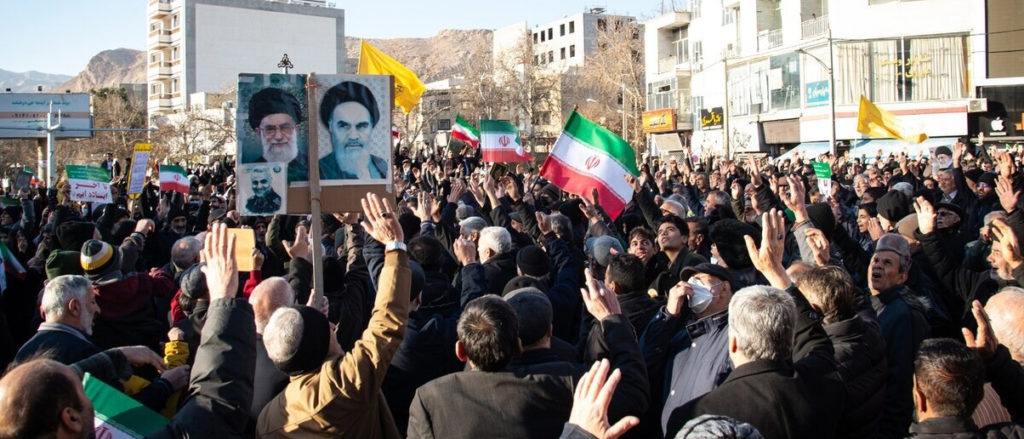

No one should be misled by surface calm. Although Iran’s rulers have temporarily forced protests off the streets through mass arrests, executions, and brute repression, the uprising has not ended. It has merely changed. Beneath the silence, the anger and resistance continue to grow. Across generations and social classes, Iranians remain united by a single demand: an end to dictatorship and the creation of a new political order based on popular sovereignty.
As Iran approaches a decisive moment, the question of what comes next is no longer abstract. After more than four decades of theocratic rule, a young, educated, and politically conscious society is demanding freedom, accountability, and dignity. Yet alongside these aspirations, a misleading narrative has resurfaced — the notion that monarchy, repackaged and rebranded, could offer a solution. Replacing a religious dictatorship with a hereditary system would not represent progress. It would amount to a return to unaccountable rule under a different symbol.
The son of the former Shah has sought to position himself as an alternative through rhetoric and external visibility. But political change in Iran is not driven by nostalgia or media presence abroad. It is forged through organization, sacrifice, and sustained resistance inside the country. Appeals to elements of the regime’s security apparatus do not constitute opposition. They reflect a fundamental misunderstanding of how entrenched authoritarian systems collapse. A figure without an organized presence, network, or operational capacity inside Iran cannot lead a democratic transition. Regime change is not performative. It is structural.
Iran does not need a crown. It needs a republic grounded in democratic legitimacy. Monarchism is inherently incompatible with the principles of equality, accountability, and popular sovereignty that have animated Iran’s protest movement. A political system derived from bloodline or anything resembling it, stands in direct contradiction to the demands voiced repeatedly by Iranians risking their lives in the streets. For a nation of more than 90 million citizens, inherited legitimacy is not merely outdated. It is an affront to the very concept of citizenship.
Inside Iran, the struggle for change has been sustained not by symbolic figures abroad, but by organized resistance. For years and with renewed visibility during the most recent uprising, networks led by the People’s Mojahedin Organization of Iran and its nationwide Resistance Units have played a central role in confronting the regime’s machinery of repression. Operating under relentless surveillance and extreme risk, these forces have coordinated acts of defiance, preserved continuity of resistance, and demonstrated that the regime’s control is not irreversible. Any serious vision for Iran’s future secular democratic republic must be anchored in this reality. Without an organized force on the ground, regime change remains an illusion.
Monarchist narratives do more than mislead. They actively serve the interests of the ruling establishment. As documented by the National Council of Resistance of Iran, the regime has long exploited royalist rhetoric to smear all opposition as a return to past tyranny. By promoting a false binary between clerical rule and monarchy, Tehran portrays itself as the lesser evil. This tactic diverts attention from genuine democratic alternatives and fragments opposition efforts at a moment when clarity and unity are essential.
Iran’s future must therefore be defined by a clean break, not only from theocracy but from every form of unaccountable rule. That future is a secular democratic republic, established through free and fair elections and grounded in universal human rights. A transitional government, limited in scope and duration, can guide the country through this passage and transfer power to elected representatives. Legitimacy must be earned at the ballot box, never inherited or imposed.
This vision is clearly articulated in the 10-Point Plan presented by Maryam Rajavi, the President-elect of the National Council of Resistance of Iran, which outlines a roadmap for a democratic republic based on the separation of religion and state, gender equality, abolition of the death penalty, autonomy for ethnic minorities, and a non-nuclear Iran committed to peaceful coexistence. It offers a practical and credible framework for transition.
For decades, Iranians have paid a heavy price for demanding the right to choose their leaders. They have faced bullets, prisons, and executions for the most basic democratic freedoms. To betray that struggle by reviving monarchy or anything that resembles it, would compound one historic injustice with another.
The stakes extend far beyond Iran. As a pivotal country in the Middle East, Iran’s trajectory will shape regional stability and global security. The international community must resist the temptation to romanticize nostalgia or embrace false shortcuts. Revolutions that replace one form of autocracy with another do not liberate societies. They merely rearrange the chains. Iran and its people deserve better. The future they seek is not a throne but a secular democratic republic.
Shahin Toutounchi Ph.D. is a member of the Iranian American Community of Northern California.
The views and opinions expressed in this commentary are those of the author and do not reflect the official position of the Daily Caller News Foundation.
(Featured Image Media Credit: Mehr via Wikimedia Commons)
All content created by the Daily Caller News Foundation, an independent and nonpartisan newswire service, is available without charge to any legitimate news publisher that can provide a large audience. All republished articles must include our logo, our reporter’s byline and their DCNF affiliation. For any questions about our guidelines or partnering with us, please contact [email protected].