



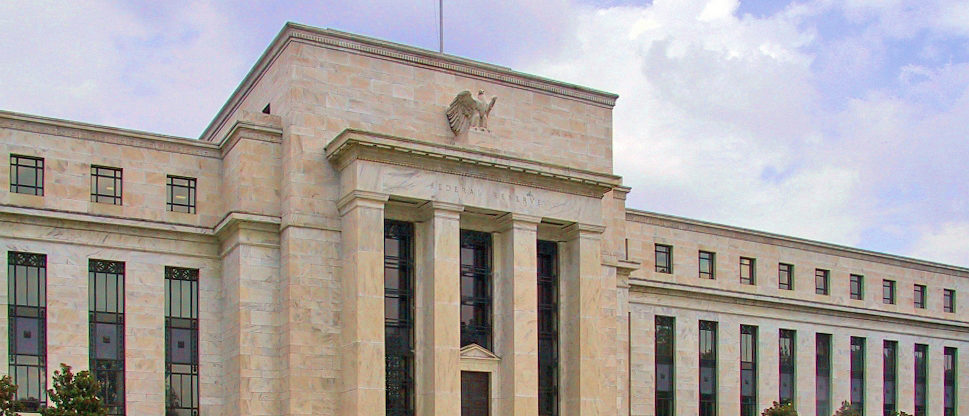
President Donald Trump’s new pick to lead the Federal Reserve could take the central bank in a direction sharply different from the eight years under outgoing Fed Chair Jerome Powell, according to analysts.
Trump announced Friday that he is nominating Kevin Warsh to succeed Powell, fueling speculation about how the nominee would change the central bank’s policies if confirmed by the Senate. Economists told the Daily Caller News Foundation that Warsh could potentially enact major monetary policy reforms and also move to reduce the Fed’s economic footprint.
“Warsh’s understanding of monetary [policy] is reflective of actual history and empirical evidence — the exact opposite of Powell,” E.J. Antoni, chief economist at the Heritage Foundation, told the DCNF. “We can therefore expect very different results including a much more stable dollar and much less volatility in interest rates.”
“Under Powell, the Fed has engaged in egregious mission creep, taking its eye off the prize of conducting sound monetary policy and instead focusing on ESG [Environmental, Social, and Governance], DEI [diversity, equity and inclusion] and other far-left causes,” Antoni continued. “Warsh would undo all of that and return the Fed’s focus where it belongs. Additionally, Warsh understands that many of the Fed’s economic models are deeply flawed and contrary to the historical evidence, so we can expect he would also address this issue as well. It would be top to bottom regime change under his chairmanship.”
Under Powell’s watch, the central bank notably made several moves to be in line with the Biden administration’s green energy agenda, including joining a global climate change group, analysts previously told the DCNF.
Warsh, who served as a member of the Fed’s board of governors from 2006 until 2011, has previously called for a “regime change” at the central bank, The New York Times reported on Jan. 29. He also claimed in a Nov. 16, 2025 op-ed for The Wall Street Journal that “inflation is a choice, and the Fed’s track record” under Powell “is one of unwise choices.”
Warsh wrote further that he thinks the Fed’s current “bloated balance sheet, designed to support the biggest firms in a bygone crisis era, can be reduced significantly.” As of Dec. 31, 2025, the Fed’s total assets stood at $6.6 trillion, accordingto the American Action Forum.
A Fed spokesperson declined to comment. Warsh did not respond to the DCNF’s request seeking comment.
Reducing the Fed’s balance sheet could contribute to lowering U.S. inflation, according to Jason Sorens, an economist at the American Institute for Economic Research.
“Yes, ‘quantitative tightening’ substitutes for hikes in the federal funds rate as a tool for bringing inflation down,” Sorens told the DCNF. “By reducing the federal funds target rate and selling assets in tandem, the Fed should be able to reduce interest rates without raising inflation. However, the Fed will need to reduce liquidity regulations on banks to make it possible for the Fed to reduce its balance sheet without replicating the ‘repo spike’ of 2019. Currently, banks have to keep liquid assets on reserve at the Fed to match their lending portfolios, which requires the Fed to supply those assets.”
Quantitative tightening refers to monetary policies that shrink the Fed’s balance sheet by either selling Treasury securities or letting them mature, according to Investopedia. The Fed states on its website that all of its monetary policy decisions, including purchasing and selling securities, are made “independently of the borrowing decisions of the federal government and are intended solely to fulfill the mandate set out for the Fed by law: maximum employment and stable prices.”
Sorens added that “Warsh wants to reduce the footprint of the Federal Reserve in the economy, not just the reserves that it holds.”
“That fact could mean a Warsh-led Fed would be less likely to help the U.S. Treasury issue new debt at low rates, as the Powell-led Fed did in 2020, causing massive inflation,” Sorens said. “That’s one reason why markets have interpreted Warsh as a slightly ‘hawkish’ pick.”
Sorens also told the DCNF that if the Fed decides to aggressively slashes interest rates soon it could help drive “real, inflation-adjusted rates temporarily down,” but warned it might also result in “permanently higher interest rates.”
“One thing readers should know is that the short run and long run work differently when it comes to monetary policy,” he explained. “Drastically cutting rates now might generate inflation that outpaces the mortgage market, driving real, inflation-adjusted rates temporarily down. But in the long run, rates will catch up to inflation, and we’ll end up with permanently higher interest rates. That’s precisely what happened in 2020-2023. For long-term low interest rates, it’s better to have macroeconomic stability, which means not trying to push rates down in the short term.”
If confirmed, Warsh is likely to generally follow Powell’s overall approach to leading the Fed, but he may also spearhead more monetary policy reforms, according to Jai Kedia, a research fellow at the Cato Institute’s Center for Monetary and Financial Alternatives.
“Warsh previously served as a Fed governor and never dissented from any Fed decisions,” Kedia explained to the DCNF. “It is likely that, if nominated, he will follow Powell and other past chairs in his public comments and general approach to Fed governance. As far as policy goes, Warsh is presenting himself as a ‘regime change’ candidate so there’s a higher chance he pushes for reforms.”
“But, ultimately, those [reforms] are likely to lead nowhere without Congress issuing legislation,” Kedia added.
Additionally, Kedia explained that Warsh has “already shown support for the balance sheet reduction,” which he noted “must be coupled with the elimination of the interest on reserves program which pays large corporate banks billions of dollars in interest payments.” He also said “the most important overall reform that will improve economic outcomes and help shield the Fed from political attacks is to implement rules-based monetary policy.”
All content created by the Daily Caller News Foundation, an independent and nonpartisan newswire service, is available without charge to any legitimate news publisher that can provide a large audience. All republished articles must include our logo, our reporter’s byline and their DCNF affiliation. For any questions about our guidelines or partnering with us, please contact [email protected].