

A new congressional report details previously unknown facts about the EU’s years-long campaign to influence how social media companies moderate content, pressuring platforms to censor lawful American speech.
The House Judiciary Committee report, released Tuesday, relies on nonpublic documents obtained from major technology companies under subpoena. Lawmakers say the records show the European Commission pushed platforms to adopt stricter, globally applicable content moderation policies that disproportionately targeted conservative viewpoints, resulting in the removal of lawful U.S. speech.
“Though often framed as combating so-called ‘hate speech’ or ‘disinformation,’ the European Commission worked to censor true information and political speech about some of the most important policy debates in recent history—including the COVID-19 pandemic, mass migration, and transgender issues,” the report states. “After ten years, the European Commission has established sufficient control of global online speech to comprehensively suppress narratives that threaten the European Commission’s power.”
The EU Censorship Files, Part II
For more than a year, the Committee has been warning that European censorship laws threaten U.S. free speech online.
Now, we have proof: Big Tech is censoring Americans’ speech in the U.S., including true information, to comply with Europe’s… pic.twitter.com/Fg0gxzoTxD— House Judiciary GOP
 The EU Censorship Files, Part II
Since 2020, the European Commission has held more than 100 closed-door meetings with major platforms — including X, TikTok, Facebook, and YouTube — urging companies to revise their content moderation policies, according to the report.
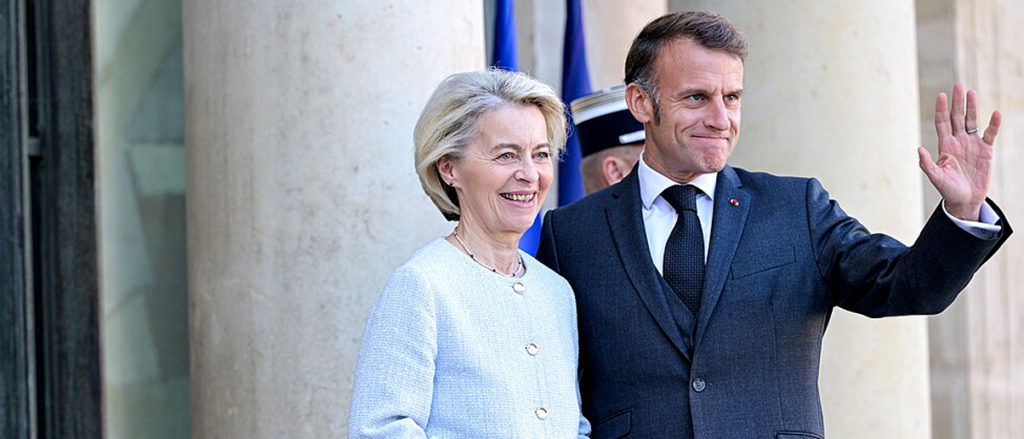
Among the most notable findings in the committee report was that, as early as 2020, European Commission President Ursula von der Leyen and Vice President Věra Jourová had urged platforms to remove content that questioned official narratives regarding the COVID-19 pandemic and vaccines.
Europe’s campaign against American speech intensified after the Digital Services Act (DSA) took effect in 2024. The sweeping online content law imposes strict requirements on platforms to police content deemed harmful by government authorities.
That same year, TikTok revised its global Community Guidelines to comply with the DSA, according to internal records obtained by the committee. The documents show that following meetings with EU officials, TikTok censored “common” conservative political statements on transgender issues, including claims such as “there are only two genders.”
Ahead of the 2024 U.S. presidential election, Jourová traveled to California to meet with tech executives about moderation policies for U.S. political content. When asked whether the discussions would focus primarily on EU elections or also include U.S. elections, EU officials indicated that both were on the agenda.
In December, the European Commission fined Elon Musk’s social media platform X approximately $140 million under the DSA, alleging the platform misled users through its paid verification system and failed to provide sufficient data access to researchers.
Beyond formal enforcement actions, the report alleges the European Commission relied on so-called “voluntary” initiatives and left-wing NGOs to coerce platforms into censoring lawful speech.
Nonpublic meeting agendas and internal readouts show EU officials regularly convened national regulators, NGOs, and platform representatives ahead of elections to discuss which political viewpoints should be suppressed, according to the report. The European Commission also helped establish “rapid response systems” that empowered “government-approved third parties” to submit priority requests for censorship.
The Trump administration has since moved to crack down on foreign governments and individuals accused of censoring Americans, including by sanctioning five prominent European figures alleged to have forced U.S.-based companies to suppress protected speech.
Among those sanctioned is former EU Commissioner Thierry Breton, one of the architects of the DSA. In August 2024, while serving as European Commissioner for Internal Markets and Digital Services, he invoked the law in a letter threatening Musk ahead of a livestream interview with President Donald Trump.
Meanwhile, the French government — which on Tuesday raided X’s Paris office as part of a criminal investigation into the platform — appeared to double down on its regulatory approach to online speech.
“EU regulations don’t apply outside of the EU. Our digital life, our own rules. Our kids’ safety, our citizens’ protection,” the French Ministry of Foreign Affairs posted on X.
European laws : same rights, same obligations. Online and offline. #KidsBeforeClicks https://t.co/vGqqT50TFs pic.twitter.com/WUP1Dyyj3n
— French Response (@FrenchResponse) February 3, 2026
U.S. Under Secretary for Public Diplomacy Sarah Rogers responded to the report, saying she looks forward to engaging on the issue at the upcoming Munich Security Conference.
All content created by the Daily Caller News Foundation, an independent and nonpartisan newswire service, is available without charge to any legitimate news publisher that can provide a large audience. All republished articles must include our logo, our reporter’s byline and their DCNF affiliation. For any questions about our guidelines or partnering with us, please contact [email protected].