



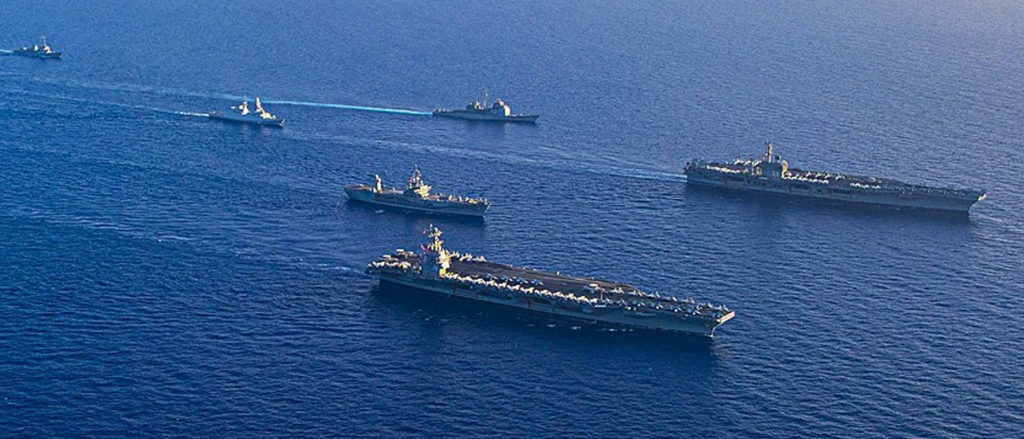

In the latest escalation of America’s pressure campaign against Iran, the Pentagon has ordered the deployment of the Navy’s most powerful aircraft carrier, USS Gerald R. Ford, from the Caribbean to the Middle East.
The move will bring two of the 11 U.S. carrier strike groups into Middle Eastern waters. The Ford, the largest and most advanced carrier in the world, is expected to join USS Abraham Lincoln and a growing number of guided-missile destroyers, fighter jets, and surveillance aircraft already in the region.
The Ford will boost the U.S. Central Command’s strike capabilities, providing greater flexibility for sustained air operations against Iran. In recent weeks, President Donald Trump has stepped up pressure on Tehran over its nuclear program and is weighing military options if diplomacy fails.
The decision marks a pivot back to the Middle East after the Ford spent months in the Caribbean and Mediterranean supporting operations, including oil tanker interdictions and the capture of former Venezuelan President Nicolás Maduro. Officials said it will take at least a week for the carrier and its escort ships to arrive, according to Reuters.
Trump indicated this week that he was considering sending a second aircraft carrier to the Middle East.
The deployment comes as indirect talks between U.S. and Iranian representatives in Oman on Feb. 6 yielded no breakthrough, and Trump warned Tehran on Thursday that failure to negotiate a deal over the next month could invite a military response “very traumatic” for Iran.
Following a private meeting with Israeli Prime Minister Benjamin Netanyahu on Wednesday, Trump said in a Truth Social post that negotiations with Iran must continue.
“Last time Iran decided that they were better off not making a Deal, and they were hit with Midnight Hammer — That did not work well for them,” he wrote.
The next round of talks between U.S. and Iranian officials has not yet been scheduled. U.S. and Israeli officials are seeking a comprehensive deal that would address Iran’s nuclear program as well as its ballistic missile capabilities, although Tehran has rejected including missiles in negotiations.
The Pentagon declined the Daily Caller News Foundation’s request for comment, while the White House did not immediately respond.
All content created by the Daily Caller News Foundation, an independent and nonpartisan newswire service, is available without charge to any legitimate news publisher that can provide a large audience. All republished articles must include our logo, our reporter’s byline and their DCNF affiliation. For any questions about our guidelines or partnering with us, please contact [email protected].