




When Donald Trump floated the idea of buying Greenland, much of Washington laughed. The proposal was treated as a punchline — another example, critics said, of crude transnationalism.
But as the former chair of the House China Caucus, I believe the laughter missed the point. Greenland was never about novelty or cartography. It was about power — and about how power is exercised in the 21st century.
Trump’s renewed push for U.S. access to mineral rights in Greenland matters for a simple reason: it’s a way to keep China from getting its hands on rare earth minerals. In a world where supply chains matter more than flags, Greenland counts because it is where geography, critical resources and great-power rivalry collide.
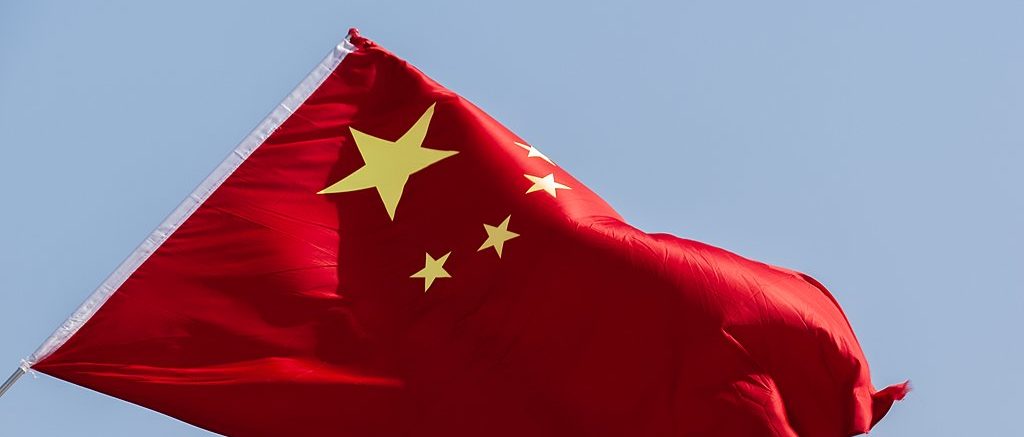
Rare earths are essential to advanced weapons systems, satellites, radar, robotics, electric motors and data infrastructure. China has subsidized production, undercut competitors and then weaponized its position — restricting exports during trade disputes and using access as leverage.
Greenland holds the eighth-largest known rare earth reserves in the world. One of its largest deposits, Kvanefjeld, has already attracted Chinese financial interest. Another major project, Tanbreez, nearly fell into China-linked hands before U.S. pressure reportedly helped steer it elsewhere. This is important. It is the contest over who controls the inputs that shape future power.
China understands something Washington often ignores: strategic competition today is about denial as much as acquisition. Preventing rivals from locking in leverage can matter more than extracting immediate gains. Ensuring that China does not consolidate influence over Greenland’s resources is a necessary defensive move, not an act of escalation.
China’s self-designation as a “near-Arctic state” is part of the country’s long-term strategy to gain influence over Arctic routes, energy and resources as ice recedes and access expands. Greenland, astride those routes and rich in strategic materials, is an obvious target.
Critics point to the costs and challenges of mining in Greenland. They are real, but they are still largely beside the point. Strategic value is not measured by short-term profitability. The question is not whether Greenland will supply rare earths tomorrow, but whether China is allowed to secure a foothold that shapes options 10 or 20 years from now.
The same realism should guide domestic policy. If the United States takes strategic competition seriously abroad, it cannot undermine itself at home. That is why debates like the HPE–Juniper merger matter, even if they draw less attention. The deal was approved by the Trump administration in part because it strengthens America’s ability to compete with Huawei, a Chinese state-aligned firm seeking to shape global standards in cloud computing, AI and next-generation communications.
Some lawmakers still treat antitrust as if geopolitics does not exist. But China’s technology champions are not ordinary market actors. They are instruments of state power. Weakening American firms in the name of abstract market theory risks handing Beijing an advantage in the very systems that underpin economic and military strength.
This is not an argument for endless intervention or industrial favoritism. It is an argument for realism. Strategic freedom abroad depends on strength at home — and on a willingness to think beyond the next news cycle. Energy security, industrial capacity and access to critical minerals are not side issues. They are elements of national defense.
The Greenland debate exposes a deeper divide in American thinking. One side treats power as something governed mainly by norms and intentions. The other understands that access, denial and control still matter.
America cannot opt out of global competition. The only question is whether it shapes the terrain or leaves that task to others.
Randy Forbes is a former member of Congress from Virginia. He served as founder and chair of the Congressional China Caucus and as a member of the House Armed Services Committee.
The views and opinions expressed in this commentary are those of the author and do not reflect the official position of the Daily Caller News Foundation.
(Featured Image Media Credit: Wikimedia Commons/Public/Ermell)
All content created by the Daily Caller News Foundation, an independent and nonpartisan newswire service, is available without charge to any legitimate news publisher that can provide a large audience. All republished articles must include our logo, our reporter’s byline and their DCNF affiliation. For any questions about our guidelines or partnering with us, please contact [email protected].