



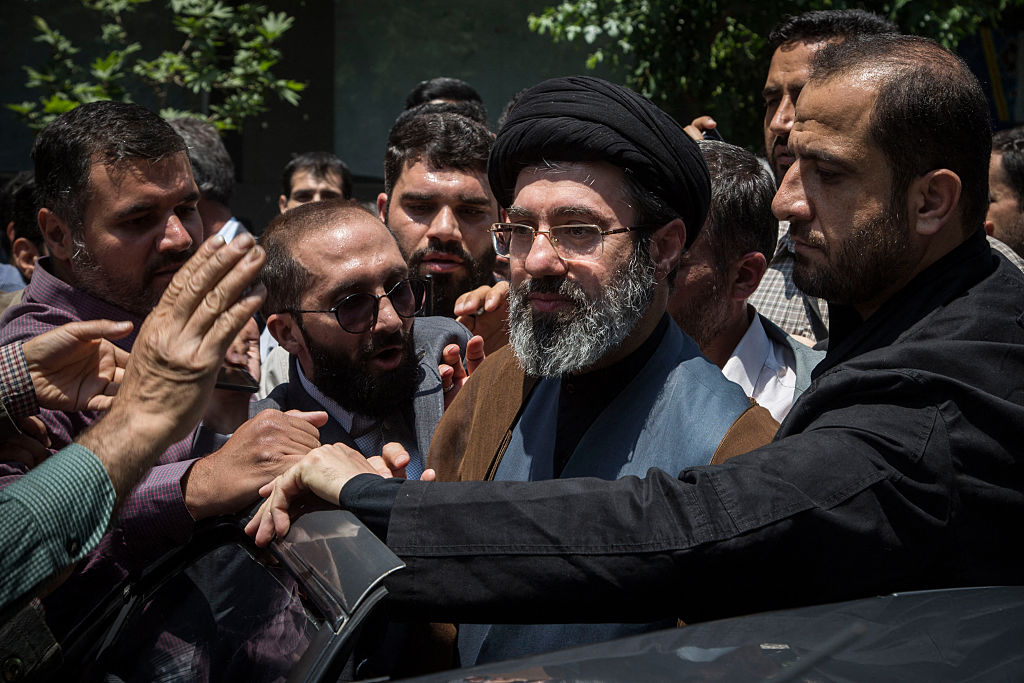
Mojtaba Khamenei has reportedly been selected to step into one of the most powerful roles in the Middle East following the death of his father, according to opposition media.
According to the New York Post, Iran International reported Tuesday that the country’s 88-member Assembly of Experts chose the 56-year-old cleric to succeed Ali Khamenei as supreme leader.
The report was quickly amplified by Israeli outlets, though Iranian state media had not confirmed the claim.
In the chaotic aftermath of Saturday’s strike that killed several top Iranian aides, Mojtaba was initially believed to have been among roughly 40 senior figures killed. That speculation was later overtaken by the succession report.
Ali Khamenei, who ruled Iran for 37 years, maintained a fiercely anti-Western agenda and consolidated sweeping authority over the nation’s religious and political institutions.
Mojtaba, the second-oldest son of the late supreme leader, has long been viewed as a hardliner aligned with his father’s ideology. He has close ties to Iran’s Islamic Revolutionary Guard Corps and was sanctioned by the United States in 2019 despite holding no formal government position.
If confirmed, his appointment would mark an unexpected turn. Iran’s leadership has historically resisted hereditary succession, particularly after the 1979 revolution toppled a monarchy rooted in family rule.
Since the elder Khamenei’s death, Iran has been run by a three-man council made up of senior loyalists who survived the strike. The country has faced mounting instability, with missiles striking inside its borders and retaliatory rockets and drones targeting U.S. interests in the region.
Uncertainty has deepened due to the lack of a publicly named successor. The Assembly of Experts is tasked with choosing the supreme leader, but its decision must also be approved by the Guardian Council, which ensures leaders meet strict Islamic standards.
Mojtaba’s limited religious credentials could complicate that process, observers have noted.
Ali Khamenei biographer Mehdi Khalaji suggested any successor may wield less centralized authority.
“We can almost certainly say that leadership will not be concentrated in one person,” Khalaji told the Wall Street Journal.
“The next supreme leader will be mostly ceremonial.”