



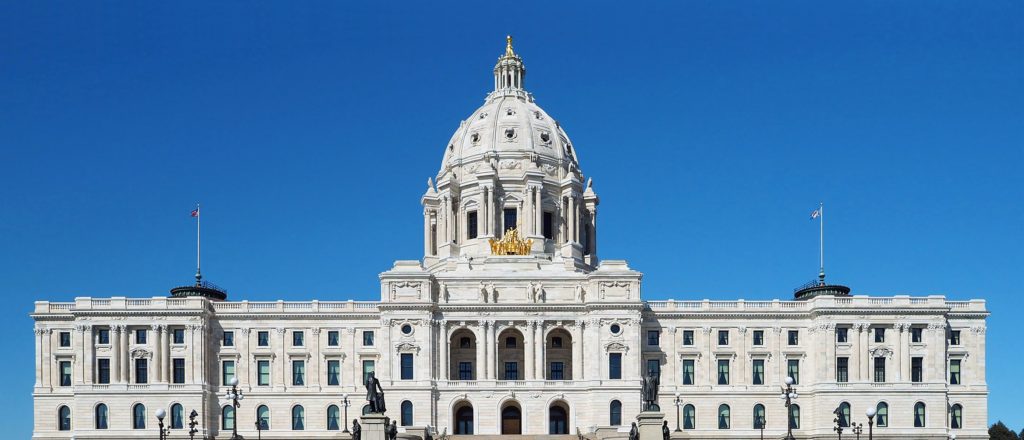
Democratic Minnesota lawmakers introduced legislation Wednesday aiming to create a climate “superfund” that would require large fossil fuel companies to pay fees for damages related to greenhouse gas emissions.
The legislation, called the Greenhouse Gas Pollution Superfund Act, would force fossil fuel companies in Minnesota that have emitted at least 1 billion metric tons of carbon pollution since 1995 to shell out a fee for such emissions, The Minnesota Star Tribune reported on Thursday. Democratic Minnesota state Sen. Ann Johnson Stewart and Democratic Minnesota state Rep. Athena Hollins introduced the bill.
However, the legislation is unlikely to pass due to Minnesota presently having a split state government this session, the outlet reported.
“I honestly don’t expect it to get passed this year. Our goal is to pass it next year,” Johnson Stewart told the Star Tribune in an interview. “This is obviously more of a Democrat bill.”
Johnson Stewart’s office and Hollins’ office each did not respond to the Daily Caller News Foundation’s request for comment.
Johnson Stewart also told the Star Tribune that any funds generated by the legislation could help Minnesota cities with financing public infrastructure projects such as upgrading sewer lines and culverts to handle increased rainfall and assisting homeowners cover the cost of roof repairs.
“We spend tens of millions on flooding,” Johnson Stewart said. “We’re seeing the impacts of climate change accelerate at a time when we’re already strapped for cash to fix our infrastructure.”
Republican Minnesota state Sen. Andrew Mathews blasted the legislation on Wednesday, claiming it “failed to put the needs of Minnesotans first,” according to the Star Tribune.
“Minnesotans are already struggling with rising costs of energy due to the actions of Democrats, and the last thing they need is another complicated government program that will just raise the cost of gas and utilities,” Mathews said in a statement provided to the Star Tribune.
The National Federation of Independent Business (NFIB) warned in a Wednesday statement that if enacted, the climate legislation could potentially “retroactively penalize [Minnesota] companies for decades old, legal emissions.”
“At a time when Minnesota’s small businesses are already struggling with rising costs, our state cannot afford a policy that punishes reliable, affordable energy and sends the bill to Main Street businesses,” NFIB Minnesota State Director Jon Boesche said. “If this policy ever comes to fruition, it will result in higher energy costs for small businesses and higher prices for the goods we depend on every day.”
Similar climate superfund legislation has notably become more prevalent across the nation in recent years. In May 2024, Vermont passed a climate “superfund” law in May 2024 which requires major fossil fuel to pay for part of climate change-related costs proportional to their emissions from 1995 to 2024, environmental advocacy organization Conservation Law Foundation reported.
Democratic New York Gov. Kathy Hochul signed legislation into law in December 2024 which aims to “bolster” the state’s “efforts to protect and restore the environment by requiring large fossil fuel companies to pay for critical projects that protect New Yorkers,” according to a news release from her office.
Scott Lauermann, a spokesperson for the American Petroleum Institute, previously said in a January 2025 statement, referring to the New York law, that “this type of legislation represents nothing more than a punitive new fee on American energy,” Inside Climate News reported.
All content created by the Daily Caller News Foundation, an independent and nonpartisan newswire service, is available without charge to any legitimate news publisher that can provide a large audience. All republished articles must include our logo, our reporter’s byline and their DCNF affiliation. For any questions about our guidelines or partnering with us, please contact [email protected].