




By any honest measure, rural America is under siege – not from foreign adversaries, but from within.
For decades, unelected bureaucrats, entrenched regulators, and a bloated federal apparatus have waged a quiet but devastating war on the communities that feed, fuel, and defend our nation. The result is a hollowing out of small towns, declining access to basic services, and a growing sense that Washington has abandoned the very people it claims to serve.
Consider the facts. Rural America accounts for nearly one in five Americans, about 60 million people spread across the vast majority of the nation’s landmass. Yet these communities face systemic disadvantages: Older populations, lower incomes, and fewer economic opportunities. That’s not an accident. It’s the predictable outcome of decades of top-down policymaking that prioritizes urban elites over working families.
Nowhere is this crisis more visible than in health care. Nearly 80% of rural America is considered medically underserved, with fewer doctors, longer travel times, and worse outcomes. Rural hospitals, often the economic backbone of their communities, are collapsing under regulatory pressure, workforce shortages, and reimbursement systems designed by bureaucrats who have never set foot in a small town. More than 40% of rural hospitals are already operating at a loss, and over 400 are at risk of closure.
This is what the “Swamp” looks like in practice: A maze of rules, mandates, and one-size-fits-all policies that punish rural providers while rewarding large, urban hospital systems. It is a system that values compliance over care, paperwork over patients.
President Donald J. Trump understands this reality and, unlike his predecessors, has taken it head-on.
The Trump-Vance Administration has made rural revitalization a central pillar of its agenda, recognizing that the path to national strength runs directly through the heartland. His $50 billion Rural Health Transformation Program is aimed at expanding access, increasing the number of doctors in underserved areas, and correcting the structural imbalances that have long disadvantaged rural providers. This is not just funding; it is a strategic effort to dismantle the bureaucratic chokehold on rural health care and replace it with patient-centered reform.
Critics in the mainstream media and on the radical Left are quick to attack these efforts, but they consistently ignore the underlying problem: The federal bureaucracy itself. Rural hospitals aren’t closing because of too little government. They are closing because of the wrong kind of government. Layers of regulation, distorted payment systems, and administrative red tape have made it nearly impossible for small providers to survive.
Trump’s broader economic agenda has also delivered tangible results for rural communities. By cutting taxes, rolling back burdensome regulations, and unleashing American energy production, his administration has restored opportunity in regions long written off by Washington. These policies have strengthened industries like agriculture, manufacturing, and energy – sectors that form the backbone of rural economies.
At the same time, Trump has taken on the cultural forces that have further alienated rural Americans. The rise of woke ideology in federal agencies and corporate boardrooms has imposed values and mandates that are completely disconnected from the realities of everyday life in small towns. From investment decisions driven by Environmental, Social, and Governance frameworks that choke off capital to rural industries, to federal policies that prioritize ideological goals over economic growth, these trends have only deepened the divide between Washington and the rest of the country.
This is not just a policy dispute; it is a question of who government is supposed to serve.
Rural Americans don’t want handouts. They want a fair shot. They want policies that recognize their contributions and remove the barriers standing in their way. They want a government that works for them, not against them.
That is exactly what Trump is fighting for.
His approach is rooted in a simple but powerful principle: trust the American people more than the federal bureaucracy. By decentralizing decision-making, empowering states and local communities, and holding agencies accountable, the Trump-Vance Administration is working to reverse decades of neglect and mismanagement.
The stakes could not be higher. When a rural hospital closes, it’s not just a loss of health care – it’s the loss of jobs, economic stability, and community identity. When a family farm goes under, it’s not just a business failure; it’s the erosion of a way of life that has defined this country for generations.
The swamp may be entrenched, but it is not invincible. With leadership that is willing to challenge the status quo, expose bureaucratic failure, and put Americans first, we can rebuild what has been lost.
Rural America is not a relic of the past. It is the foundation of our future. And with Trump leading the charge, that future is once again within reach.
Jorge Martinez is Executive Vice President and Chief of Staff at Defend Forgotten America Action. He previously served as press secretary for the U.S. Department of Justice.
The views and opinions expressed in this commentary are those of the author and do not reflect the official position of the Daily Caller News Foundation.
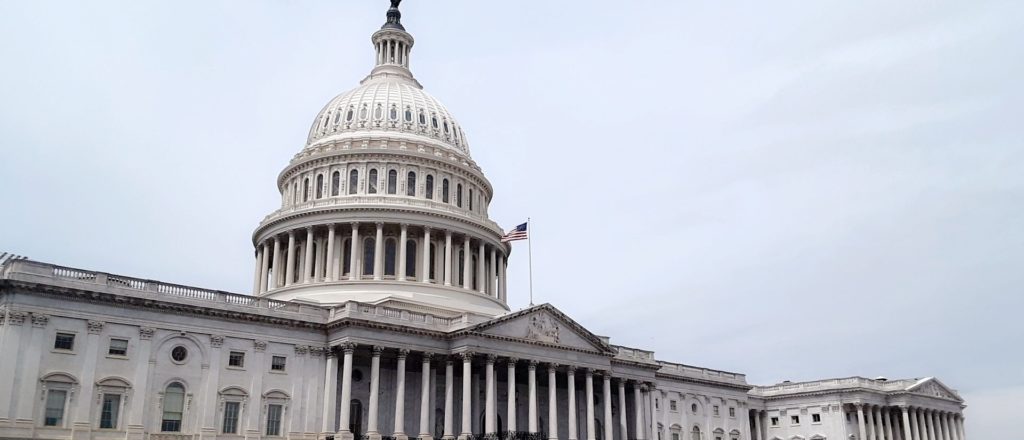
(Featured Image Media Credit: JessicaRodriguezRivas/Wikimedia Commons
https://commons.wikimedia.org/wiki/File:Home_of_the_US_Congress.jpg)
All content created by the Daily Caller News Foundation, an independent and nonpartisan newswire service, is available without charge to any legitimate news publisher that can provide a large audience. All republished articles must include our logo, our reporter’s byline and their DCNF affiliation. For any questions about our guidelines or partnering with us, please contact [email protected].