



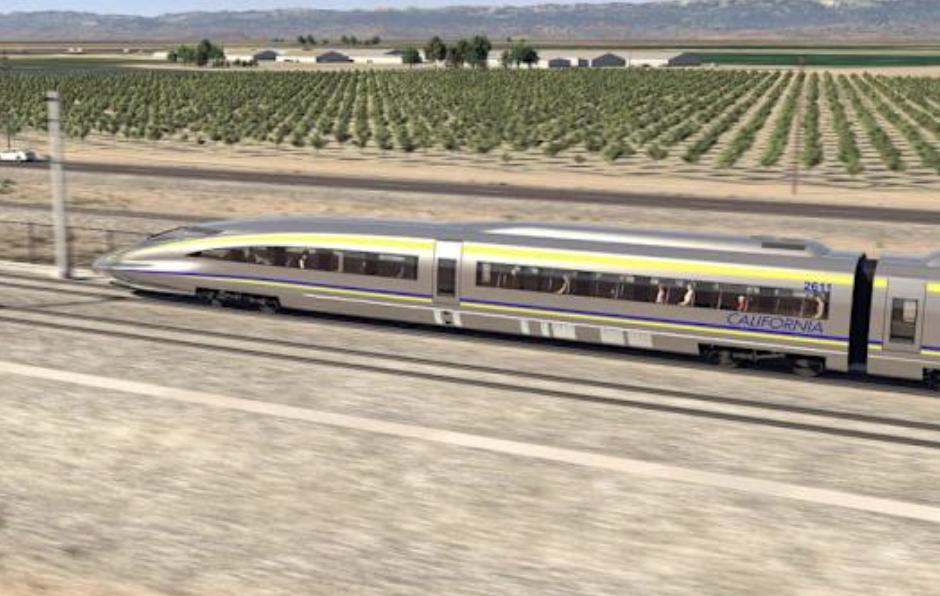
Calls to scale back or abandon California’s long-running high-speed rail project are gaining renewed attention after a sharp increase in projected costs. During a recent Senate Transportation Committee hearing, updated estimates suggested the full system could reach as much as $231 billion, a figure that immediately drew criticism from some lawmakers and policy analysts.
The project has been controversial almost from the start. When voters approved it in 2008, the plan was to connect Los Angeles and San Francisco with a high-speed line costing roughly $33 billion, with trains running by 2020.
Nearly two decades later, only a portion of the system in the Central Valley is under construction, and even that segment has faced delays and rising expenses. Roughly $14 billion has already been spent, much of it on land acquisition and early construction work.
Republican lawmakers, including State Sen. Tony Strickland, argue the latest estimates confirm long-standing concerns about the project’s viability. Strickland has called for the effort to be scrapped entirely, saying costs have spiraled far beyond what voters were originally promised. He and others point to the gap between initial projections and current estimates as evidence of deeper problems in planning and oversight.
A recent review by the state’s nonpartisan Legislative Analyst’s Office added to those concerns. The office flagged several issues in the High-Speed Rail Authority’s latest business plan, including unclear funding assumptions, shifting project scope, and reliance on future policy changes that are far from guaranteed. Analysts also raised questions about transparency, suggesting lawmakers and the public may not have a clear picture of the project’s long-term financial outlook.
Even under the authority’s current plan, the full Los Angeles-to-San Francisco system remains uncertain. Gov. Gavin Newsom acknowledged as far back as 2019 that there was no clear path to completing the entire route as originally envisioned. Since then, the focus has shifted to a 171-mile stretch between Merced and Bakersfield. About 119 miles of that segment are now under active construction, with a target completion date of 2032.
Critics argue that continuing to invest in a partial system without a clear plan for expansion risks wasting additional resources. Some lawmakers have also questioned the project’s reliance on funding sources like the state’s Greenhouse Gas Reduction Fund, which can fluctuate year to year.
Supporters, however, maintain that large infrastructure projects often evolve over time and that cost increases reflect inflation, design changes, and the complexity of building a statewide rail network. They also argue that California’s size and population make a high-speed rail system a worthwhile long-term investment, even if the timeline has stretched.
Public opinion appears mixed but not entirely negative. A 2025 poll found that a majority of California voters still support the project in principle, despite skepticism about whether it will ever be fully completed.
For now, the project remains in a kind of limbo. Construction continues in parts of the Central Valley, while state leaders debate whether to commit more funding, scale back ambitions, or reconsider the effort altogether. The outcome will likely shape not just the future of high-speed rail in California, but how the state approaches major infrastructure projects moving forward.












