



Political violence is escalating across the United States, with public officials from both parties increasingly targeted in threats, harassment, and deadly attacks — a disturbing trend that has rocked statehouses and city halls across the country.
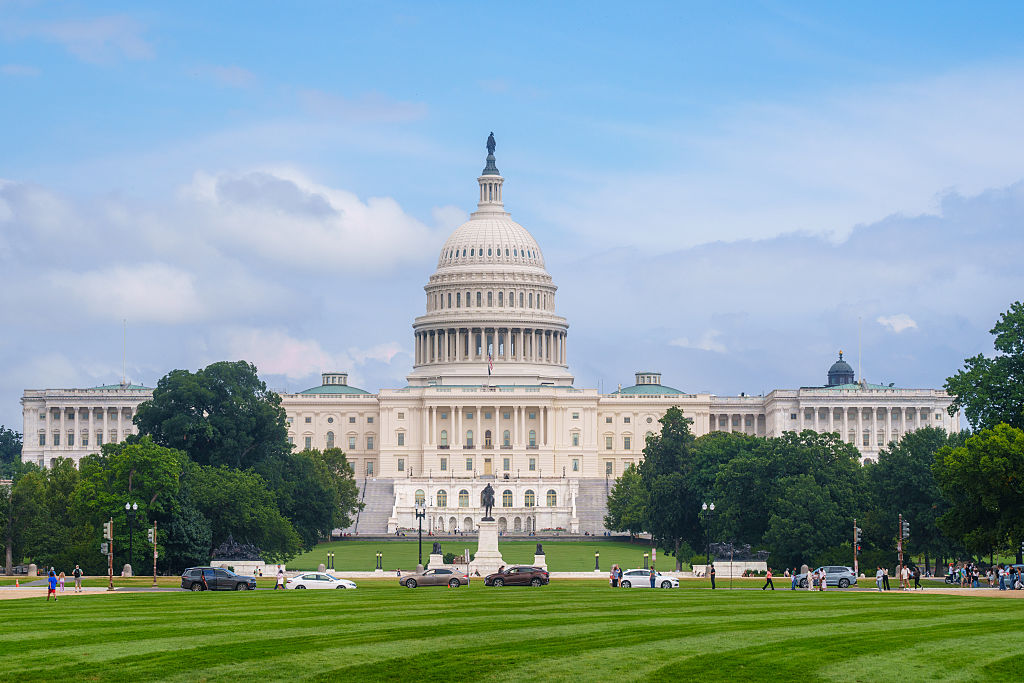
From mayors and state legislators to the 535 members of Congress, elected officials are facing unprecedented levels of intimidation, often directed at them and their families, according to Fox News.
In 2024 alone, U.S. Capitol Police investigated more than 9,000 threats against members of Congress — a staggering 18% increase over the previous year, according to internal police records.
The rise in threats has prompted expanded intelligence and threat-monitoring operations, and Congress has approved new funding for home security upgrades, including surveillance cameras, alarm systems, and reinforced doors.
But for state and local officials, protection is limited — or nonexistent.
In Utah, Democrat State Sen. Stephanie Pitcher told Fox News Digital that she and fellow lawmakers have experienced an “uptick” in digital harassment, including stalking and menacing emails, with some threats serious enough to trigger state patrol surveillance.
“Certainly, people feel empowered online and the worst versions of people tend to come out online where there’s little accountability, and you can even mask your identity,” Pitcher said. “I’ve had colleagues that have experienced or have had people stalking them who’ve had to get our Utah Highway Patrol involved to help patrol their neighborhood and do surveillance on their homes. I think that’s terrifying and very scary.”
“It’s not for a lack of laws,” she added. “What we once thought of as innocuous online threats, we now take very seriously. Some of it is certainly the nature of politics, but it has gotten worse over the past year or two.”
The violence is not hypothetical.
On June 16, Raleigh, North Carolina Mayor Janet Cowell was jolted awake at 3 a.m. when her cat alerted her to a pickup truck idling outside her home, its headlights blazing. The incident came just days after a Minnesota gunman shot and killed two Democratic lawmakers and their spouses, leaving a state and nation in shock.
“It all hit home,” Cowell told the News & Observer. “And, so then, two nights later [after the Minnesota shootings], to have a car in front of your house at the same time of the night was just disturbing.”
The mayor called 911. The vehicle left before officers arrived.
The Minnesota shooter, identified as 57-year-old Vance Boelter, is accused of disguising himself as law enforcement to carry out a coordinated political assassination.
According to the Department of Justice, Boelter traveled to the home of State Sen. John A. Hoffman and his wife Yvette, allegedly shooting them both and attempting to shoot their daughter, Hope Hoffman. He then drove to the home of Speaker Emerita and Rep. Melissa Hortman, where authorities say he fatally shot Hortman and her husband, Mark.
“Vance Boelter planned and carried out a night of terror that shook Minnesota to its core,” said Acting U.S. Attorney for the District of Minnesota Joseph H. Thompson. “He carried out targeted political assassinations the likes of which have never been seen in Minnesota.”
Boelter is facing six federal felony charges, including two counts of murder, two counts of stalking, and two firearms violations. A Hennepin County grand jury also indicted him on two counts of first-degree murder for the killings of Melissa and Mark Hortman, and four counts of attempted first-degree murder for allegedly trying to kill Sen. Hoffman, Yvette, Hope, and State Rep. Kristin Bahner.
While Minnesota does not have the death penalty, the federal charges could carry capital punishment.
Meanwhile, back in North Carolina, threats are also increasing. In June, a man was charged with threatening to kill 41 state lawmakers over a dispute about a shrimping bill, the News & Observer reported.
In Washington, Capitol Police remain responsible for protecting Congress members, even in their home districts. But at the state level, lawmakers largely rely on state police or highway patrol for protection — and only when a threat is deemed credible.
As political temperatures rise, officials across the country say the toll is not just physical — it’s deeply personal.
The growing wave of threats, intimidation, and deadly violence is no longer just a warning sign — it’s the new reality for America’s public servants.