



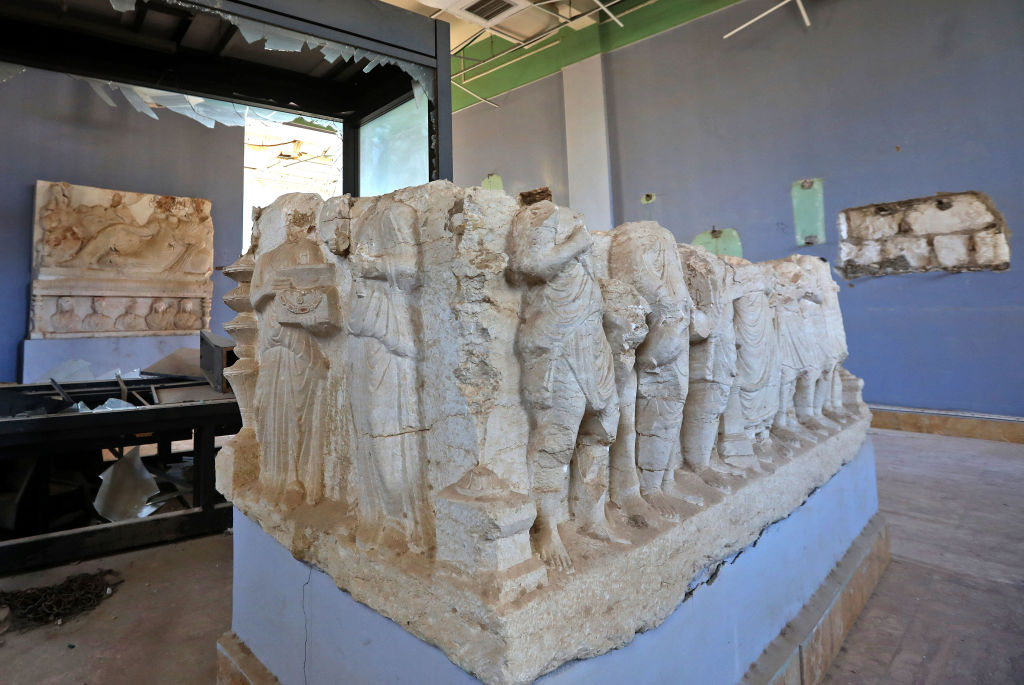
Authorities in Damascus are investigating the theft of several ancient Roman-era statues from Syria’s National Museum, an incident officials believe was carried out by an individual rather than an organized gang.
According to The Associated Press, the theft, discovered early Monday, forced the closure of the National Museum of Damascus just months after it reopened in January.
The museum’s return had been seen as a sign of cultural renewal following Syria’s 14-year civil war and the fall of the Assad family’s 54-year rule last year.
On Wednesday, a security vehicle sat outside the museum’s main entrance in central Damascus as guards blocked public access.
“God willing we will reach good results,” one official from the Directorate-General for Antiquities and Museums said, noting that progress had been made and the investigation’s findings would be released soon.
Both officials who spoke did so on condition of anonymity because they were not authorized to comment publicly.
The National Museum is Syria’s largest repository of historical artifacts, holding treasures that span thousands of years.
After the outbreak of war in 2011, the government reinforced security by installing metal gates and surveillance systems and transferring hundreds of items from other regions to the capital for safekeeping.
The theft sparked anger among residents of Damascus who saw it as an assault on the country’s heritage.
“This is not only an aggression on the Syrian state but an aggression on Syrian civilization,” said local resident Waddah Khalifeh, who expressed concern that the stolen statues could be smuggled abroad and sold on the black market.
An Associated Press journalist attempting to enter the museum on Wednesday was turned away, told that all indoor and outdoor sections were closed because of the ongoing investigation.
The museum had briefly shuttered after rebels ousted former President Bashar Assad in December, reopening in early January as part of the nation’s effort to reclaim stability. Syria’s cultural sites suffered heavily during years of conflict, particularly in the ancient city of Palmyra, where Islamic State militants destroyed 2,000-year-old monuments and mausoleums in 2015.
“I hope that these pieces will be returned because this is good for the new Syria,” said Damascus resident Hussein Abu al-Kheir.