

When the first National School Choice Week was held in 2011, the concept of a program that would allow any child in a state to attend the school that best fits their needs didn’t exist. However, as we celebrate the 15th Annual National School Choice Week in 2026, America’s approach to education is undergoing rapid changes. Today, 17 states have created exactly these programs, and millions of students across the country are benefiting from them.
This is why the American Legislative Exchange Council (ALEC) is proud to release the 2026 Index of State Education Freedom. Now in its third edition, the index has quickly become the leading barometer of education freedom across the states, ranking the states based on their policies in support of student-centered funding, charter schools, homeschools, virtual schools, and open enrollment.
For the third year in a row, Florida claimed the number one spot in our 2026 rankings and continued to be the only state to earn an overall “A+” grade, setting itself apart by going beyond simply ensuring its education dollars follow students. The Sunshine State has cultivated a thriving education marketplace where parents are empowered to pick the best school for their children. In Florida, all learning options can compete on a level playing field, thus ensuring that parents, not the government, are the ultimate arbiters of their students’ success.
However, Florida is beginning to face serious competition. The biggest story in education freedom in 2025 was Texas’ passage of the largest universal education freedom account (EFA) program in the country. As a direct result of this, the Lone Star State jumped 15 spots in ALEC’s rankings to ninth overall. Texas Gov. Greg Abbott made establishing the program his top legislative priority and was relentless in his support of families and students.
In addition to Texas, Idaho moved up eight spots to 10th place overall after passing a universal refundable tax credit program, and Wyoming moved up 11 spots to 17th overall after creating the new Steamboat Legacy Scholarship program, an EFA program available to all students in the state.
Unfortunately, some states saw their ranking fall significantly in this year’s Index. The largest among them was Louisiana, which fell 24 spots to 33rd overall after placing in the top 10 in last year’s report. Louisiana’s legislature has thus far failed to appropriate sufficient funds for the Louisiana Giving All True Opportunity to Rise (LA GATOR) scholarship program, significantly impacting its education freedom score. Instead, the Pelican State has only provided enough funding to transition students who were using the Student Scholarships for Educational Excellence Program to the LA GATOR program, thus denying new students the ability to enroll in the GATOR program.
Also troubling is the situation in Nebraska, which plummeted 18 spots to finish dead last at number fifty. After lawmakers passed the Opportunity Scholarship Program in 2023, 5,500 students in the state were able to use the program to attend the school that best fit their needs. Unfortunately, national teachers’ unions launched a massive misinformation campaign that forced the program onto the ballot. Despite providing a better learning opportunity to more than 5,000 students in the state, Nebraska voters chose to repeal the program and force those families back into schools that weren’t working for them.
Nebraska stands out for its inexplicable opposition to families and students. It is one of just three states that have no charter school law and no virtual schools. In addition, the state makes it very difficult for families to homeschool their own children. Put simply, the situation in Nebraska is dire.
Despite the news in states like Louisiana and Nebraska, most state policymakers are choosing to expand rather than shrink the learning options available to families. Lawmakers in states like Florida, Arizona, Arkansas, Iowa, and West Virginia recognize that parents, not government bureaucrats, are best positioned to understand the needs of their students. More importantly, they recognize that there is no such thing as a “one-size-fits-all” system of education. Instead, states need to prioritize options if they want to ensure every student has an equal opportunity to succeed.
As legislative sessions kick off for 2026, the message from voters and policymakers is clear. The era of government school monopoly is at an end. Parents are invoking their constitutional right to hold chief responsibility for their children’s education. The revolution is well underway, and ALEC is excited to see what this year will bring for families looking for choice in their child’s education.
Andrew Handel, Director, Education and Workforce Development Task Force, American Legislative Exchange Council
The views and opinions expressed in this commentary are those of the author and do not reflect the official position of the Daily Caller News Foundation.
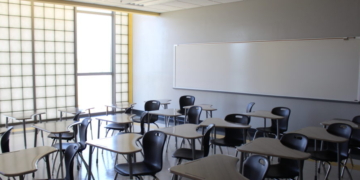
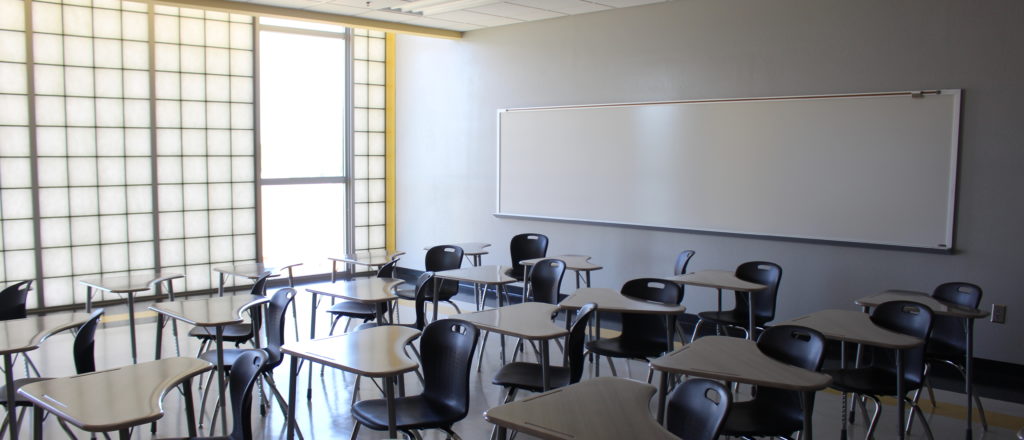
(Featured Image Media Credit: Michael Rivera/Wikimedia Commons)
All content created by the Daily Caller News Foundation, an independent and nonpartisan newswire service, is available without charge to any legitimate news publisher that can provide a large audience. All republished articles must include our logo, our reporter’s byline and their DCNF affiliation. For any questions about our guidelines or partnering with us, please contact [email protected].