



Archaeologists working at an excavation site in Pompeii have uncovered new evidence that helps explain why ancient Roman buildings have lasted for thousands of years. The discovery points to a special type of concrete that could repair itself over time, a finding that may offer lessons for modern construction.
The research was published earlier this month in the journal Nature Communications and focuses on a construction site frozen in time by the eruption of Mount Vesuvius in 79 AD. When the volcano erupted, ash buried the area and preserved it for nearly 2,000 years. Unlike finished buildings often studied by historians, this site was still under construction, giving researchers a rare look at how Roman workers actually built with concrete.
Archaeologists found unfinished walls, piles of dry building materials, and tools used for weighing and mixing concrete. The area included rooms meant for homes, a bakery with ovens, grain-washing basins, and storage spaces. When the eruption happened, workers left everything behind, allowing modern scientists to study their methods in detail.
The discovery of a 2,000-year-old building site in Pompeii reveals the raw ingredients for ancient Roman self-healing concrete. https://t.co/vuOr6s8dvz
— Live Science (@LiveScience) December 14, 2025
It has long been known that the Romans used concrete to build major structures like the Colosseum and the Pantheon. Many of those buildings are still standing today, while modern concrete structures often crack and fail after only a few decades. Until now, the exact reason for the Roman concrete’s durability was not fully understood.
Researchers discovered that Roman builders used a technique called “hot mixing.” Instead of mixing lime after it had already reacted with water, they added quicklime directly to water, volcanic ash, and rock. This caused a chemical reaction that heated the mixture as it was being prepared.
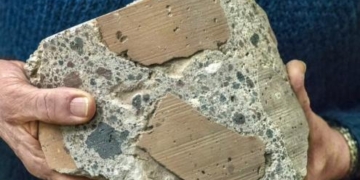
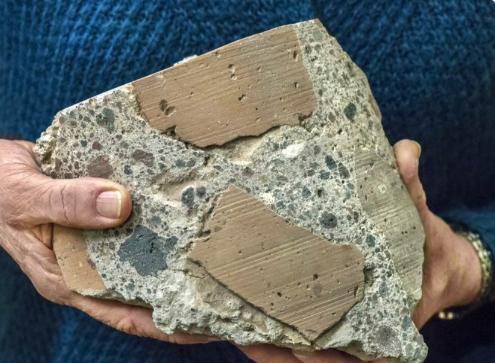
This process created small white chunks inside the concrete known as lime clasts. For years, scientists believed these chunks were signs of poor mixing or low-quality work. The new study shows the opposite. When cracks formed in the concrete and water entered, the lime clasts dissolved and reacted, forming calcium carbonate. This material filled the cracks and sealed them, effectively allowing the concrete to heal itself.
5. Its longevity owes much to Roman concrete.
This concrete contains calcium carbonate lumps called “lime clasts,” once thought to be from poor mixing.
Should researchers explore Roman concrete techniques for modern construction materials?Now, they’re known to provide “self-healing” by dissolving in water that seeps into cracks and recrystallizing to seal them. pic.twitter.com/m3euO62nWF
— Jeremy Wayne Tate (@JeremyTate41) June 8, 2025
Admir Masic, a professor at the Massachusetts Institute of Technology and a co-author of the study, described the excavation as a rare experience. He told Reuters that working at the site felt like “traveling back in time” and standing next to Roman workers as they mixed and poured concrete.
The site dates to more than 100 years after the Romans began large-scale concrete production in the first century BC. The findings suggest that Roman building techniques had evolved beyond what was previously recorded. Earlier writings by the Roman architect Vitruvius described different methods that may have already been outdated by the time Vesuvius erupted.
Masic explained that technological change happens even in ancient times. He compared it to the difference between early telephones and modern smartphones, noting that a century can bring major advancements, even without modern tools.
The study also raises questions about how modern construction compares to ancient methods. According to the researchers, most modern concrete does not have built-in self-healing abilities. This means cracks can spread over time, leading to costly repairs or early replacement of bridges, roads, and buildings.
Masic said the Roman method is not meant to replace modern standards directly. However, he believes the principles behind it could help engineers develop stronger, longer-lasting, and lower-maintenance concrete. That could be especially important as governments look to build infrastructure that lasts longer and costs less to maintain.
As the United States continues major infrastructure investments under President Donald Trump’s administration in 2025, discoveries like this highlight how innovation does not always mean starting from scratch. Sometimes, looking back can offer practical insights for the future.
The Pompeii discovery adds another chapter to the story of Roman engineering and shows that even ancient builders had solutions that modern science is only now beginning to fully understand.












