



A long-sought crackdown on U.S. funding of China’s military and strategic industries is on the verge of becoming law after House lawmakers successfully embedded sweeping outbound-investment restrictions into the National Defense Authorization Act (NDAA).
The House passed the massive $900 billion defense policy bill Wednesday, setting the stage for a Senate vote next week before the measure heads to President Donald Trump’s desk. Backers of the outbound investment curbs — including Republican Rep. Andy Barr of Kentucky — call it the “strongest framework in history” for safeguarding American capital and strengthening national security.
“This legislation takes President Trump’s America First Investment Policy to the next level and puts Beijing on notice,” said Barr, who introduced the Foreign Investment Guardrails to Help Thwart (FIGHT) China Act included in the House version of the NDAA. “Congress is sending a clear message: no more American money for the [Chinese Communist Party] to build missiles aimed at our troops, the next spy balloon that will fly over our communities, or any other product that could harm Americans.”
If enacted, the provision would prohibit U.S. investments in sensitive Chinese technologies, require domestic firms to notify the Treasury Department of certain transactions in the People’s Republic of China (PRC), and empower the Treasury secretary to sanction Chinese entities tied to the country’s military or intelligence services.
Lawmakers attempted to attach similar language to defense funding bills in both 2023 and 2024 but were ultimately unsuccessful. Notably, the measure ran into resistance in 2023 from then-House Financial Services Committee chair and Republican North Carolina Rep. Patrick McHenry, who said that more U.S. private investment in China would prevent Beijing from taking state control of them.
The push now has broad bipartisan support and strong backing from China hawks who warn that billions in American capital have fueled PRC critical-technology firms, including those linked to the Chinese military, the surveillance state and the CCP’s genocide against Uyghur Muslims.
In 2023 alone, major American financial institutions like BlackRock steered $6.5 billion into 63 Chinese companies blacklisted by the U.S. government for supporting the CCP military or human-rights abuse, according to the House Select Committee on the CCP.
The restrictions would also extend to investments in other nations that are U.S. adversaries, including Iran and North Korea.
“President Trump has made clear the past few decades of investments propping up Communist China’s aggression must come to an end,” said Speaker Mike Johnson, calling the inclusion of investment restrictions an “important step to protect our nation’s national security and economic competitiveness.”
Republican Sen. John Cornyn of Texas, who sponsored the Senate version of the FIGHT China Act, also said he is pleased the effort is nearing the finish line.
“This landmark legislation would prohibit and require notification of U.S. investments in certain technologies in countries of concern, ensuring American ingenuity, innovation, and investment do not end up in the hands of adversaries like the Chinese Communist Party to be weaponized against us,” said Cornyn.
Republican Rep. Brian Mast of Florida likewise called the measure a “huge win” for national security, cutting off “American investors to feed the Beijing military machine.”
The investment curbs also have Democratic backing, including from Sen. Elizabeth Warren of Massachusetts, who co-sponsored the Senate bill and called it an “important step toward ensuring the United States remains the world’s leader in advanced technology.”
Among the other victories for China hawks in the NDAA is the BIOSECURE Act, which limits federal contracts with biotechnology firms linked to foreign adversaries such as the PRC. The provision was previously sidelined in 2024 after Democrat Rep. Jim McGovern of Massachusetts — then chair of the House Rules Committee — intervened to protect jobs tied to one of the targeted Chinese companies in his district.
Despite the NDAA’s new restrictions on China, the president announced Monday that the U.S. will allow Nvidia to ship its advanced H200 AI processors to approved customers in China in exchange for a 25% surcharge. Critics argue the move risks eroding America’s technological edge and undermining long-term national security, noting that China is unlikely to produce a domestic equivalent before at least late 2027.
Despite clearing the House, the bill drew objections from several Republicans who criticized the authorization of additional security assistance to Ukraine and other foreign countries, the omission of provisions to ban a central bank digital currency, and the inclusion of certain DEI-related provisions.
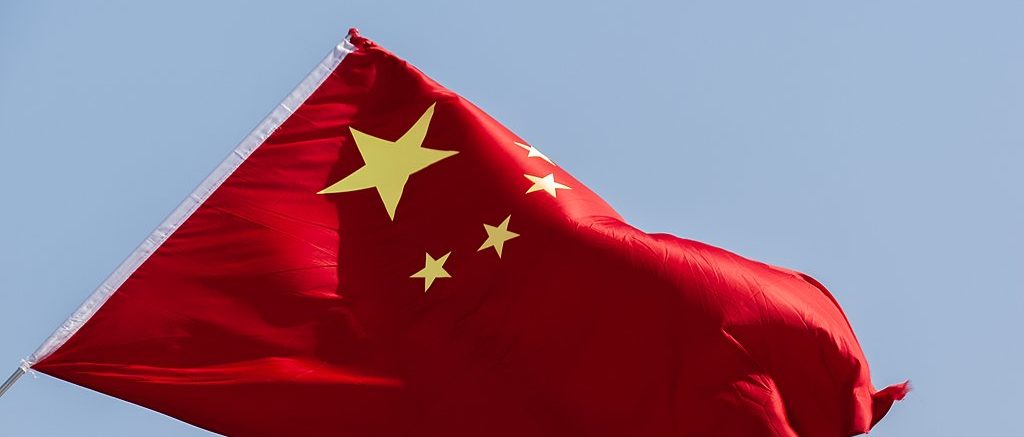
(Featured Image Media Credit: Wikimedia Commons/Public/Ermell)
All content created by the Daily Caller News Foundation, an independent and nonpartisan newswire service, is available without charge to any legitimate news publisher that can provide a large audience. All republished articles must include our logo, our reporter’s byline and their DCNF affiliation. For any questions about our guidelines or partnering with us, please contact [email protected].